The Avengers opened on May 4th, 2012 and finished its run at just over $1.52 billion, which at the time made the question of what Marvel had left on the cutting room floor an unusually interesting one. The answer arrived that September, when the Blu-ray landed carrying just under fifteen minutes of deleted and extended material across eight scenes. Most of it is what you would expect from a film that Joss Whedon has said ran close to three hours in its first assembly: an alternate opening and ending built around Maria Hill being debriefed by the World Security Council, a stretch of Loki and a mind-controlled Clint Barton in the tunnels, unfinished raw footage from the viaduct fight. Useful, occasionally fun, mostly the kind of connective tissue a two-hour-twenty-three-minute blockbuster can live without. One of the eight is different, and it runs three minutes and three seconds. It is also the only one on the disc that a later Marvel movie would end up needing.
Videos by ComicBook.com
It is called “Steve Rogers: A Man Out of Time,” and ComicBook was writing about what it implied within days of the disc arriving, including the call that Peggy Carter would turn up in Captain America: The Winter Soldier. That call was correct, and it is not the argument here, because it has already been made. The thing nobody said in 2012, and the thing that becomes obvious watching the scene now with the rest of the MCU behind it, is stranger and a little sadder. The Avengers did not simply cut a good scene, and plenty of good scenes get cut. It cut the setup and kept the payoff, leaving a beat in the finished film that works on atmosphere alone because the three minutes that gave it meaning were sitting on a bonus disc. Two years later, another movie had to build the same idea from scratch, and got enormous credit for doing it well.
The Scene Is a Man Reading His Friends’ Death Notices

It opens quietly and it does not get louder. Steve is alone at a kitchen table in a small apartment, going through a stack of S.H.I.E.L.D. files on the people he served with. Each one is stamped in red: “DECEASED.” He works through them the way you would work through a stack of bills, which is the detail that does the damage. This is not a montage of grief. It is a man doing paperwork on his entire life, seventy years of it compressed into a folder somebody else assembled while he was in the ice. Nobody is in the room. There is no score doing the work for him and no other character to react to, which is exactly the kind of thing a team-up movie with six leads has no room for.
One file is different. Peggy Carter is alive, and her file carries a current address and a phone number. He looks at the phone. He closes his eyes. He does not call. There is no dialogue in that moment and it does not need any, because the scene has already explained the arithmetic — everyone else is gone, one person is not, and the version of her that exists now is not the version he left. He also pulls files on Howard and Tony Stark, and Tony’s includes the armor, which is the closest the scene comes to a joke. It is also the only moment that reaches forward instead of back, a reminder that the one man he knew in 1945 left a son Steve is about to spend a movie arguing with.
From there it loosens. He watches newsreel footage of himself on a laptop, his own war playing back as archive material. He walks through New York, a city he knows the shape of and nothing else about. He ends up in a diner, where a waitress named Beth trades a few words with him and a modern-technology gag lands as something he does not catch. An older man at a nearby table leans over and tells him to ask for her number, “you moron”. The man is Stan Lee. Steve does not ask. He takes the train to a gym instead and works the punching bags, which is the only part of the whole three minutes that made it into theaters.
The Movie Kept the Payoff and Cut the Setup
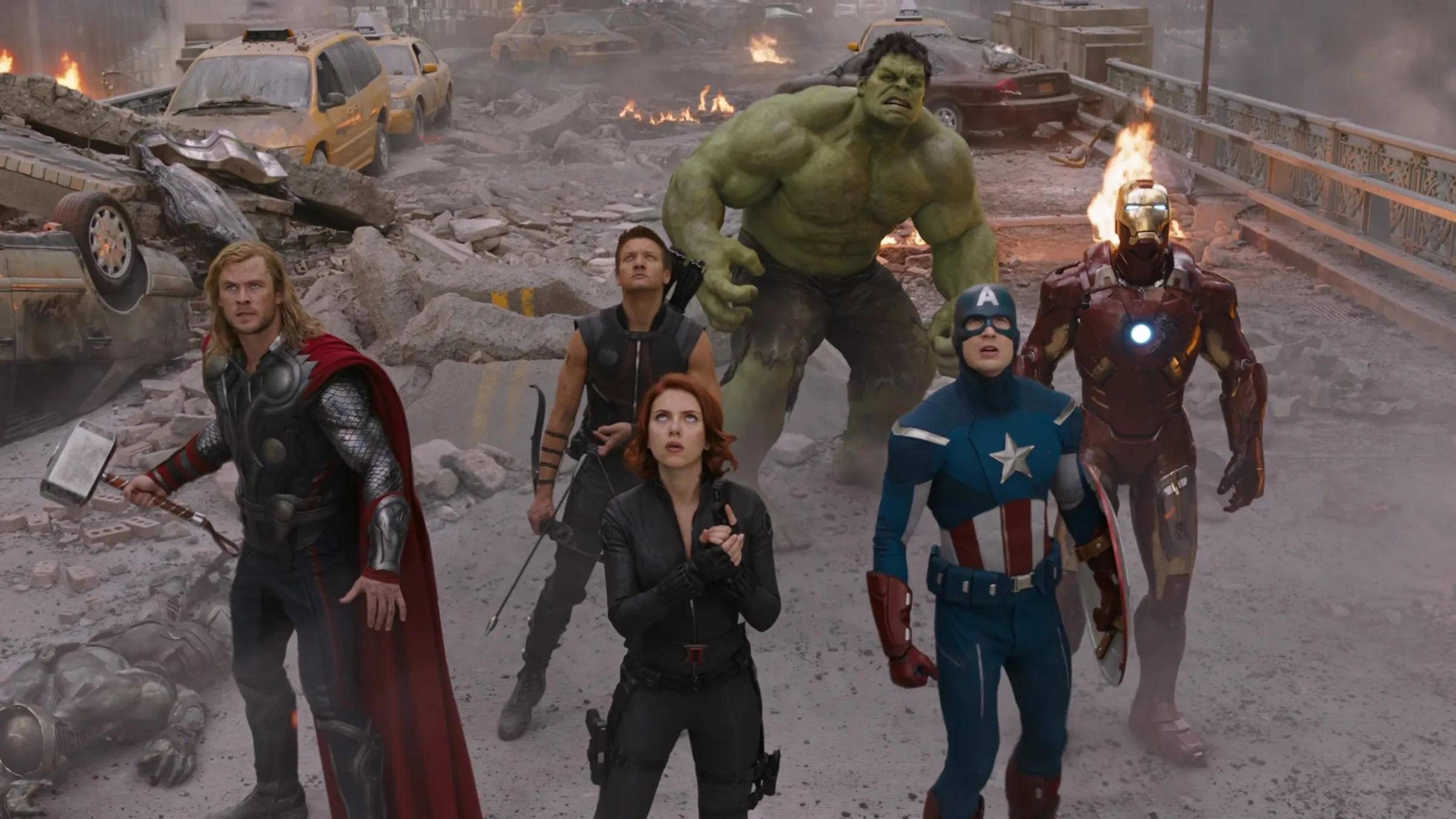
Here is the part that stops being a nice deleted scene and starts being a structural problem. Beth is still in the finished film. During the Battle of New York, Captain America saves a group of civilians trapped in a bank, and she is among them, which is already more attention than an unnamed extra would get. Then, in the closing news montage, when the film is canvassing ordinary New Yorkers about whether the Avengers are heroes or a menace, she is one of the faces that says he saved her life, visibly moved by it. The film gives her a name and a reaction shot and treats her as somebody the audience should recognize.
That beat exists in the theatrical cut with nothing behind it. A waitress the audience has never met is rescued by a man she has never met, and then handed screen time in the ending to be grateful about it. It plays fine, because Ashley Johnson is good and because the montage moves quickly enough that nobody stops to ask who she is. But it was built to pay off a relationship, and the relationship was removed. What survives is the shape of a callback with the thing it was calling back to deleted, which is a genuinely odd thing to find in a film this carefully assembled.
It is also not the only casualty of the same kind. The disc carries an extended version of Bruce Banner meeting the security guard after the helicarrier fall, which originally ran to twelve pages and features Harry Dean Stanton doing the same job for Banner that Beth was doing for Steve: giving a lost man something ordinary and human to bounce off. Both scenes are quiet, both are character work rather than plot, and both went for the same reason. The film they were in had six leads to introduce or reintroduce, an alien invasion to stage, and a hundred and forty-three minutes to do all of it in.
Two Years Later, Another Movie Had to Build It Again

Captain America: The Winter Soldier opened on April 4th, 2014, directed by Anthony and Joe Russo, and it begins its emotional arc almost exactly where the deleted scene left off. Steve visits Peggy, now elderly and bedridden, and the scene does the work of establishing what the seventy years actually cost him. It is one of the best things in the film, the Russos stage it beautifully, and Hayley Atwell is extraordinary in it. It is also, structurally, the second time the MCU tried to tell this audience the same thing, and the first attempt had been finished and abandoned two years earlier.
The deleted scene had already done it, harder and in less time. In 2012 the audience could have watched Steve hold Peggy’s phone number and put it down, and then in 2014 watched him finally walk into her room, and the second scene would have landed on two years of accumulated silence rather than on four minutes of setup inside its own first act. Instead The Winter Soldier had to introduce the idea and resolve it inside the same movie, because the setup had been sitting on a bonus disc since September 2012, where most of the audience never saw it. The scene it was quietly completing had effectively never happened.
None of which is a complaint about the decision, and Whedon has been clear that he did not enjoy making it. “I hated cutting it,” he said in 2012. “I hated cutting the Captain America stuff with the waitress.” His reasoning was the only reasoning available to a man assembling a film with six leads out of a three-hour rough cut: “It’s not about me. Even though it’s my film, it’s about the Avengers. I am less important than the needs of the film.” He was right, and The Avengers works. It just works with a small hole in it, and the hole is shaped exactly like the movie that came two years later.
More Movies
-
Disney – Marvel -

Paramount – Legendary Pictures -
Image Courtesy of Lions Gate Films