By the middle of the 1990s, the scariest thing about one of horror’s most legendary franchises was how tired it had gotten. The original, a grimy little Texas nightmare shot for next to nothing in 1974, rewrote the rules of the genre and turned a masked man with a power tool into a permanent fixture of late night television and teenage sleepovers. Then came the sequels, each one louder and sillier than the one before it, until audiences and studios mostly stopped paying attention. So, one of the men who co-wrote that original film went home to Austin, scraped together somewhere between $600,000 and $1 million, and decided to try again with a cast of local unknowns, a script packed with ideas nobody had asked for, and a shooting schedule that ran mostly through the sticky Texas night.
Videos by ComicBook.com
Two of those unknowns were young Texas actors who could barely land a speaking part at the time. One had a scene-stealing turn in a Richard Linklater hangout comedy under his belt, and the other had mostly been picking up bit parts and commercials. Within a couple of years he would be headlining a John Grisham courtroom drama and she would be telling Tom Cruise he had her at hello, and between them they would eventually carry home three Academy Awards. First, though, they had to survive a cannibal family, a shrieking killer in full makeup and a dress, and a mysterious man in a limousine who knew way too much about all of it. On September 22, 1995, the film quietly opened in 27 theaters as The Return of the Texas Chainsaw Massacre, starring Renée Zellweger and Matthew McConaughey.
How Did This Sequel End Up Sitting On A Shelf For Two Years?
That September run was a test market release in cities like Atlanta, Orlando, and Portland, and it made $44,272 before disappearing. A month later Columbia TriStar bought the home video rights for $1.3 million and agreed, as part of the deal, to give the film a proper wide release with 1,000 prints and at least $500,000 in marketing. That release was scheduled for July 1996, then pushed to January 1997, and then it simply never happened. In the middle of all that waiting, McConaughey broke out in A Time to Kill and Zellweger broke out in Jerry Maguire, and suddenly a forgotten slasher movie had two of the hottest young names in Hollywood on its poster. Producer Robert Kuhn said he believed the studio was deliberately holding the film until Jerry Maguire opened, a plan he said the filmmakers had no problem with. The people who controlled the rights to the franchise saw it very differently, and the fight ended up in court.
The first lawsuit came early in 1997, aimed at Kuhn and director Kim Henkel over the missing wide release, and it was dropped once the studio invoked arbitration. The second came later that year, and this one named McConaughey and his agency, CAA, alleging they had pressured Columbia TriStar to limit the release so it would not cash in on his new fame. The courts sided with McConaughey and CAA, and the claim that he personally buried the film has never been proven. For his part, McConaughey said in 1996, “I’m not embarrassed by it at all. It was fun and honest work at a time when I was trying to figure out how feature films are made.” Zellweger was just as blunt, saying, “I don’t have the power to do something like that, even if I wanted to,” and adding that she kind of liked the movie. It finally reached theaters again on August 29, 1997, retitled Texas Chainsaw Massacre: The Next Generation, and its combined gross of $185,898 made it the lowest earning film the franchise has ever produced. The saga never fully ended either, since both stars were even left off the cover art when the film finally hit Blu-ray in 2018.
Why Is This The Weirdest Chainsaw Movie Ever Made?
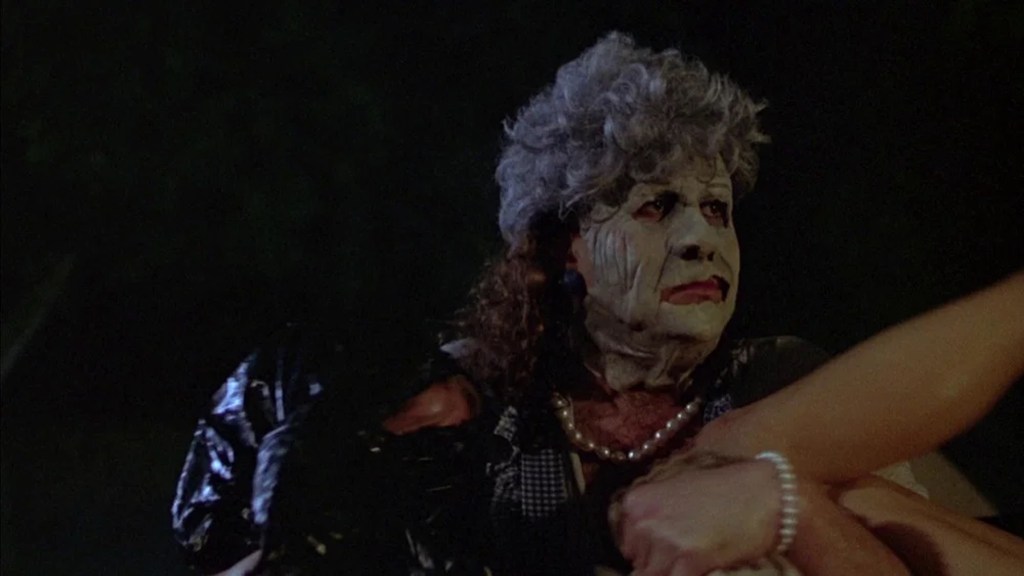
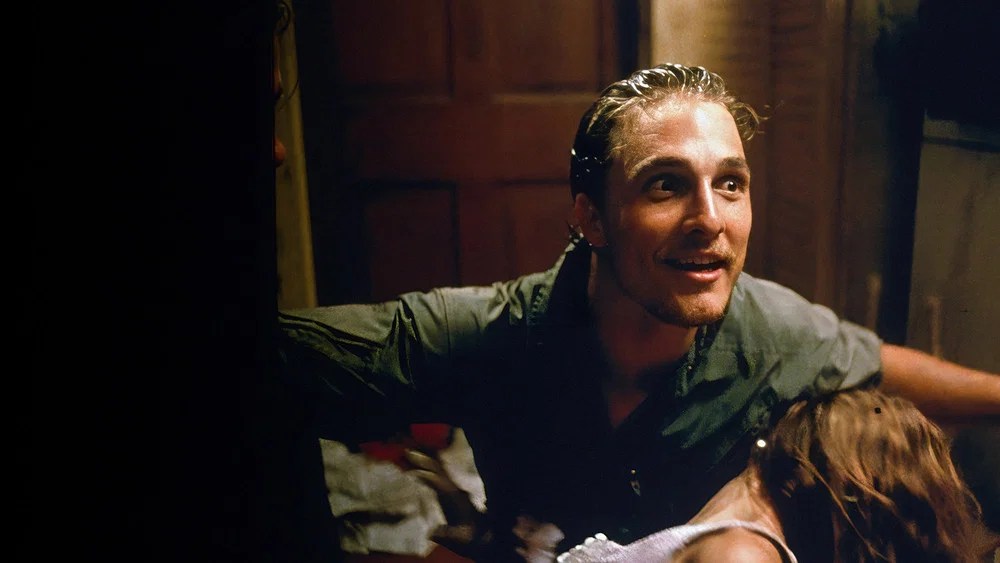
Start with Leatherface, played here by Robert Jacks as a screaming figure in lipstick and women’s clothes, whose personality shifts to match whichever face mask he happens to be wearing. Add McConaughey’s Vilmer, a tow truck driver with a mechanical leg brace controlled by a remote, which Zellweger’s Jenny eventually grabs and uses against him in the finale. The family that once feasted on unlucky travelers sits down for pizza at one point, and in a franchise literally named after a power tool, not a single character dies by chainsaw. Henkel has admitted the film amounts to almost a structural remake of the 1974 original with new characters, and he slipped in cameos from three members of that first cast, including Marilyn Burns as a patient on a hospital gurney, credited only as “anonymous” because the production was not a union shoot.
Then the ending arrives and the whole movie swerves into conspiracy thriller territory. A well-dressed man named Rothman shows up in a chauffeured limousine with piercings and scars across his torso, and it turns out the family has been working for a centuries-old secret society all along. Vilmer’s tow truck even says “Illuminati Wrecking” on the side, and there is a stray line about the Kennedy assassination for good measure. Henkel has said plainly that “it is implied that the Illuminati, or an Illuminati-like organization was lurking in the Chainsaw family background,” and he described Rothman as the leader of a group that believes terror “produces some sort of transcendent experience,” before adding, “of course, it does produce a transcendent experience. Death is like that.” Underneath all the strangeness, he always saw the movie as Jenny’s, explaining “It’s her story. It’s about her transformation, her refusal to shut up, to be silenced, to be victimized.”
How Did Two Future Oscar Winners End Up in a Texas Chainsaw Movie?
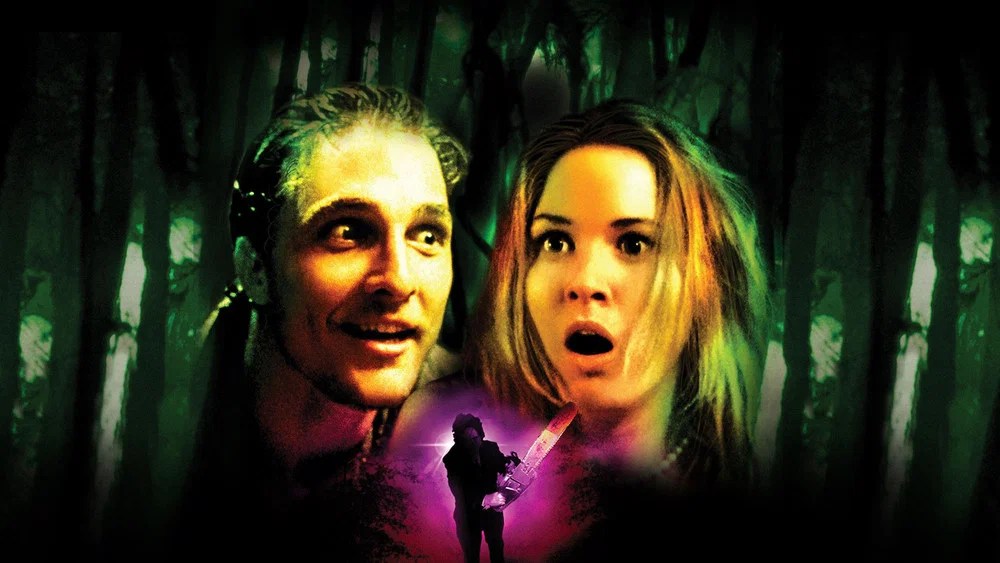
McConaughey almost did not play Vilmer at all. He was first offered a one day role as a biker with no lines, took it, and then went back to the casting office to try out for the villain. As he tells it, he ran to the kitchen, “grabbed a big tablespoon, came back in and just pinned her in a corner and acted like it was a weapon,” and kept going until the casting secretary cried, at which point Henkel simply told him it was good. McConaughey has told that story with obvious delight, and it fits a shoot where everyone was working fifteen hour days for about $300 a week. Zellweger was an even easier call for the director, who said, “From the moment she read for the part, I didn’t even consider anyone else.” She later remembered a production so tiny that the whole cast shared a single Winnebago borrowed from a producer, with makeup in the front seats and a table in the middle for hair, where she would climb into her prom dress before heading out into the dark. “It was ridiculous,” she said. “It was kamikaze filmmaking.”
Both of them went on to make that scrappy little shoot outside Austin look like the strangest first step in Hollywood history. Zellweger won Best Supporting Actress for Cold Mountain in 2004 and Best Actress for Judy in 2020, and McConaughey won Best Actor for Dallas Buyers Club in 2014. The franchise is having its own comeback too, with A24 locking down the rights this year and planning both a new film and a series, Glen Powell executive producing, and Kim Henkel himself back among the producers three decades after he talked two unknown Texans into a limousine full of madness. The 1995 oddity is streaming free on Tubi and Plex, and its 2018 Blu-ray came loaded with extras for anyone who wants to see just how deep the weirdness goes.
More Movies
-
Image Courtesy of Warner Bros. -
Courtesy of Warner Bros. Pictures -

Image Courtesy of Lucasfilm