By the fall of 2010, everybody thought they had Zack Snyder all figured out. He’d made Dawn of the Dead, then 300, then Watchmen, and somewhere in the mix his name came to mean blood in slow motion, men with abdominal definition you could file paperwork on, and comic book panels lifted off the page and lit like a cologne commercial. At a press conference that September, a reporter asked his producer whether she had been surprised her husband wanted to make a family film, given all the rumors that he would not touch anything without an R rating. That is the kind of question you only get asked once your reputation has hardened into a punchline. The reporter had no idea that the decision had been settled way before it ever reached a studio, by six children who had been putting the same request to their father for years.
Videos by ComicBook.com
His producer and wife, Deborah Snyder, laid it out plainly. “Zack has six children and none of the kids were ever able to come to any of the premieres,” she said. “They never saw 300. So, they kept saying, ‘When are you going to make something that we can see?’” The answer he gave them was a PG-rated stereoscopic 3D animated fantasy, made in Sydney by Animal Logic, the studio behind Happy Feet, starring Helen Mirren, Geoffrey Rush, Hugo Weaving and Sam Neill as talking owls, adapted from a children’s book series about an armored owl army fighting a supremacist regime that abducts orphans and brainwashes them under the moon. He had also started working on it before Watchmen began shooting, so it was never the detour everyone assumed. Sixteen years ago this week, Warner Bros. released Legend of the Guardians: The Owls of Ga’Hoole.
Why Did Zack Snyder Make a Kids’ Movie Owls in the Middle of His Comic Book Era?
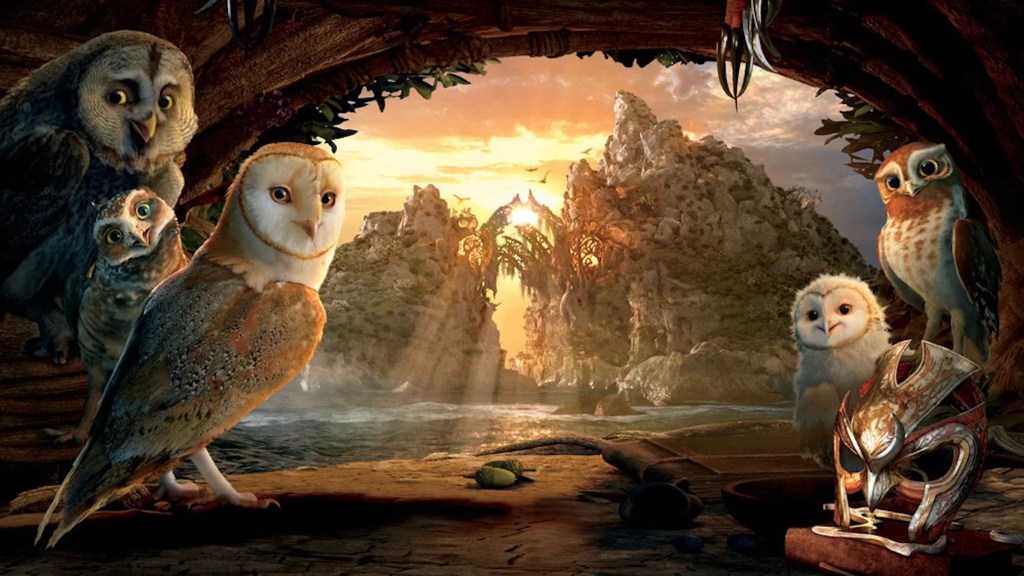
The timeline is the part that surprises a lot of people. Warner Bros. picked up the rights to Kathryn Lasky’s Guardians of Ga’Hoole books in 2005, and Snyder was circling it way before anything became official. “We started working on the movie about three years ago,” he told reporters in September 2010. “Before we started shooting Watchmen, we were working on this movie.” Production began in Australia in February 2009, a full month before Watchmen arrived in theaters. So the popular version, where an exhausted Snyder staggered out of the Watchmen wars and fled into a forest full of birds, does not survive contact with the calendar. He was running both at once, which says something about a man who looks at the schedule and finds nothing strange in it. The owls were a second job he picked up while the first one was still going.
His own explanation was refreshingly unbothered by legacy. “Honestly, I didn’t really think about it like I had any fans,” he said at the same press conference. “I didn’t feel like I had anyone to disappoint.” He rejected the idea that he was making any kind of statement, saying he “didn’t think about it in a chronological filmography kind of way.” He actually wanted something simpler and slightly sweeter than the internet has ever really given the man credit for. “I wanted to make an adventure film like Star Wars, Narnia, The Lord of the Rings or something like that, that I would have personally liked, as a child.” Snyder has since named Watchmen as the comic book he is proudest of, and ComicBook has argued the owl film is the most underrated thing he has made. Both of those can be true at once.
How Did One Australian Studio Build Owls That Still Look Better Than Most Movies?
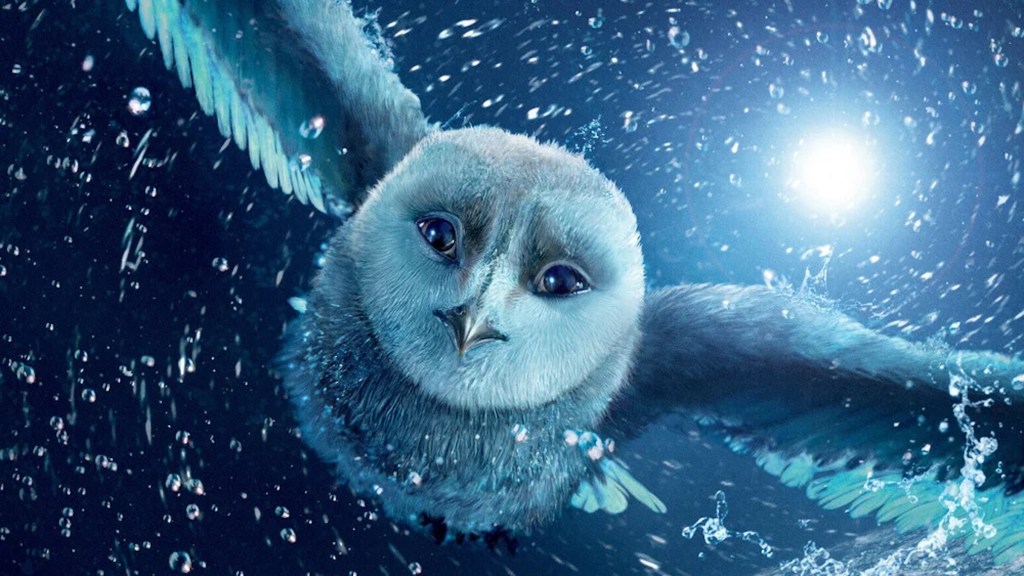
Animal Logic put roughly three years into this in Sydney with more than 500 artists, technicians, and support staff, designing fifteen owl species plus snakes, crows, bats, a Tasmanian devil and an echidna, because somebody on that crew was clearly feeling homesick. That’s so real. The hard part was the feathers because that’s what an owl mainly is, with a small confused animal somewhere in the middle. “The bald version of an owl is a skinny, chicken-like creature,” CG supervisor Aidan Sarsfield told Computer Graphics World in 2010. “The volume and thickness for the owls comes from their feathers.” So the studio tore down its entire feather system and rebuilt it from scratch, naming the new one Quill. Artists hand-placed about a thousand guide feathers on each bird, and Quill interpolated those into roughly 25,000. Noctus, Soren’s father, went through 99 versions of his high-resolution groom before anybody was willing to sign off on him.
But the math underneath that is absurd to say the least. “We had 4.6 million individual curves,” character supervisor Damien Gray said. “The analogy would be a fur system on top of a fur system with hair strands coming off each individual hair strand.” Yeah, they were definitely getting creative. Sixty feathers per owl stayed under direct animator control, twenty-four on each wing and twelve in the tail, so the flight reads as flight and not a very committed screensaver. Surfacing artists also had to re-groom the warrior owls so their feathers would stop poking through the armor, a problem that has most likely never come up in any other production history. Snyder just couldn’t help but sneak himself in either, telling reporters that one of the owl helmets was modeled on Nite Owl’s cowl from Watchmen. CG supervisor Ben Gunsberger summed up the leap from the studio’s earlier work with admirable understatement. “Everyone thought we pulled a one-off,” he said. “But, Legend was an order of magnitude more complex.” Grant Freckelton won Best Visual Effects at the AACTA Awards for it, and the film picked up a whopping four Annie nominations and two more from the Visual Effects Society.
Why Is a PG Movie About Owls This Violent?
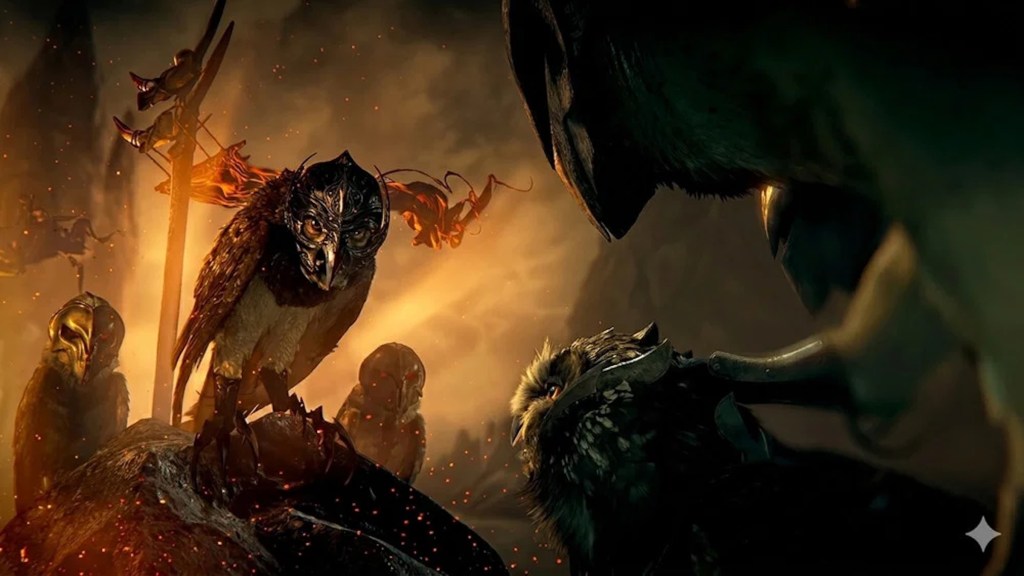
Because Snyder refused to talk down to it. “I knew this was going to be a kid’s fantasy film and the last thing I wanted to do was smirk at their fantasy that they believe is 100% real,” he said. “The byproduct of that is that the battles are intense and the reality of the consequences is real.” Screenwriter John Orloff was pulling in the same direction, telling TIME that month that “something attracted me to go back to the roots of animation and make something that does have a little harder edge to them than we’ve been seeing in animation today.” Orloff also had to perform fairly violent surgery on the source material, compressing the first three books into a single film. His opening draft ran 160 pages and had to come down to 100. “We would have loved the movie to be two hours and 15 minutes long, but we had to make it 90 minutes,” he said.
The calibration happened in test screenings, and Deborah Snyder’s account of that process is the funniest thing that’s ever happened in production. “We tested it a lot, because once you go down the line, you’re pretty much down the line,” she said. “One of the things that we were always conscious of is, what is that tipping point? You don’t want the kids to be afraid.” The kids, when consulted, had thoughts. “They’d say, ‘we like all the battles. Can you add more?’” Her husband described managing the intensity in terms that don’t even sound like directing, but more so piloting. “I tried to just surf it, so that right when it gets super intense, there’s something that happens that lets you off the hook.” Kathryn Lasky, who wrote the books, watched three of them get squeezed into ninety minutes and took it remarkably well. “My main concern was they stayed truthful to the spirit of the book and the characters, and they did,” she said.
What Does the Owl Movie Say About Zack Snyder in 2026?
It opened on September 24, 2010 with $16.1 million, landing at number two behind Wall Street: Money Never Sleeps, so a movie about armored owls lost its opening weekend to Gordon Gekko in a sequel nobody, and I mean nobody, was asking for. That made it the first Snyder film not to open at number one in the United States. Box Office Mojo has it finishing with $140 million worldwide, against a budget the Los Angeles Times reported at $80 million, a result nobody throws a party over and nobody files under catastrophe. Critics landed at 52% on Rotten Tomatoes. Audiences gave it an A minus CinemaScore, which is a wide enough gap to suggest the film knew precisely who it was made for and reached them. The sequel never materialized. Producer Zareh Nalbandian said in April 2011 that “there hasn’t been anything specific around a second Legend of the Guardians at this stage,” and that was more or less the end of it. But, the cast volunteered anyway.
Ryan Kwanten’s contribution to the press tour deserves preserving under glass. “I am actually an older brother and I too, like Kludd, suffer from what I have diagnosed as OSS which is Older Sibling Syndrome,” he said, before mentioning that he left two and three hour voice sessions with sweat pouring off him and that he would gladly sign up for another. Jim Sturgess, who voices Soren, had a simpler pitch. “It’s not often in film you get the chance to play a baby owl.” Sixteen years on, Snyder is moving a 300 prequel series forward, circling an Escape From New York remake, and taking a beating over the violence in The Last Photograph, which premiered at TIFF this month. Buried in the middle of all that is the one time he aimed the same machinery at a children’s book and then sat in a room asking eight-year-olds whether he had pushed it too far. Anybody who has him filed under slow motion and bloodshed is working from an incomplete record. Asked in 2024 whether he would do another feature, he did not hesitate. “Yeah, I would do another feature-length animated film. Absolutely. I love the freedom and the incredible way that the characters can express themselves.”
Legend of the Guardians: The Owls of Ga’Hoole is streaming free with ads on Tubi, and available to rent or buy on Amazon, Apple TV an Fandango at Home.
More Movies
-
Courtesy of Warner Bros. Pictures