The case for Station Eleven has already been made on this site, and made well, so start there if you want the argument about why it is the best of its kind. This is a different question, and it is the one that has bothered me for years. Patrick Somerville’s ten-episode adaptation of Emily St. John Mandel’s 2014 novel holds 98% on Rotten Tomatoes from 56 counted reviews. On Metacritic it sits at 81 out of 100 from 27 critics, which the site files under universal acclaim. And its user score there, five years after it finished airing, is drawn from 127 ratings. One hundred and twenty-seven people, for a show that ran ten episodes on a major platform with a large, solid cast. That is not a show people disliked. It is a show almost nobody appears to have watched, and unusually, there is no number anywhere that can tell you how many actually did.
Videos by ComicBook.com
That gap is the whole subject here. A series can fail commercially in a dozen ordinary ways, and almost all of them leave a trail somebody can follow: bad reviews, a ratings collapse, a loud public cancellation, an audience that turned on it somewhere in the middle of the run. None of that happened here. The reviews were close to unanimous, the show ran its full ten episodes, it finished the story it set out to tell, and then it simply did not enter the conversation the way everything around it did. What follows is not another appreciation. It is an attempt to work out what actually happened to it using the only evidence that exists, which turns out to be the scores themselves, the calendar it was released against, an awards record stranger than the reviews, and the one thing that has quietly protected it ever since. It is a small pile of evidence, but it is all there is, and it points somewhere specific.
The Scores Describe Two Completely Different Shows
Start with the gap, because it is the cleanest measurable thing about this series. Critics gave it 98%. The Rotten Tomatoes audience score is 75%. A 23-point spread is not unusual on its own, and normally it means a show divided people. Here it means something odder, because the sample sizes are so lopsided. The critic figure rests on 56 reviews, which is a full, healthy press rollout for a prestige limited series. The audience figure rests on a pool Rotten Tomatoes will not even count precisely, displaying it as more than 500 ratings and leaving it there. Metacritic is more specific and more brutal about it: 127 user ratings, total, for a show that has been available continuously since December 2021. For comparison, essentially any HBO series you can name from that period has user counts in the thousands.
So the 98% RT score is real and it is also slightly misleading, in the way a unanimous vote in an empty room is misleading. This site has itself ranked it among the best post-apocalyptic shows on television. Everyone whose job it was to watch it thought it was extraordinary. The number of people who volunteered is small enough to fit in a lecture hall.
It Premiered The Week Omicron Arrived And Finished The Week Cases Peaked

Here is the sequence, and every date is from the CDC’s own published surveillance. In the week ending December 11, 2021, the Omicron variant crossed 1% of circulating lineages in the United States. Station Eleven premiered five days later, on December 16, with three episodes. By the week ending December 25 the variant was above 50%, having gone from 1% to half of all COVID cases in a two weeks, a jump that had taken Delta roughly eight weeks. Between January 9 and 15, 2022, the country recorded a seven-day average of 798,976 cases a day, the highest figure of the entire pandemic. The finale aired January 13, inside that week. A drama whose premise is a flu that ends the world ran its entire release window against the steepest infection curve the United States has ever measured.
I want to be careful here, because that curve was a public health emergency and not a scheduling anecdote, and because there is no viewership data of any kind for this show, which means nobody can honestly claim the surge is what cost it an audience. What can be said is narrower and still striking: the show arrived at the exact moment its subject was least abstract, and no measurable audience has ever been recorded for it.
The Awards Record Is Stranger Than The Reviews

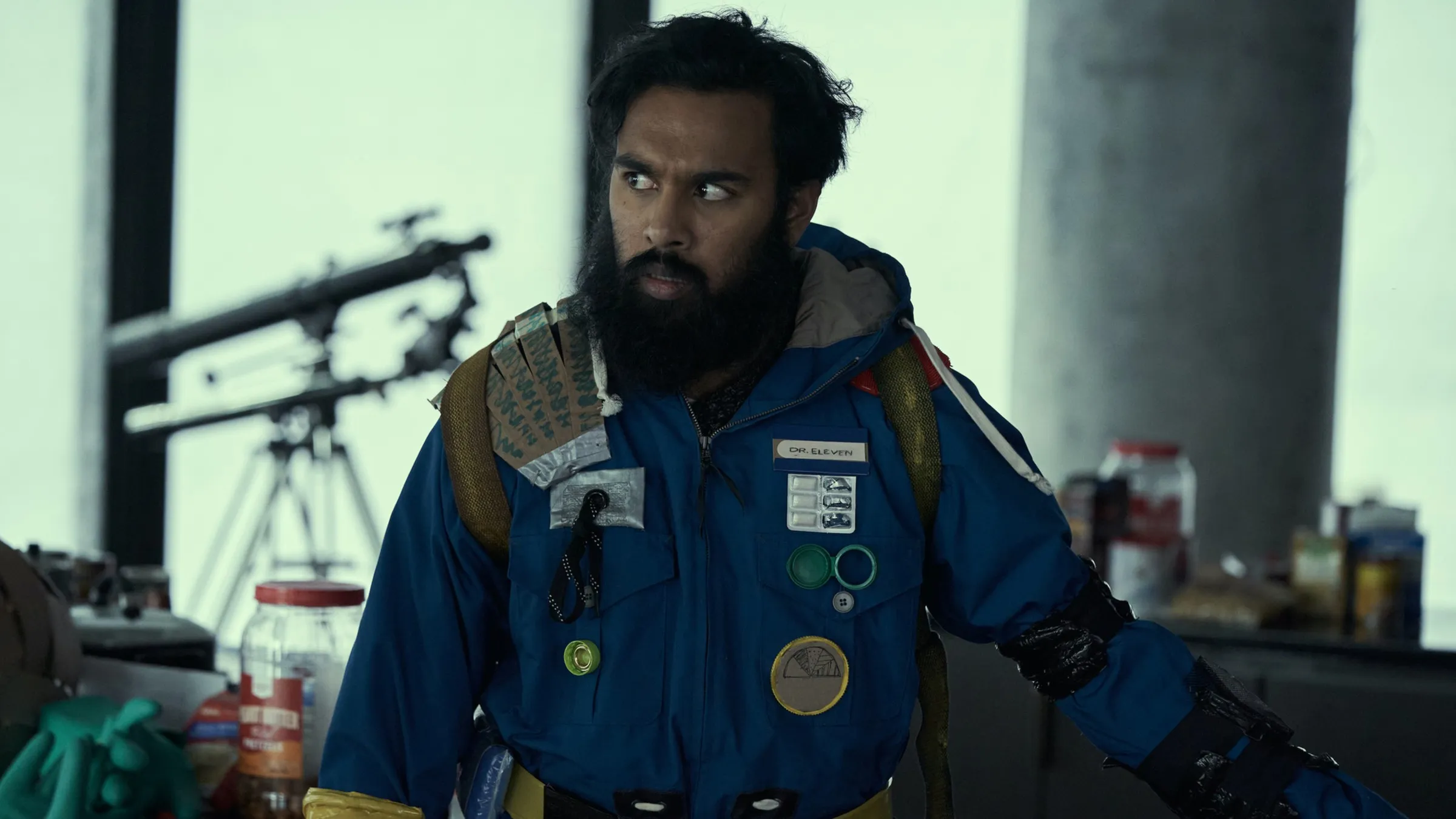
You would expect a 98% RT limited series to clean up, but what happened instead is genuinely peculiar. The series got seven Emmy nominations in 2022 and won none of them. Himesh Patel was nominated for lead actor, Hiro Murai for directing and Somerville for writing, with the other four in cinematography, music composition, editing, and sound editing. Look at what is missing from that list. There is no nomination for Outstanding Limited Series, the category the whole production existed to compete in, and nothing at all for Mackenzie Davis, who carries most of the running time. It was a craft nomination sweep with the main event left off.
Elsewhere it was a Peabody nominee and not a winner. It was nominated at the TCA Awards and lost to Dopesick. It was not nominated for a Hugo in either 2022 or 2023, which is remarkable for a television adaptation of a novel that was shortlisted for the Arthur C. Clarke Award. It did win real things, including a Directors Guild award in 2023 for Helen Shaver’s work on “Who’s There?”, which remains its most serious trophy. But the pattern is a show that everyone with a vote admired in pieces and nobody rewarded as a whole.
Nobody Ever Took It Away From You

The last part is the one that undercuts every excuse. Plenty of good streaming shows became hard to find, because in 2022 Warner Bros. Discovery began pulling titles off HBO Max for tax reasons, and subscribers watched a chunk of the library vanish with no other legal way to see it. Station Eleven was not on the August 2022 list. It was not on the December 2022 list either. It has sat on HBO Max, complete, for the entire five years since it’s release, and it got a 4K Blu-ray release in February 2023 on top of that.
So the usual story does not apply. This was not a show that got buried, deleted or made unavailable. It was available the whole time and people did not come. Somerville himself put the mechanism more plainly than any critic has, writing in 2022 that “the only way to really ensure shows remain available is that they generate too much interest (and completion) for anyone to justify removing them.” He was talking about survival on a platform. He was also, without quite saying so, describing the thing his own series never managed to do.
Underrated is a word that usually gets used loosely, and this is one of the few cases where it is precisely correct rather than just enthusiastic. The rating is not the problem. The rating is nearly perfect and has been since the week it finished. What never arrived was anybody to agree with it. There is a version of the streaming era where a show gets a 98%, seven Emmy nominations and a permanent slot on a major platform, and that is enough. This is the evidence that it is not. Meanwhile the follow up projects never happened, since adaptations of Mandel’s The Glass Hotel and Sea of Tranquility were announced at the same platform in April 2022 and have not been publicly mentioned since, and her upcoming novel, Exit Party, went to a different studio entirely. But Station Eleven is still there. It has always been there. That turns out to be a much smaller thing than it sounds.