For almost 30 years, nearly every Scooby-Doo mystery ended the same way. The gang would chase a ghost, a phantom, or a swamp creature through a spooky mansion, someone would trip into a net, and Fred would pull off the mask to reveal the grumpy real estate developer who would have gotten away with it if it weren’t for those meddling kids. Generations of children learned from Mystery Inc. that monsters were just crooks in rubber suits. By the late 1990s, though, the franchise was mostly living on reruns. Cartoon Network was airing the old episodes constantly, but Don Messick, the original voice of Scooby, had retired after a stroke and died in October 1997, and Casey Kasem had walked away from Shaggy over a dispute involving a Burger King commercial. Warner Bros. looked at how recognizable the characters still were and floated an idea that almost sounded like an afterthought, a single feature-length Scooby story made straight for video.
Videos by ComicBook.com
The small team handed that job was coming off SWAT Kats and The Real Adventures of Jonny Quest, and since the studio treated the project as a one-off experiment, nobody hovered over them. They borrowed heavily from an unproduced SWAT Kats script, hired a Louisiana radio DJ with no acting experience to voice the title character, and then got into an argument about the most sacred rule in the whole franchise. Should the monster be a guy in a mask, or should it be a monster? The answer they landed on would redefine what a Scooby-Doo story could be for the next three decades. On September 22, 1998, Scooby-Doo on Zombie Island arrived on VHS.
How Did a Direct-To-Video Cartoon End Up Breaking The Oldest Rule in Scooby-Doo?
According to model coordinator Lance Falk, the fight started when director Jim Stenstrum asked the room, “Can we just get rid of the taking off the mask thing? It’s old. It’s tired,” before adding, “I want to do real monsters.” Writer Glenn Leopold, whom Falk described as the defender of Scooby-Doo, pushed back, arguing that fans wanted the unmasking because that’s what the franchise had always been. Supervising producer Davis Doi broke the tie, pointing out that “you can yank people’s chains for about a half an hour, but you can’t do it for an hour and a half and have it be a fake.” Falk suggested doing both, saying, “We have to have an unmasking for the fans, but we have so much room. Let’s also have real monsters and mix the story and make it a thicker broth.”
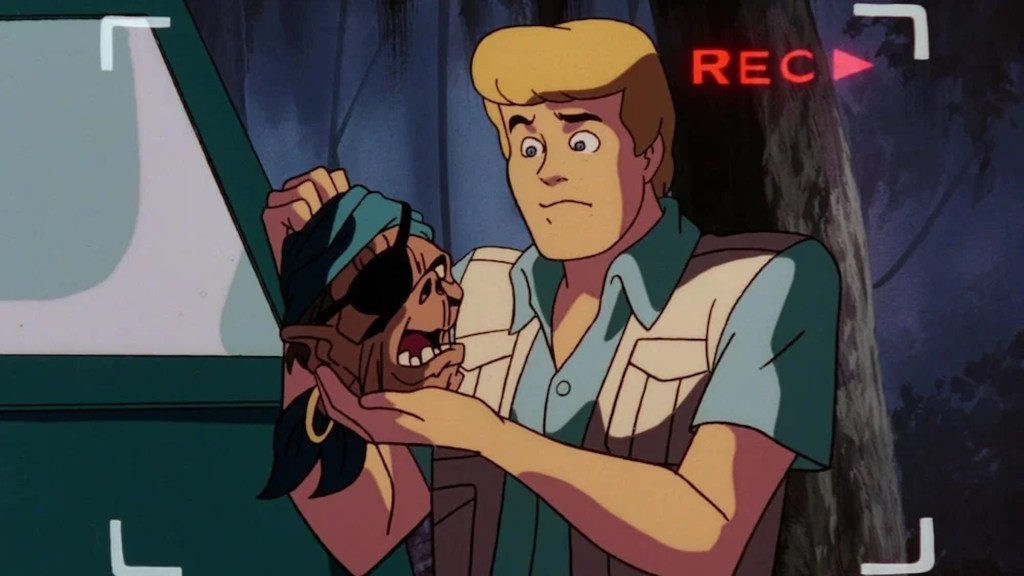
So the film opens with a classic unmasking, a man named Mr. Beeman caught in a moat monster costume, and the gang has broken up precisely because every monster keeps turning out to be a fake. Daphne is hosting her own TV show in search of a real ghost, Fred is her cameraman, and the whole crew reunites to chase one more legend on Moonscar Island in the Louisiana bayou. Then Fred grabs a zombie by the head, expecting a rubber mask, and the head comes clean off. The marketing tagline promised that “this time, the monsters are real,” and the film delivers on it with actual dread. The zombies are the restless victims of three immortal werecats who were cursed two centuries earlier and survive by draining the life out of visitors during every harvest moon, and the gang is in real danger of dying.
It is worth being precise about the history here, since Scooby-Doo had flirted with the supernatural before. The 13 Ghosts of Scooby-Doo in 1985 featured real ghosts, and a run of late ’80s TV movies like Scooby-Doo and the Ghoul School sent Shaggy, Scooby, and Scrappy up against real monsters played mostly for laughs. Zombie Island was the first feature to put the full original gang against monsters that were real and truly menacing, and the first to use the franchise’s own formula as a trap, letting the audience relax into an unmasking and then pulling the rug out from under everyone.
Who Was Behind the Voices After the Original Cast Walked Away?
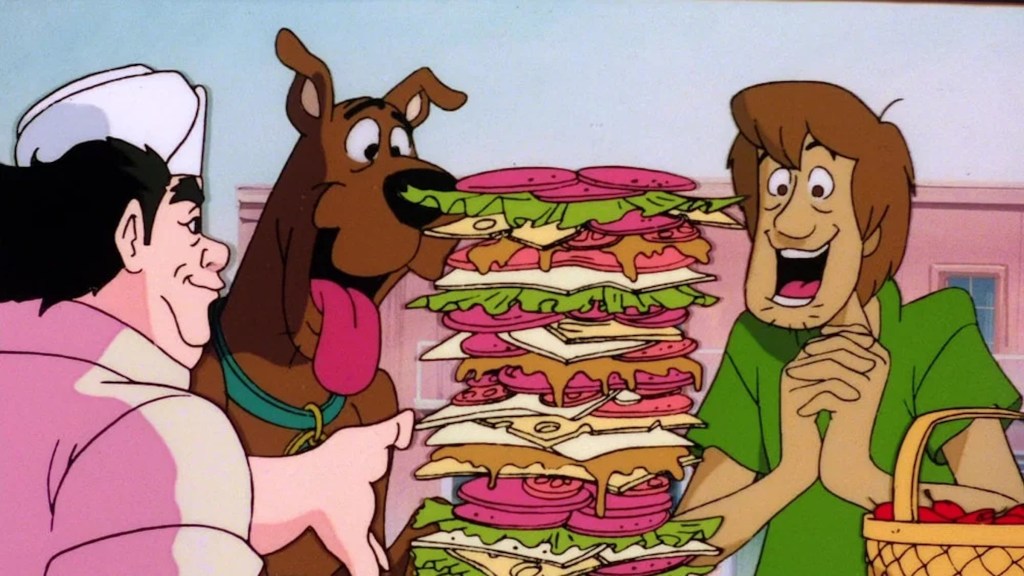
Almost nobody from the original cast, and that might be the least appreciated gamble in the whole project. Kasem, a vegan and animal rights advocate, had refused to voice Shaggy in a 1995 Burger King ad and asked that the character stop eating meat, which the team declined, since Shaggy’s appetite is basically a founding pillar of the franchise. He was reportedly offered a chance to redub the role at the last minute and turned it down again, and Billy West, soon to become the voice of Fry on Futurama, played Shaggy instead. Kasem only came back in 2002, once producers agreed to make Shaggy a vegetarian. The new Scooby-Doo was Scott Innes, a DJ at a Baton Rouge radio station who landed on Hanna-Barbera’s radar after recording a parody song called “Shaggy on the Boulevard.” A radio DJ from Louisiana ended up voicing Scooby in a movie set in the Louisiana bayou, and the film itself is dedicated to Don Messick.
Frank Welker was the only original voice to return, playing Fred, and he even nearly got recast. The voice director kept asking him to pitch Fred higher, convinced his voice had dropped over the years, until the team compared old episodes and found Welker sounded exactly the same. One theory is that Cartoon Network’s sped-up reruns had given everyone a squeakier memory of Fred than the real thing. Mary Kay Bergman took over Daphne, B.J. Ward voiced Velma, and the guest cast was stacked, with Adrienne Barbeau as the werecat Simone Lenoir, Tara Strong as Lena, Jim Cummings as the ferryman Jacques, and Mark Hamill as a hostile fisherman named Snakebite Scruggs. Innes later admitted how risky the whole thing felt, saying, “they were going out on a limb on this thing, and it could have backfired big time.” He also revealed it was originally meant to go to theaters before landing on video instead.
Why Does Zombie Island Still Beat Everything That Came After?
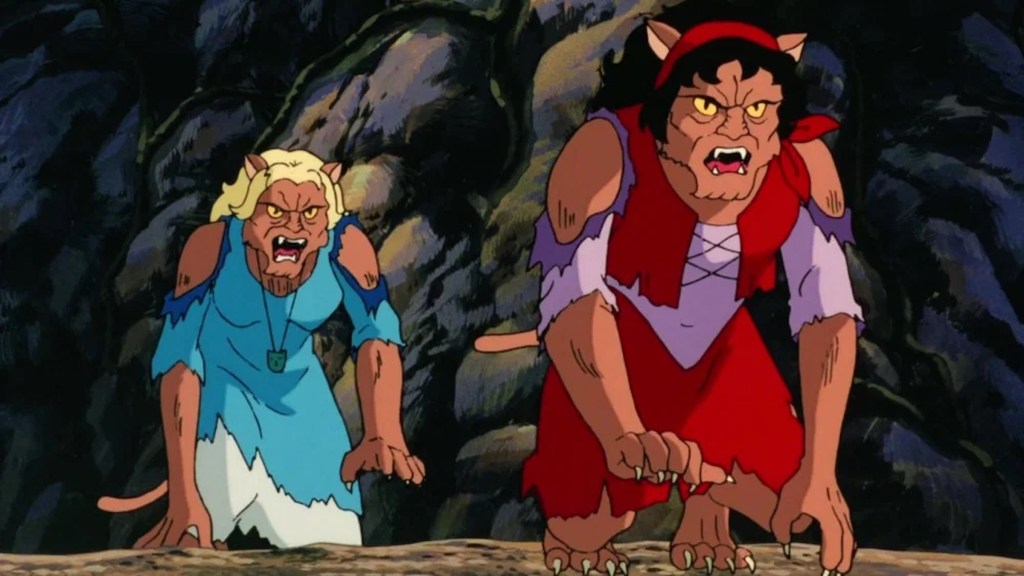
Part of the answer is how seriously it takes itself without losing the jokes. The villains have a surprisingly adult motive, a trio who called on a cat god for revenge against a pirate crew and got immortality with a horrifying price tag attached. The zombies turn out to be the good guys, trying to scare people off the island before the werecats can feed. Instead of bubblegum chase songs, the film brought in the Los Angeles rock band SkyCycle, whose frontman Steve Isaacs said they added “a little sprinkling of evil” to “It’s Terror Time Again,” and the zombie chase set to that song is still the sequence fans remember first. Warner Bros. backed the release with a reported $50 million promotional push featuring partners like Campbell’s, Wendy’s, and Lego, priced the VHS at a premium $19.95, and watched sales beat expectations. It holds an 89 percent from critics on Rotten Tomatoes and a 7.7 on IMDb, numbers almost unheard of for a direct-to-video cartoon, and is still widely regarded as the pinnacle of Scooby’s feature-length run.
It kicked off a run of darker follow-ups, including Scooby-Doo and the Witch’s Ghost in 1999, before the franchise slowly drifted back toward its comfort zone. The clearest proof of how special the original was came in 2019, when Scooby-Doo! Return to Zombie Island went back to Moonscar and filled it mostly with people in costumes again, undoing the exact twist that made the first film matter. Fans noticed, and the sequel is remembered as a letdown. Now the gang is heading somewhere new, since Netflix’s live-action Scooby-Doo: Origins just wrapped filming ahead of a 2027 premiere, with a story built around a lost Great Dane puppy and a possible supernatural murder. Whatever that series does with real monsters, it will be walking a path a tiny team cut open in 1998 because they were tired of pulling off masks. Scooby-Doo on Zombie Island is streaming on HBO Max, and the head still comes off every single time.
More TV Shows
-
IMAGE COURTESY OF LUCASFILM