It has been 35 years since one of the greatest horror icons ended his legendary run, but when he returned, it was an underrated minor masterpiece. Wes Craven created Freddy Krueger based on the combination of a news article he had read about people dying in their sleep for unexplained reasons and a person he saw when he was a child standing outside his window one night, a moment that scared him. He took these ideas and came up with the story for A Nightmare on Elm Street, a film that created a new slasher icon that killed people in their dreams, a film that changed the genre forever.
Videos by ComicBook.com
Seven years later, the franchise ended when Freddy’s Dead: The Final Nightmare was released on September 13, 1991.
Freddy’s Dead: The Final Nightmare Ends Freddy’s Story With a Whimper
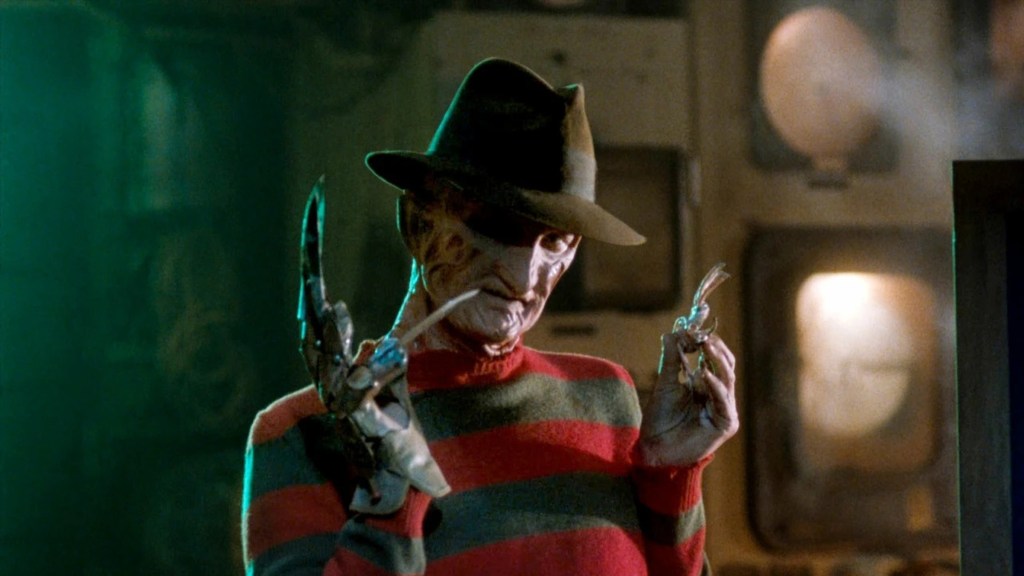
Freddy Krueger was introduced in A Nightmare on Elm Street in 1984 as a slasher killer unlike any other. Rather than an unstoppable monster or a mysterious killer murdering young adults, Freddy was a demon who died years earlier and now attacked the youngsters in their dreams in revenge for their parents killing him. This was terrifying from two different angles. First, he was a demon and not a human killer. Second, he was killing people while they were dreaming, which meant there was no escape because all it took was a quick nap for him to attack.
By 1991, slasher movies were declining in popularity, and New Line Cinema decided to end the franchise. The previous movie, A Nightmare on Elm Street 5: The Dream Child, went a little over the line with Freddy’s mother’s story, which began to show that the slasher killer didn’t have a chance since he was born cursed. It was the lowest box office take ($22.1 million) and the worst reviewed (32% on Rotten Tomatoes) to that point. This led to the end, with Freddy’s Dead: The Final Nightmare finally killing off the demon killer.
New Line Cinema went all in, releasing Freddy’s Dead: The Final Nightmare in 3D and pushing the idea that this was the last chance to see Freddy. A low budget helped, but the $34.8 million was still a lower box office total for the franchise. It should be mentioned that these were all low-budget movies, so the last movie still made a profit. However, the critical score was the lowest of the franchise, at 23%. That score remained the worst until the 2010 remake finished with a 14% Rotten Tomatoes score.
Freddy’s Dead: The Final Nightmare took place 10 years later, after Freddy Krueger had killed almost every child and teenager in Springwood, Ohio. Only one teen remained, a young man named John Doe (Shon Greenblatt), who escaped the town but had amnesia. He met three youngsters from a troubled youth shelter, and it wasn’t long before they headed to Springwood with a doctor named Maggie, who took an interest in them, and Freddy came for John Doe, his new friends, and Maggie.
The movie has a gimmick where Doc, a man who has learned to control his dreams, gives Maggie a pair of 3D glasses to use to fight Krueger, which is when the audience is supposed to put their glasses on. There were some controversial twists, such as who Maggie really was, and the ending with the Dream Demons was a reach. In the end, Maggie killed Freddy after pulling him into the real world, and he was finally dead for good.
Freddy Returned in the Minor Masterpiece Wes Craven’s New Nightmare
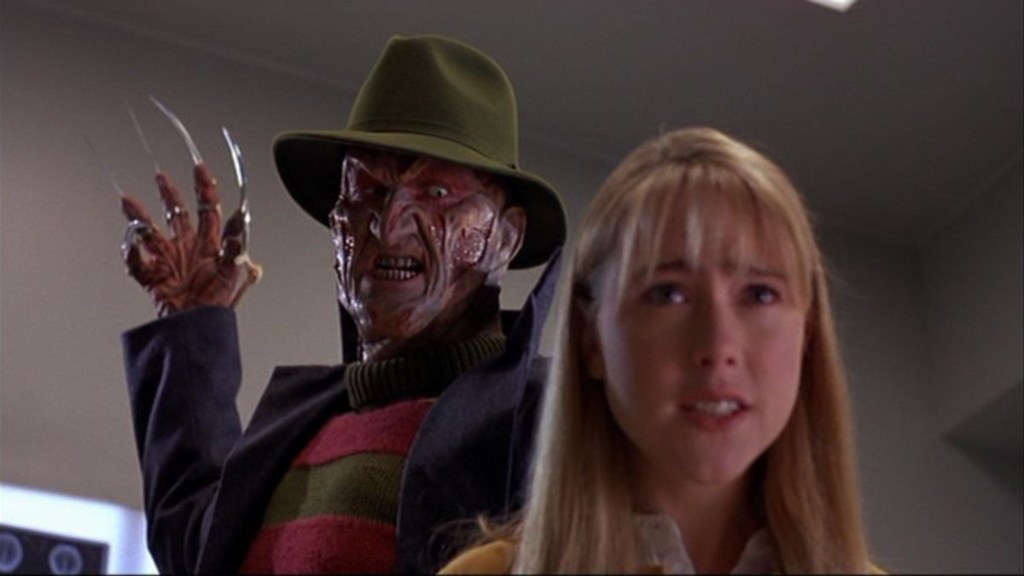
With Freddy Krueger dead and the Dream Demons unable to revive him, the franchise had officially ended. However, three years later, New Line Cinema and Wes Craven found a way to bring Freddy back, and it ended up better than any movie in the franchise since A Nightmare on Elm Street 3: The Dream Warriors. This movie was titled Wes Craven’s New Nightmare, and it was a misunderstood horror movie that would have been huge if it had come out two years later. This was the movie that helped set the table for Craven’s next franchise ideas, Scream.
Wes Craven’s New Nightmare was a meta horror movie that referenced its own franchise as fictional before bringing things into the real world. This was the first movie in the franchise that Wes Craven directed since the original, and it was a highly creative and entertaining movie. Heather Langenkamp, Robert Englund, and John Saxon all returned from the first movie, playing fictional versions of themselves. Craven even appeared in the movie as himself, as he wanted to write a reboot of the franchise. That was when the real Freddy Krueger tried to get into the real world, first by influencing Craven through his dreams and then by targeting Langenkamp’s son. It was a genius idea, but audiences didn’t get it.
This resulted in a box office failure ($19.7 million, the lowest in franchise history), but it received a 76% Rotten Tomatoes score, the second highest behind only the original A Nightmare on Elm Street. Just like how the killer in Scream referenced horror movies from the past, Wes Craven’s New Nightmare had Freddy reference the past movies as he sought to find a way to get into the real world. It was a masterful return, and it deserved a bigger box office and more respect, although it has since become a cult classic.
More Movies
-
Disney – Marvel -

Paramount – Legendary Pictures -
Image Courtesy of Lions Gate Films