How do you turn a man who rides cannonballs, visits the moon, and escapes monsters into a movie? Terry Gilliam decided to give it a shot. His 1988 fantasy adventure The Adventures of Baron Munchausen was based on a collection of tall tales that barely bothered with a traditional plot. The Baron simply went from one ridiculous adventure to another. Honestly, trying to make that work as a feature film sounds like a producer’s worst nightmare.
Videos by ComicBook.com
And the production nearly became one. Gilliam ran out of money six weeks into a 21-week shoot. The people financing the film wanted him to cut back. Gilliam had other ideas. The finished movie features enormous sets, wild practical effects, and a cast that includes John Neville, Eric Idle, and Robin Williams. It also became one of the most notorious productions of Gilliam’s career. The story behind it is almost as unbelievable as the Baron’s adventures.
How The Adventures of Baron Munchausen Brought an Almost Impossible Book to the Screen
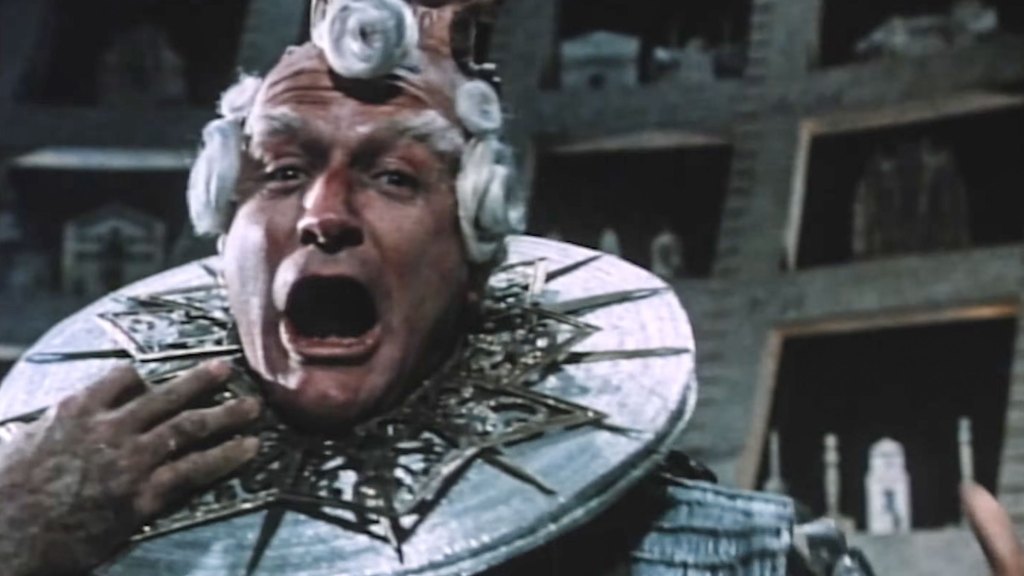
The Baron Munchausen stories date back to the 18th century. Their hero was a German nobleman famous for telling increasingly ridiculous stories about his adventures. One minute he was traveling across the world. The next, he was doing something that made absolutely no sense. Rudolf Erich Raspe helped popularize the tales in an 1785 book. There was no neat plot waiting for a filmmaker to pick up. Gilliam had to find one among all those wild stories. He built his film around an aging Baron who arrives in a city under siege by the Ottoman army. A young girl named Sally joins him on a quest to save the city. Their journey takes them to the moon and beyond.
John Neville plays the Baron with the confidence of a man who has never had a reason to doubt his own stories. Sarah Polley plays Sally, while Eric Idle appears as one of the Baron’s old companions. Robin Williams turns up as the King of the Moon, credited under the wonderfully silly name Ray D. Tutto. The whole thing looks like a fever dream assembled by a theater company with an unlimited budget. Gilliam fills the screen with enormous sets, strange creatures, and practical effects that give the fantasy a handmade quality. You can see the work that went into every corner. The film doesn’t look like anything else from the era. That was part of the appeal. It was also part of the problem.
Why Terry Gilliam’s Fantasy Movie Nearly Collapsed Behind the Scenes
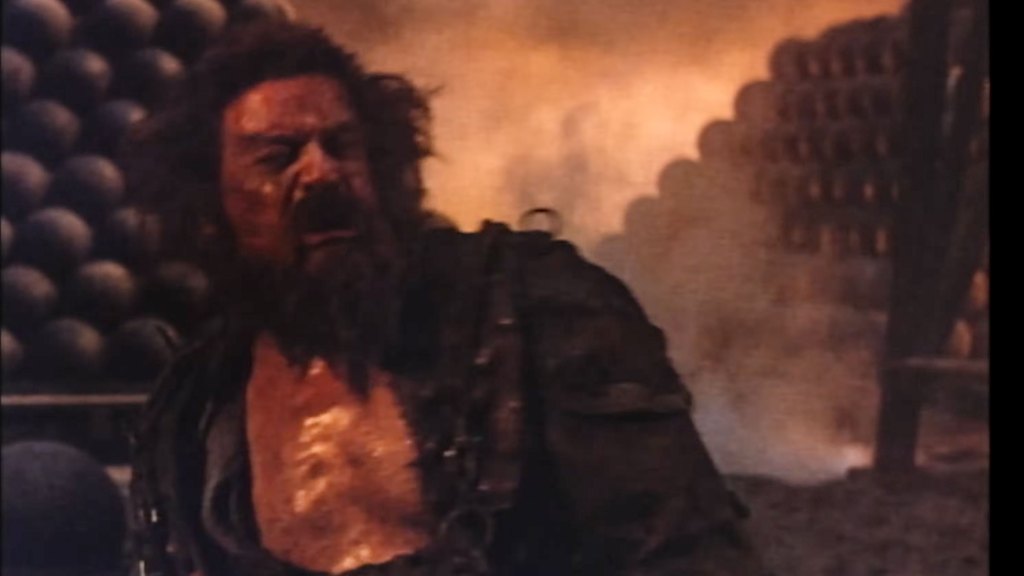
Gilliam had a budget of $23.5 million and a 21-week shooting schedule. By the sixth week, the money was gone. The production’s financial backers shut things down. Gilliam recalled being told that the Baron couldn’t go to the moon. There was supposed to be a huge sequence involving thousands of people on the moon and Sean Connery as its king. That plan had to change. Gilliam eventually reduced the scene to just two people. Connery even joked that being king of two people wasn’t much of a job. It’s a funny story now. At the time, the entire production was in serious trouble.
Robin Williams helped get things moving again after Eric Idle brought him into the project. Gilliam also had to rethink some of the film’s enormous sets. Instead of building everything as originally planned, the crew used scaled-down designs and clever visual tricks. The movie finally reached American theaters in March 1989. It earned around $8 million domestically, a painful result for such an expensive production. The reputation of Munchausen as a financial disaster followed Gilliam for years. Yet the film itself is worth seeing beyond all that drama. Its imagination is all over the screen. The characters travel to impossible places, and the movie somehow makes every stop feel real. Gilliam took a book that resisted a conventional adaptation and made something unbelievable out of it. Getting the film finished was a fantasy adventure in itself.
In the end, Terry Gilliam pulled off a miracle worthy of the Baron himself. He took a story that barely had a plot, nearly lost his entire movie halfway through production, and somehow made it to theaters. Turns out, the real tall tale was getting the film finished.
More Movies
-
Courtesy of Warner Bros. -

Johnny Depp in Ebenezer and Bill Murray in Scrooged -
Image Courtesy of Turtle Releasing Organization