While both sci-fi and horror are popular genres overall when it comes to television, there’s a specific type of both stories that really resonates with fans: the post-apocalyptic story. There is something about end of the world as we know it scenarios that not only fascinate but make for great television as well. It doesn’t matter exactly how the world ends — nuclear disaster, aliens, disease, or even zombies — it’s stories about life at the end of the familiar that people love. But while there are many different kinds of post-apocalyptic shows, there is one that, for many, is the “best”. That would be HBO’s The Last of Us. Based on the video game of the same name, the series was an instant, massive hit that pulled no punches about the brutality of a world overtaken by zombies. However, for as good as The Last of Us is, there’s one show that I think is more deserving of the title of “best”.
Videos by ComicBook.com
Another HBO series, Station Eleven didn’t necessarily have a big cultural moment when it was initially released and understandably so. The series premiered on HBO Max in late 2021, while the world was still dealing with the COVID-19 pandemic and, frankly, a show about life after the collapse of civilization from a flu pandemic was a bit too close to home. However, despite its timing, Station Eleven is the best post-apocalyptic television show of all time and it is for one simple reason: while most post-apocalyptic stories focus on the world-ending incident or the horrors of life after, Station Eleven instead focuses on what it means to do more than just survive the end of the world but focus on what is good and begin to thrive again.
Station Eleven Is a Show Not About Tragedy But Hope
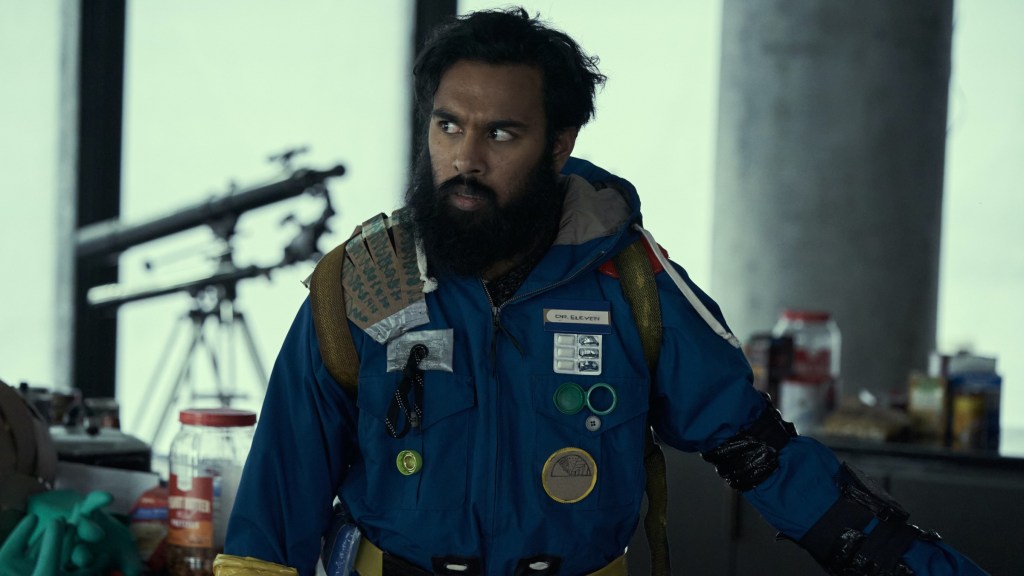
Based on Emily St. John Mandel’s 2014 novel of the same name, Station Eleven is set 20 years after a lethal flu pandemic brings about the collapse of civilization. The main part of the story follows The Traveling Symphony, a group of actors and musicians who, in this new world, travel from settlement to settlement performing various stage works, preserving art and culture from a world now long gone. Of course, the series isn’t merely about traveling artists. The series is split up to weave in glimpses of the world as it collapsed as well as other characters and how their lives and journeys all intersect, sometimes in the most surprising of ways.
It’s those connections and journeys that truly set Station Eleven apart. While shows like The Last of Us lean into the intertwining stories and connections between characters to show a fight to hold onto humanity in a brutal world that, more often than not, feels like everyone has given up on saving or restoring, Station Eleven is more about humanity redefining itself in the face of building a future. You’re not going to get gory action sequences here. Instead, you’re going to see more quiet human moments. Kirsten Raymonde (Mackenzie Davis) is as much the “main” character of the story as we have and we see her making her way through this world having been a young child when things fell apart. Through her experience, we see her deal with the trauma that shaped her while never really losing what it means to be human. She’s fixated on a specific comic book from before the collapse and even with her own bitterness from her traumatic experiences, we see her focus on what is good even if that’s not something even she would explicitly realize is happening. She’s continuing to make art in a world stripped of everything and when a dangerous cult threatens a younger member of the symphony, she sets out to go after the mysterious “Prophet” behind said cult.
We also see a focus on the good through the other characters in the story. Jeevan (Himesh Patel) goes from a man who ended up caring for a child (a younger Kirsten) as the pandemic kicked off to the doctor of his community of survivors in the years after. Clark (David Wilmot) finds himself preserving artifacts of the past in the so-called Museum of Civilization while leading a group of survivors in an airport. There’s even a character, Miranda (Danielle Deadwyler), who doesn’t make it into the “present day” setting of the series, but still is focused on the good when, at the outset of the virus, she uses her remaining moments to reach out to the pilot of a plane arriving at the Severn City Airport to implore him to keep his passengers on the plane, thus protecting those at the airport form the fatal virus. Those people would, in turn, be the settlement that Clark is steward of. Because the series centers itself more around these acts and not a fight to just make it through the day, the story we get about the end of the world is one not about what happens when things fall apart but what does it mean to thrive or, at a minimum, work towards something more than just survival. To put it more simply, Station Eleven is about hope and it makes all the difference.
Don’t get me wrong, I love The Last of Us. It’s a well-written, brilliantly acted series with a lot of great action scenes and it asks some deep and unsettling questions about humanity in the face of adversity. That’s what I love about most post-apocalyptic stories, but The Last of Us does it particularly well. Yet there is just something about Station Eleven’s more hopeful approach that stands above. It’s something new, a look at the aftermath of the worst of what mankind can face and instead of offering us a grim future, it gives us hope. It’s a series that isn’t about trying to find light in the darkness; it’s the reminder that the light never really goes out and it’s up to us to let it shine. Watch the series for yourself; you’ll come out the other side better than you started.
More TV Shows
-
Image Courtesy of DC Comics