If you grew up with The Transformers, the franchise’s original animated movie is arguably one of the best animated movies ever. Released in 1986, it was bigger, bolder, and far more cinematic than the television series, and its story carried directly into the show’s third season. After something that ambitious, you might expect the adventures that followed to maintain that same level of spectacle. Well, Cybertron has a way of keeping expectations interesting.
Videos by ComicBook.com
And that’s part of the charm of revisiting the original Transformers cartoon today. For every genuinely epic moment, there’s an episode that reminds you these robots were starring in a syndicated television series with a whole lot of ground to cover. The animation could be gorgeous one week and leave you wondering whether somebody misplaced the character models the next. As fans, we love these mechanical heroes enough to forgive a few rough edges, but forgiveness doesn’t mean we won’t point and laugh when a Transformer does something questionable—especially for a big robot. And there’s one particularly notorious season-three adventure that takes an already bizarre premise, adds an unexpected musical twist, and makes the animation itself the real star of the show: “Carnage in C-Minor.”
The Transformers’ “Carnage in C-Minor” Is the Infamous Musical Episode Fans Can’t Forget
That episode is “Carnage in C-Minor,” the third-season oddity that sends the Autobots and Decepticons to Eurythma, a planet where music is practically a way of life. The locals communicate in a peculiar sing-song rhythm, and the conflict revolves around a musical harmony powerful enough to threaten the balance of the battle. It’s an unusual premise for a franchise built around transforming robots, laser blasts, and Megatron making increasingly questionable decisions. Still, there’s something charming about the sheer commitment to the idea. If you’re going to make a Transformers episode about music, why not make the entire planet sound as though it’s auditioning for a very strange space opera?
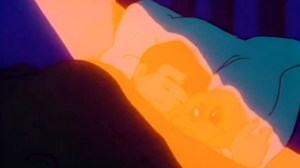
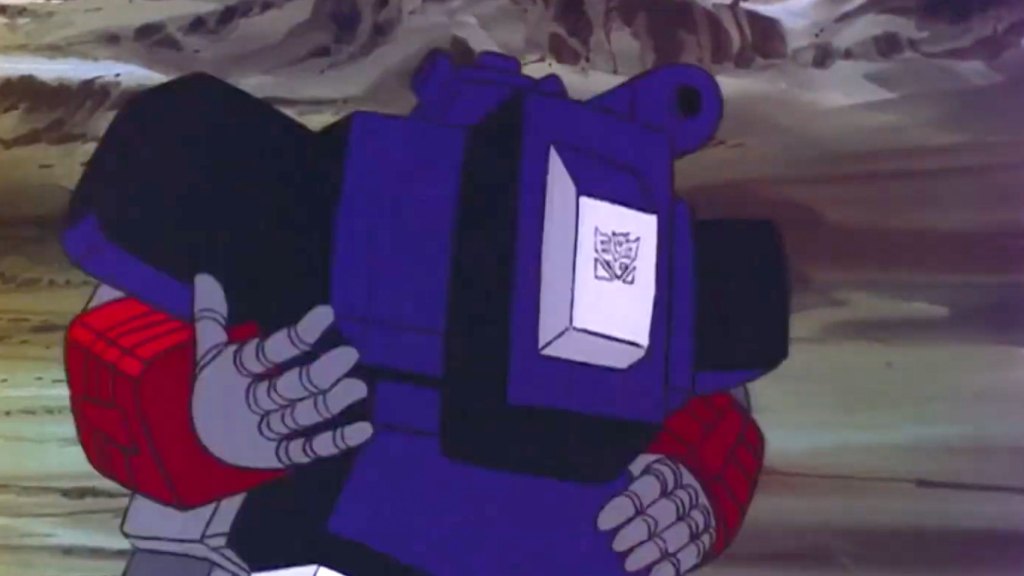
Here are two of my favorites. Notice the unfinished deception symbol on Soundwave’s back. And even though he’s locked in combat with Autobot Blaster, they look more like a couple making out than two warriors fighting.
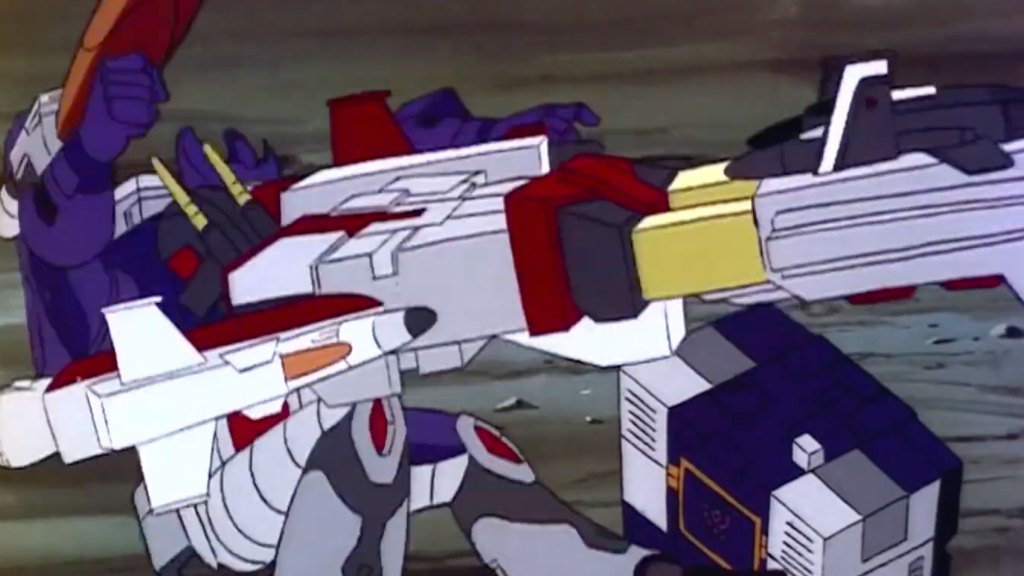
And then there’s the combiner Superion, who either somehow shrinks down to Galvatron’s size or Galvatron suddenly grows in size.
Of course, the musical gimmick isn’t what earned this installment its lasting reputation. That honor belongs to the animation, which frequently appears to be operating according to rules of its own. Broadside shows up with an outdated character model, Devastator briefly appears far smaller than he should be, and characters who ought to be nowhere near the action somehow find themselves back in the middle of it. Even the episode’s musical world can’t keep everyone in harmony. It’s the kind of spectacle that turns a routine rewatch into a scavenger hunt, with fans spotting fresh mistakes long after they think they’ve seen everything. The story may be about finding harmony, but the production clearly has other plans. This episode is definitely jarring in its own way—just like the episode that features Peter Cullen’s last performance as Optimus Prime.
From Wrong-Sized Transformers to Impossible Cameos, the Animation Errors Are Hilarious
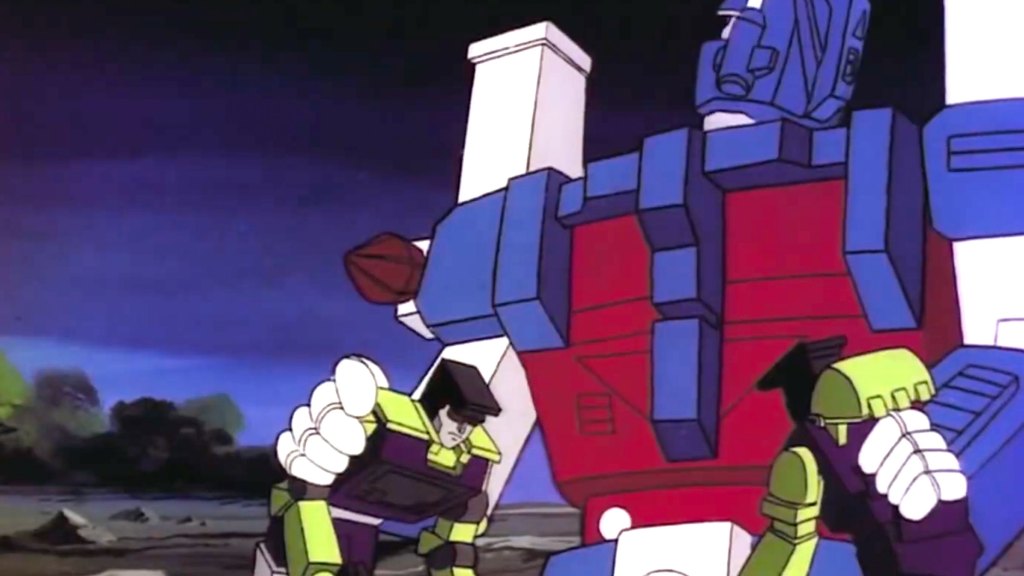
The real fun begins when you start looking at individual shots. At one point, Ultra Magnus handles two Constructicons as though they’re little plastic figures, bringing them together with a casualness that makes you wonder whether the Decepticons shrank during a commercial break. Elsewhere, Devastator appears roughly the same size as Soundwave, which is a fairly impressive accomplishment considering the former is supposed to be a towering combination of six robots. It’s difficult to maintain the tension of a giant-robot showdown when the scale seems to have been decided by a coin toss. Imagine Galvatron reviewing the battle footage afterward. “Soundwave, why were you suddenly the size of Devastator?” “I have no explanation, Lord Galvatron.” Honestly, fair enough.
Then there are the continuity blunders, which make the episode feel like a game of spot-the-imposter. Brawn turned up despite having been killed earlier in the movie, while Hotspot appeared alongside Defensor, the combined form he’s supposed to be part of. Broadside’s inconsistent appearance is another treat, and misplaced character details only add to the confusion. None of this is particularly subtle, either; these are the sorts of errors that practically wave at the audience. Yet that’s precisely why “Carnage in C-Minor” remains so entertaining to revisit. The mistakes become their own running comedy, turning a flawed piece of animation into a fan-favorite curiosity. The Autobots might be fighting for harmony, but the production delivers glorious chaos instead.
Regardless, any fan can forgive the errors in this episode, and the legacy of The Transformers cartoon is still nothing to scoff at. If you spotted any other animation blunders in this episode, share it with everyone in the comments.
More TV Shows
-
Image Courtesy of Marvel -

Image Courtesy of Marvel