If you grew up with Disney movies in the 1980s, there was a good chance you knew exactly what you were supposed to feel when their enchanted castle appeared on screen. The music started, the lights went down, and for the next hour and a half, everything was going to be magical. Except Disney animation itself wasn’t exactly thriving. The studio was going through a rough period, and the movies of the decade had struggled to recapture the magic of the earlier classics. Maybe most kids couldn’t sense if something wasn’t quite clicking, and most adults would have been more concerned with getting popcorn and candy.
Videos by ComicBook.com
Then a very unusual Disney movie arrived. It had a Dickens story, but no old-fashioned London. It had a kitten, a gang of dogs, and Billy Joel playing a streetwise mutt. It looked and sounded unlike the Disney movies that came before it, which is probably why it has been easier to forget than the films that followed. But tucked inside this strange little experiment was something important. Disney animation was starting to figure out what it could become.
How Oliver & Company Helped Change Disney Animation
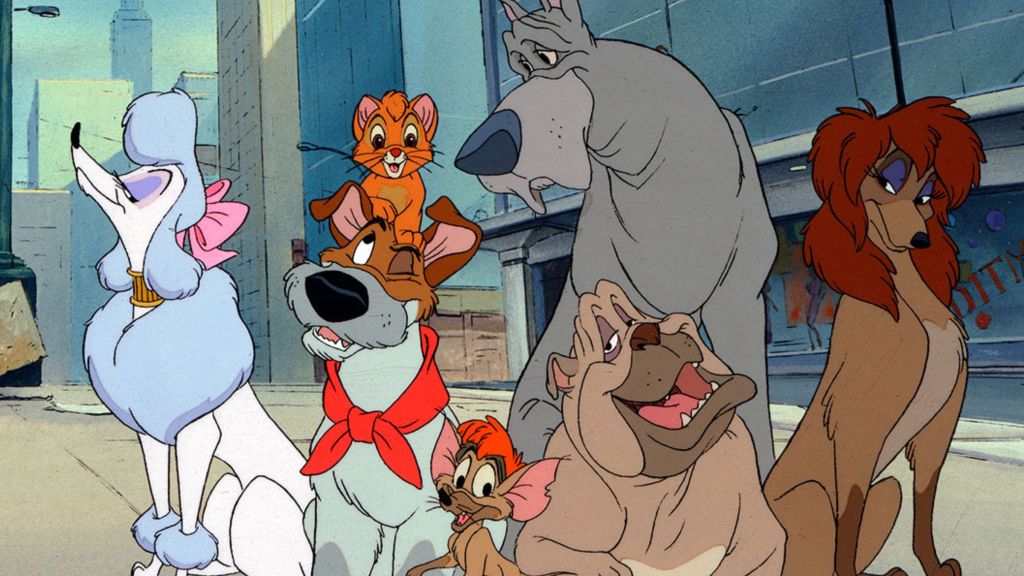
Looking back at November 1988, Oliver & Company is a pretty funny concept to imagine as a Disney comeback story. The studio took the original story of Oliver Twist, threw away the Victorian setting, dropped the action into modern-day Manhattan, and turned its title character into an adorable kitten. Fagin became a human with a collection of pickpocketing dogs, Dodger was voiced by Billy Joel, and Georgette had Bette Midler doing what Bette Midler does best. It was Dickens, if Dickens had somehow wandered into a New York recording studio in the middle of the Reagan era. Personally, I remember playing the movie’s soundtrack cassette tape regularly. I even brought it to my elementary school’s music class and played my favorite song for everyone. Looking back, I’m not sure my classmates were quite as enthusiastic as I was.
For Disney animation, though, the movie was more than an oddball experiment. The filmmakers went to New York to photograph the city from about 18 inches off the ground. Back then, when animation was still primarily a hand-drawn art form, Disney animators created their own reference material based on whatever project they were working on. The production also used computer animation for cars, buses, subway trains, the Brooklyn Bridge, and other elements, while Disney established a department specifically to create that computer-generated material. More than 300 artists and technicians worked on the hand-drawn feature. None of that sounds particularly revolutionary by today’s standards, but it says something about the passion and dedication that went into making the movie. In 1988, Disney was trying to make movies that belonged to the world kids were actually living in. They needed audiences to want that magical Disney theater experience again.
The Oliver & Company Disney Legacy
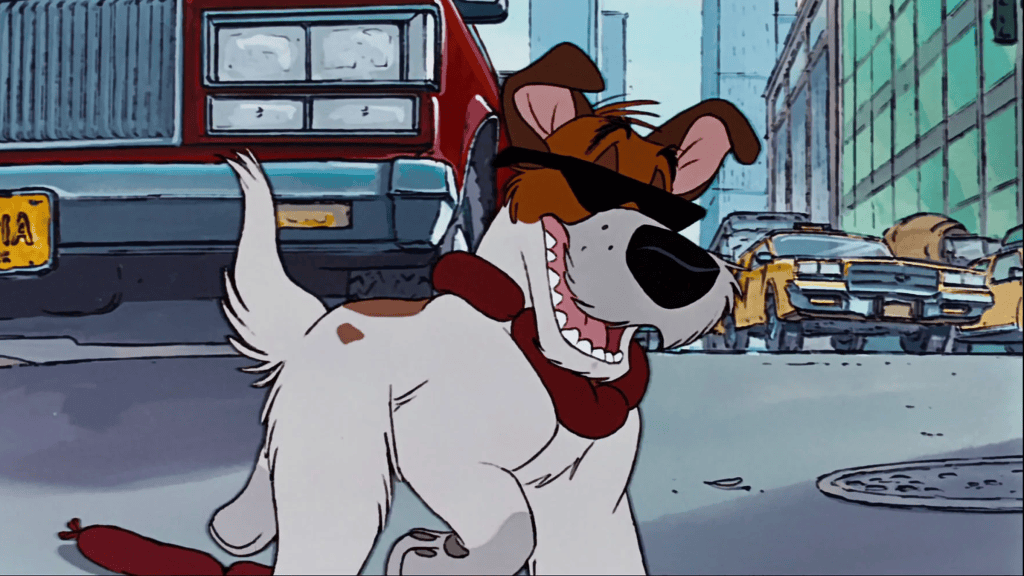
What makes Oliver & Company so interesting in hindsight is that Disney didn’t need it to become the biggest animated movie ever made. The studio needed people to keep showing up. And they did. The movie earned $53.3 million during its original domestic run, making it a solid theatrical success, and its later re-release pushed that total past $74 million. Even more interesting, Oliver & Company was released on the same day as The Land Before Time, which went on to become the biggest animated movie in the world at the time. In the United States, however, Disney’s scrappy little New York adventure actually made more money. For a studio that had spent much of the decade trying to find its footing in animation, that mattered.
But here’s the part that really gets me about Oliver & Company: look at the people who were working on it. Joe Ranft was there. So were Kirk Wise, Gary Trousdale, Roger Allers, Kevin Lima, and Mike Gabriel. At the time, they were simply artists working on another Disney animated movie. As Disney’s animation renaissance took off, those same names started showing up on some of the studio’s biggest movies. Kirk Wise and Gary Trousdale directed Beauty and the Beast. Roger Allers co-directed The Lion King. Kevin Lima directed Tarzan, and Mike Gabriel co-directed Pocahontas. Joe Ranft worked on Beauty and the Beast and The Lion King before becoming a major creative force at Pixar. Looking back, that’s a pretty ridiculous collection of talent for one movie.
Glen Keane was also working on the film, and he would go on to become one of Disney’s most celebrated animators, including supervising animation for Ariel in The Little Mermaid. And then there’s Howard Ashman, who contributed a song to Oliver & Company. Afterward, he helped transform Disney animation with Alan Menken on The Little Mermaid, Beauty and the Beast, and Aladdin. As an ’80s kid, I had no idea any of this was happening behind the scenes. Almost no kid would. I just knew I liked the movies. Looking back, though, it’s almost like Disney had quietly assembled part of its future Renaissance team without any of us noticing.
In my elementary school heyday, you could catch me bumping this jam in my Sony Walkman. It really goes to show what Disney can achieve with hand-drawn animation and original music.
And the technology was changing, too. Oliver & Company successfully used computer-generated animation to support the beautiful aesthetic of hand-drawn animation—instead of replacing it outright. More importantly, Disney was beginning to create a new process that combined traditional artistry with new technology. You could see that evolution in the movies that followed, with computer animation becoming an increasingly important part of Disney’s production process and playing a much more extensive role by the time the studio made Tarzan. Personally, I’m not a fan of the Pixar CGI style that currently dominates the animation industry.
I hope audiences can once again watch beautiful, entertaining animated cartoons that are predominantly hand-drawn, either at home or in theaters. I’m sure any fan of The Disney Afternoon would agree. And tragically, not even Disney seems to realize what they had—and what they’ve abandoned. Currently, Oliver & Company doesn’t even have an official trailer on the Disney Animation Studios YouTube channel or the Disney+ YouTube channel. That’s why I think Oliver & Company deserves more credit than it usually gets. It wasn’t just a movie Disney released while trying to get back on its feet. It was a place where some of the people, ideas, and technology that would define the studio’s next great era were already coming together. Let us know: Have you seen Oliver & Company, and what did you think of it?
More Movies
-
Image Courtesy of New Line Cinema -
IMAGE COURTESY OF PARAMOUNT -
Image Courtesy of Warner Bros. -

Image courtesy of DC Studios