Back when movie franchises favored the trilogy model, rewatches were straightforward — you watch three movies in order, and there are usually enough hours in the day to make that possible. Sure, Indiana Jones shook things up a bit by making Temple of Doom a prequel, but the original three movies didn’t directly connect, so that didn’t really matter. It’s once a series starts adding fourth and fifth movies that problems arise — if a whole second trilogy comes of it, like the Star Wars prequels or sequels, there’s an easy dividing point. If it pulls a Godfather Part II, and depicts events before and after the previous film, things can get complicated.
Videos by ComicBook.com
Where does that leave us with The Lord of the Rings? The Hobbit became a trilogy which entirely takes place prior to the original trilogy, so that watching order is clear. If the rewatch includes the extended versions, it’s best to divide the watch-through between the two trilogies. The animated War of the Rohirrim takes place in a totally different era, and is a completely different visual style, so it can stand alone anywhere in a potential marathon as a dream or flashback. The upcoming The Hunt for Gollum, however, while originally positioned as a bridge film between the trilogies, takes place during the events of The Fellowship of the Ring: after Bilbo’s birthday but before the Hobbits make it to Moria. So where does it go in a rewatch? Let’s look at the possibilities.
Option 1: Between Fellowship and Two Towers
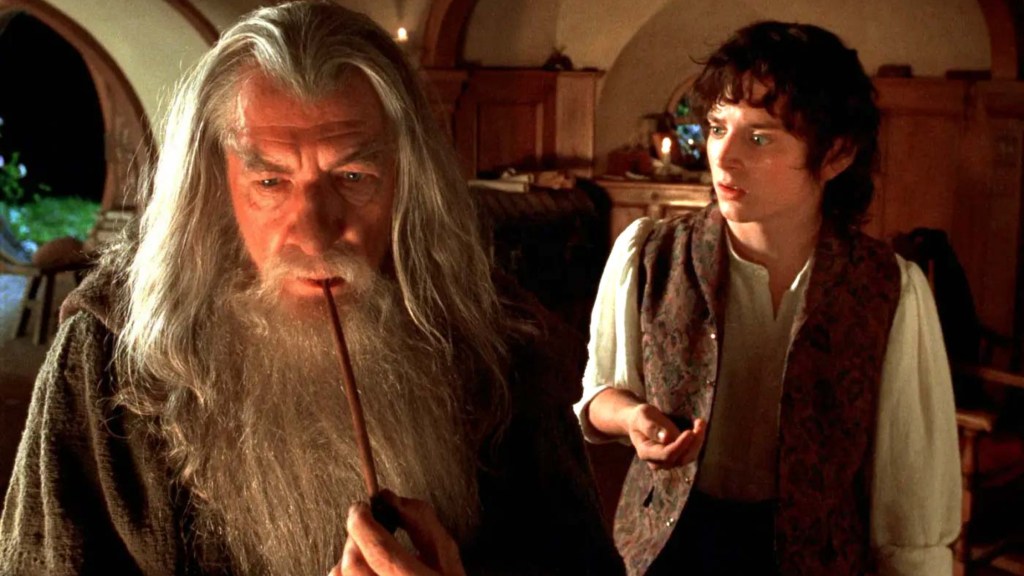
The Fellowship of the Ring pointedly doesn’t show us much of Gollum except from a distance. This was to make his full reveal in The Two Towers more potent, and it worked. Gollum is now a pop culture fixture, though, and everyone knows what he looks like. If you’re doing a six-film rewatch, he has already shown up in The Hobbit: An Unexpected Journey by then. Revealing him directly after watching Fellowship inserts him into the story at about the same point, giving everyone his backstory so that when Frodo and Sam encounter him, we now know more than they do. Yeah, it futzes with the timeline, but lots of movies, after showing you an event from one perspective, go back in time to show the same events from a different angle. Rashomon, in which the story actually changes every time, is the most famous; more recently, Netflix’s nuclear war thriller A House of Dynamite told the same 30-minute story from three different sides, one after the other.
Option 2: Before Fellowship
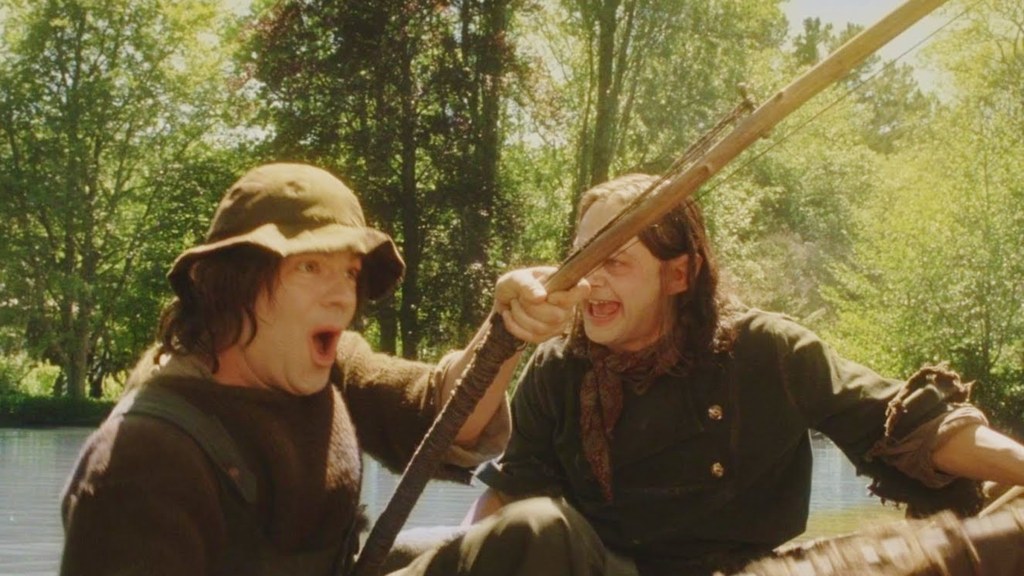
If we’re going to go ahead and be okay with a bit of non-linearity, though, why not go first? If both trilogies are involved, use it as a bridge, as intended. If The Hobbit trilogy isn’t part of the marathon, watch it first. In this case, rather than backtracking after the first film to see what Gollum was doing, you’d be backtracking after the first film to see what Frodo and Gandalf were doing. This makes more sense for fans of Gollum; for those who approach the story as an adaptation of the book, Frodo is the clear protagonist, and his story should begin and end the saga. Nobody can force a host to follow that rule, but breaking it might make the saga feel more like Gollum’s story with Frodo digressions than a Frodo story with one big Gollum tangent. Gollum’s story in the trilogy isn’t entirely linear anyway, as The Return of the King begins with a flashback to pre-Gollum Smeagol killing brother Deagol for the One Ring…a scene we will presumably revisit in The Hunt for Gollum.
Option 3: Maintain Absolute Linear Continuity (Mostly)
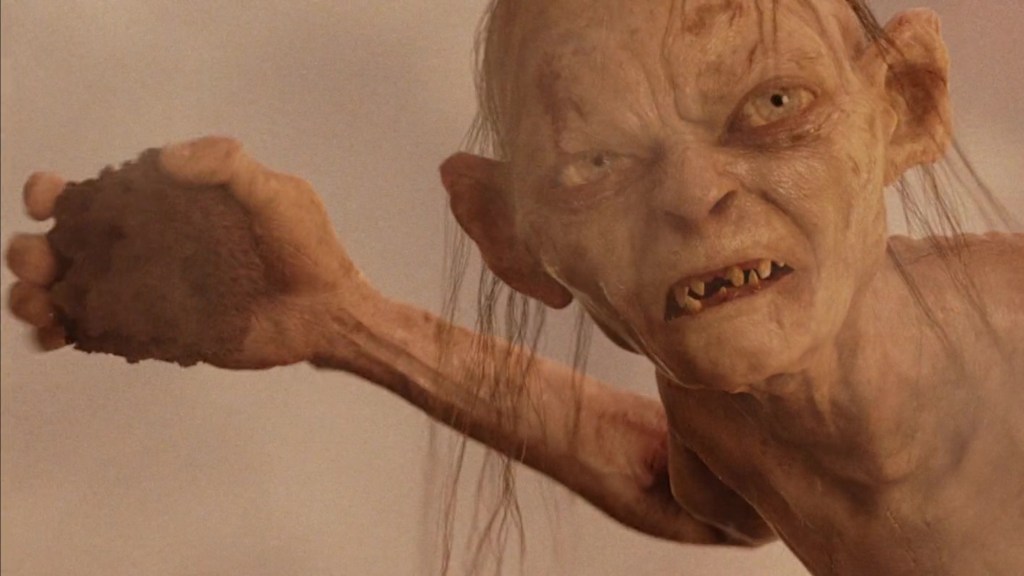
How obsessive are you about a story told in order? If the answer is “very,” there’s always the option of playing Fellowship until Gandalf leaves, and them starting The Hunt for Gollum. Play that until it ends, then restart Fellowship where it left off. The downside of this is that the Deagol flashback is still out of chronological order, and it’s not yet known when it might happen in The Hunt for Gollum. So do you then pause The Hunt for Gollum in this scenario, play the Return of the King opening scene, then start Gollum again, and skip the beginning when you get back to Return of the King?
This approach seems akin to the idea of watching Memento in reverse order. Audiences these days have seen Christopher Nolan’s movies, and can usually hang with his flashbacks and flash forwards. And anyone who thinks Lord of the Rings movie continuity poses a problem should talk to a Saw franchise fan — after the initial trilogy used nonlinear edits to fool audiences, the chronology bent over backwards to fill in flashbacks and retcons in order to keep Tobin Bell’s compelling, murdered antagonist John Kramer in the narrative. Basically, The Hunt for Gollum can be slotted in anywhere people like, and Lord of the Rings fans aren’t going to be drastically disoriented. But it is a choice that has to be made.
More Movies
-
Courtesy of Focus Features -
Courtesy of Warner Bros. Pictures -

Capcom – Skydance – Legendary Pictures -
Image courtesy of Focus Features