While the Marvel Cinematic Universe stands today as the undisputed titan of the film industry, it is easy to forget that its empire was built on one of the biggest gambles in Hollywood history. The very concept of a shared universe, where heroes from separate films would unite for a massive crossover event, was an entirely unproven strategy at its inception. Compounding that risk was the studio’s decision to build its foundation on characters considered second-tier players from the pages of the comics, because heavy hitters like Spider-Man, the Fantastic Four, and the X-Men had been sold to other studios. As a result, mainstream audiences had to be sold on heroes like Iron Man, Black Widow, and Hawkeye. Yet, even among this roster of underdogs, one foundational hero was deemed so creatively challenging that his role in the original team-up was almost drastically reduced.
Videos by ComicBook.com
Years after The Avengers shattered all expectations, screenwriter Zak Penn revealed in an interview with The Hollywood Reporter that he was initially unsure how Thor would be received by audiences on the big screen. “Originally, I was trying to reduce how much Thor was in the movie,” Penn explained. The writer’s apprehension was quickly dispelled, however, the moment Chris Hemsworth was cast in the role. The actor’s presence was so commanding that it reshaped the entire creative team’s perception of the character’s potential. “I remember Chris Hemsworth walking through the Marvel offices, and being, ‘Oh, my god, that guy is Thor,’” he added. This pivotal moment solidified Thor’s place as a cornerstone of the team. “Once it was clear that, no, this is going to work and they were excited about it, then I did not [reduce Thor in the script],” Penn added. “I stopped doing that.”
Thor Went On to Become One of the MCU’s Biggest Names

The decision to fully embrace Thor proved to be one of the most successful moves in the history of the MCU. The character’s solo films have collectively grossed over $2.6 billion worldwide, showcasing a remarkable capacity for reinvention. The first film, Thor, successfully translated the character’s Shakespearean cosmic roots for a modern audience, a significant challenge that paid off with a $449 million global take. After the critically maligned Thor: The Dark World, the franchise faced a pivotal moment. The course correction came with 2017’s Thor: Ragnarok, which saw director Taika Waititi dismantle the character’s previous persona and rebuild him with a comedic energy. This bold pivot was a massive success, earning over $855 million and proving that the MCU’s formula could accommodate radical tonal shifts. The follow-up, Thor: Love and Thunder, continued this box office success, further solidifying the character as a reliable commercial powerhouse, even when critics are unconvinced.
Chris Hemsworth’s performance is the undeniable anchor of this success. His portrayal has been essential in grounding a character who could easily have become a caricature. Initially capturing Thor’s regal arrogance, Hemsworth evolved the performance to showcase the hero’s underlying nobility and, eventually, his profound vulnerability, particularly after the universe-altering events of Avengers: Infinity War. More importantly, Hemsworth’s sharp comedic timing, largely untapped until Ragnarok, became the key that unlocked Thor’s full potential. He made the God of Thunder relatable and deeply human, a quality that directly addressed the initial fears that a mythical Norse god would fail to connect with audiences.
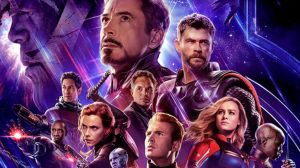
As one of the few original Avengers still active in the MCU, Thor’s story is far from over. He is confirmed to be a central figure in the upcoming crossover event Avengers: Doomsday, and persistent rumors suggest a fifth Thor solo film is being developed to follow the conclusion of the Multiverse Saga. This puts the character in a unique position. Marvel Studios head Kevin Feige has indicated that some original heroes, like Iron Man and Captain America, will eventually be recast for future sagas. Those characters, however, received definitive narrative conclusions in Avengers: Endgame. Thor’s journey, in contrast, remains open-ended, with some speculation about him getting a hero’s farewell in Avengers: Doomsday and Avengers Secret Wars.
Recasting the God of Thunder is no simple task. For an entire generation of moviegoers, Hemsworth simply is Thor, having defined the role for over a decade. It is difficult to imagine another actor wielding Mjolnir, a testament to how thoroughly a character once deemed too risky for the big screen has conquered the cinematic universe.
Thor will return when Avengers: Doomsday hits theaters on December 18, 2026.
Do you think Chris Hemsworth has a future as Thor after Avengers: Secret Wars? Or is Marvel Studios right to recast the original Avengers? Leave a comment below and join the conversation now in the ComicBook Forum!
Most Viewed
-

Image courtesy of Netflix -
Image courtesy of Bethesda -

Warner Bros. Animation / Cartoon Network Studios -

Courtesy of Crunchyroll