
Predating even the likes of Batman and Superman, Universal’s classic monsters might just be the oldest enduring piece of twentieth century pop culture. Beginning with the 1931 one-two punch of Bela Lugosi in Dracula and Boris Karloff in Frankenstein, Universal’s studio name became synonymous with gothic, romantic horror — to this day, the phrase “a Universal movie” will first call to mind the likes of Lugosi and Karloff for many cinephiles. Retroactively, Universal’s legacy of terror has been canonized as beginning even earlier, with Lon Chaney’s star-making 1923 The Hunchback of Notre Dame and 1925 The Phantom of the Opera. It was Dracula and Frankenstein, however, that cemented the modern horror genre, and Universal’s place in its creation. In the decades that followed, a slew of still-iconic monsters and madman would shamble forth from the studio’s backlot: The Wolf Man, The Mummy, The Invisible Man, the Creature from the Black Lagoon. To this day, these characters can be found in themes parks, television reruns, and toy aisles.
Videos by ComicBook.com
While Universal Monsters toys have been a staple going back to the sixties, the road to being able to find them hanging on the pegs year-round was a complicated one. Despite their continued popularity, retailers had surprising reservations about monster toys, and their under-ordering lines like Remco’s 1981 Mini-Monsters accidentally helped create a highly sought-after collector’s item. With the Universal Monsters as popular with fans and collectors now as they were then, the Remco line — the first-ever 3.75″ Universal Monsters line, and the first-ever movie-accurate, actor-based figures of many of the creatures in question — is a certified collecting cult classic, the figures worth more loose or carded than those of many better-known, more widely-collected lines. When figures from the line come up for auction, a bidding war always ensues. With a week left to bid at time of writing, this upcoming Hakes auction has already accumulated bids of fifty-five dollars for a loose, high-grade Wolf Man, and seventy-five for the Creature from the Black Lagoon.
How Retailers Helped Killed Remco’s Universal Monsters Line Before It Even Hit Shelves
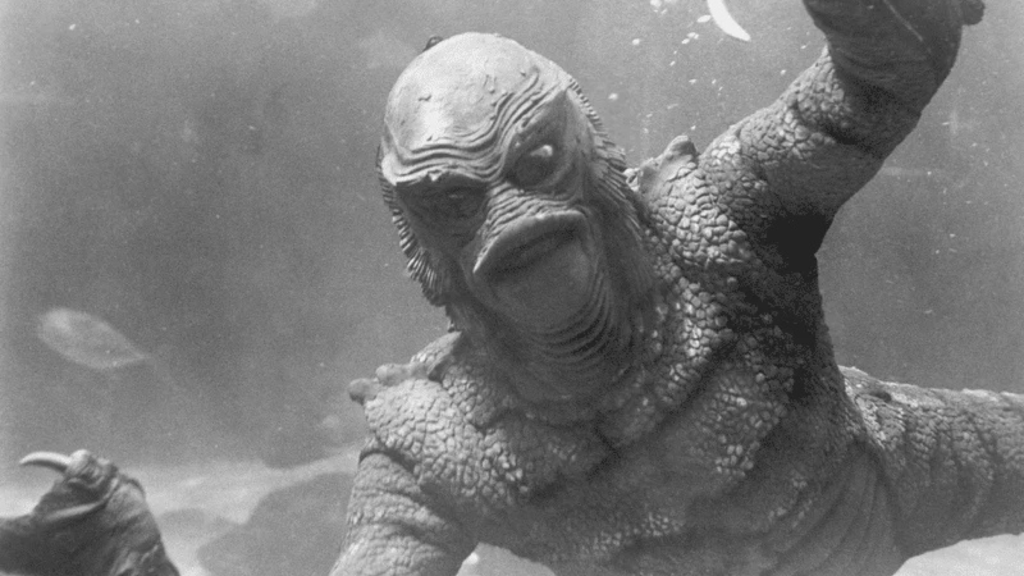
The Universal Monsters return to pop cultural prominence came in the mid-fifties, when Universal began to sell packages of their 1930s and 1940s horror films to the burgeoning television market. The films became a staple of late-night TV (and, in many markets, were also played on weekend afternoons), and found a surprising audience: kids. Licensors were quick to catch on, and the late fifties and early sixties brought an unprecedented merchandise boom for the already-decades old films, including model kits, unarticulated figurines, and miniatures. Action figures would come in the seventies, with several companies taking advantage of the public-domain nature of many of Universal’s characters and concepts (the literary bases for Dracula and Frankenstein were already nearly two hundred years old; and you can’t copyright mummies and werewolves outright). Mego’s Mad Monsters and the budget-friendly Lincoln Monsters exemplify these “unlicensed but you know what we’re going for” lines. Azrak-Hamway acquired the official Universal Monsters license, and set their toys apart with an on-model, Karloff-likeness Frankenstein, and with the Creature from the Black Lagoon — the only of Universal’s classic monsters who they were able to lay a legitimate, complete copyright claim to.
All of these lines ran into an unexpected problem: retailers ordered large around the Halloween holiday, but seemed to think these figures would only sell around Halloween. The seasonal sales weren’t enough to justify the tooling and manufacturing costs, and all these lines were short-lived, lasting only a year or two at retail. This was despite the fact that, even into the seventies, there was an abiding interest in the characters, evidenced by the continued popularity of those TV reruns, and by the popularity of child-oriented magazines like Famous Monsters of Filmland. Because of that clear, untapped market segment, Remco Toys went after the license again in 1980, and produced two different Universal Monsters lines in 1980 and 1981. The early eighties were a transitional period for the action figure market, emerging from the market-dominance of Mego’s 8″ and 12″ doll-like clothed action figures into a new era of 3.75″, fully sculpted figures like Kenner’s Star Wars line. Unsure what would prove more popular with kids, Remco tried both, trying both a 9″ scale Mego-esque line and the 3.75″ “Mini-Monsters.” The character selection was the same for both lines: Frankenstein, Dracula, the Mummy, the Wolf Man, the Creature from the Black Lagoon, and the Phantom of the Opera were produced. An accessory / playset was produced for both scales, the “Monsterizer” for the 9″ figures (think Frankenstein’s lab table), and a crypt carrying case playset for the Mini Monsters.
The 9″ figures came first, inaugurated with a four-figure wave (Frankenstein, Dracula, the Mummy, the Wolf Man) in 1980. All four featured movie stills on the packaging, and three were based explicitly on actor likenesses (Lon Chaney Jr. for the Wolf Man, Boris Karloff for the Mummy and Frankenstein). Due to a long-standing legal battle between Bela Lugosi’s estate and Universal Studios over his likeness, Lugosi’s face was not used as the model for the Dracula figure, and the card art was a still of Robert Quarry’s titular Count Yorga, Vampire. How Yorga came to be used is unknown, and is especially odd as it was not a Universal film. The Creature and the Phantom were added to the line the following year; both figures are incredibly rare on the secondary market. The Phantom is notably as the only of the figures to come with an accessory, a hat and mask to disguise his disfigured features. The Creature makes for the oddest figure in the line, with Remco opting to use a cloth outfit over a standard figure body, rather than a fully-sculpted new figure.
The Mini-Monsters were introduced in 1981, and proved more popular (and apparently an easier sell to retailers), remaining on shelves until 1983. Despite this, only six characters were made, all offered in the initial 1981 wave. Later production runs would use glow-in-the-dark plastic, creating a collector-favorite variation on the figures and their packaging. Loose or carded samples of the glow-in-the-dark versions of the figures are worth double or more the value of the non-glow versions; this is especially true for the Creature from the Black Lagoon. As the least-merchandised of the monsters (given the inability to make legally-distinct-from-the-real-thing unlicensed versions), the Creature is, as a rule of thumb, the most popular character in any set of Universal Monsters merchandise. The Creature also boasts dedicated collectors, who, even if they don’t buy the rest of the Universal Monsters in a given line, will buy the Creature. Remco produced several other, ancillary Universal Monsters toys, including a bizarre line of hand-puppets.
How the Adult Collector Market Saved Universal Monsters Toys
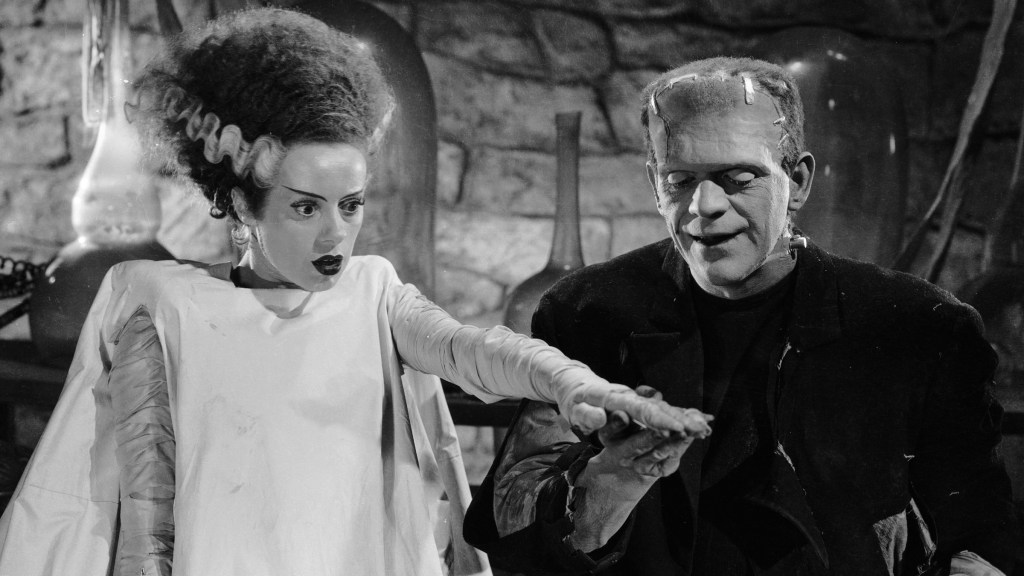
Despite offering the first-ever Phantom of the Opera action figure, Remco’s line did come with a major disappointment: it bypassed the fan-favorite Bride of Frankenstein (likely due to conventions of the era that “girls toys don’t sell”) and the Invisible Man. Fans would have to wait until the late nineties for proper action figures of either character, part of Sideshow’s 9″ Universal Monsters collector line. The nineties were another renaissance for Universal Monsters merchandise, which finally found its niche in the emerging internet-era figure collecting culture. Sideshow’s Universal Monsters line was able to run for years as an online and specialty retail exclusive, and gave fans deep-cut figures like a Son of Frankenstein variant of the Frankenstein Monster, the Werewolf of London, and fifties sci-fi creatures like The Mole People and the Metaluna Mutant.
While the Sideshow line could be seen as the most direct precursor to NECA’s current Universal Monsters line, NECA has also paid direct tribute to the Remco Mini-Monsters. NECA released retro-style, glow-in-the-dark repaints of all six characters issued in the original line, as well as righting a decades-old wrong by including Remco-inspired figures of the Bride of Frankenstein and the Invisible Man (as well as Nosferatu himself, Max Schreck’s Count Orlok). The NECA tribute line is a testament to the legacy of the Remco line, looming large even in the minds of collectors born long after its brief time on retail shelves. The Hakes auction tells the same story, with the pair of figures up for auction commanding a surprising premium given their obscurity to many collectors.
More Collectibles
-
Courtesy of Cinerama Releasing -
Images Courtesy The Pokémon Company and Fanatics Collect


Forum Conversation: Which Superman Costume Is Your Favorite?
Go to ForumAs of now the Kingdom Come suit
My main answer to this is that when Dan Mora draws Superman, it’s instantly my favorite. I think I prefer the modern suit best, which is just an updated take on the classic costume.
Now, two honorable mentions here if we are going a little more out there with the designs. First, Michael Turner’s Godfall suit is wild but actually rules. Second, I will always have a soft spot for the Electric Blue Superman suit. It just looks so flipping cool.
I actually like the New 52 costume a lot but Kingdom Come might be my absolute favorite. Alex Ross is just amazing.