Despite some missteps along the way, Pixar remains an undisputed animation titan. For decades, the studio has consistently delivered films celebrated for their visual innovation, intelligent storytelling, and emotional depth. This journey began in 1979 as the Graphics Group at Lucasfilm, a small computer division dedicated to advancing graphics technology. After being spun off as an independent company in 1986 with Steve Jobs as its primary investor, Pixar began producing acclaimed short films that showcased its technological prowess, including the Oscar-winning Tin Toy. These early successes led to a landmark agreement with Disney to produce a feature-length computer-animated film. That project was Toy Story, a film that would not only launch Pixar into the stratosphere but also redefine the entire animation industry.
Videos by ComicBook.com
Releasing on November 22, 1995, Toy Story was a cultural phenomenon. It became the highest-grossing film of its opening weekend and went on to earn over $373 million worldwide, making it the highest-grossing domestic film of 1995. Critics lauded the film, praising its groundbreaking technical achievements, witty screenplay, and the perfect voice performances of Tom Hanks as Woody and Tim Allen as Buzz Lightyear.
Toy Story’s universal appeal to all age groups cemented its status as an instant classic, eventually earning a 100% approval rating on Rotten Tomatoes and a Special Achievement Academy Award for its innovation. More than just a movie, Toy Story launched a multimedia franchise that has spanned generations, including sequels, a spin-off film, and a television series. Its legacy continues to grow, with Disney and Pixar confirming that Toy Story 5 is in development.
Toy Story Changed the History of Animation
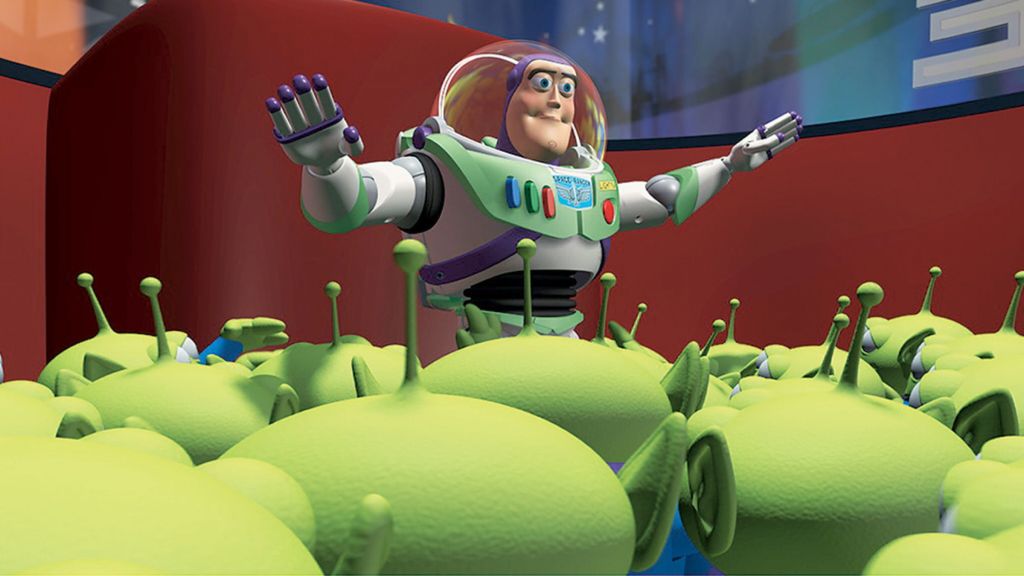
The release of Toy Story marked a pivotal turning point for the entire film industry, heralding a major shift from traditional 2D animation to the digital frontier. While the title of the first fully computer-animated feature film is sometimes disputed by the 1996 Brazilian film Cassiopeia — which skipped Pixar’s step of digitalizing clay models — Toy Story was undeniably the first to achieve widespread commercial and critical success, proving that CGI could be a viable and profitable medium for feature-length storytelling. Before 1995, 2D animation was the industry standard, but Toy Story’s impact was so profound that it triggered a paradigm shift.
The success of Pixar’s debut prompted major studios to invest heavily in CGI technology. Disney, which had partnered with Pixar for the film’s distribution, began its own transition away from the hand-drawn animation that had defined its brand for decades. This move was soon followed by the rise of new animation powerhouses like DreamWorks, whose hits such as Shrek built upon the foundation that Toy Story had established. Illumination later entered the field, further solidifying CGI’s dominance. Without the trailblazing success of Toy Story, the modern animation industry as we know it would not exist, and many beloved classics from Finding Nemo to The Incredibles might never have been made.
Toy Story 5 is scheduled to be released in theaters on June 19, 2026.
What story do you hope Toy Story 5 tells to honor the legacy of the film that started it all? Leave a comment below and join the conversation now in the ComicBook Forum!
Most Viewed
-

Image courtesy of Netflix -

2025's The Game Awards logo with 2014-2024 written below. -

Image Courtesy of Marvel Comics -

Image Courtesy of Netflix