Have you ever stopped to think about the movies that genuinely changed the way audiences look at certain types of characters? Guillermo del Toro has always liked to reframe classic monsters, and Jordan Peele made history by taking the traditional “threat” figure and flipping the entire idea of who we should actually fear. Tim Burton, ever since he leaned fully into the bizarre, quickly became known as the guy who embraced eccentricities — but with one very specific film, the impact hit differently. And it stuck. Thirty-five years later, that movie isn’t just treated as nostalgia; it’s proof of how something that looks simple on the surface became a pop-culture benchmark. It’s Burton’s best film, and it’s still one of the comparison points every time Hollywood tries to sell a new “sensitive outsider.”
Videos by ComicBook.com
Burton and Johnny Depp would go on to become one of cinema’s most iconic duos, but everything started with Edward Scissorhands, the first real proof of how strong that pairing could be. The story is familiar to almost everyone, yet it remains strangely timeless because it refuses to treat its protagonist like a tragic mascot. Edward (Depp) is created in isolation by an eccentric inventor, brought into suburban life by a well-meaning saleswoman, and immediately turned into a local attraction. The premise could’ve easily become a silly comedy or a formulaic romance, but the movie works because it commits to one idea: suburbia is hostile by nature. Edward isn’t rejected because he’s strange; he’s rejected because people reveal who they really are when confronted with someone they can’t control.
Edward Scissorhands Is Still Tim Burton’s Masterpiece
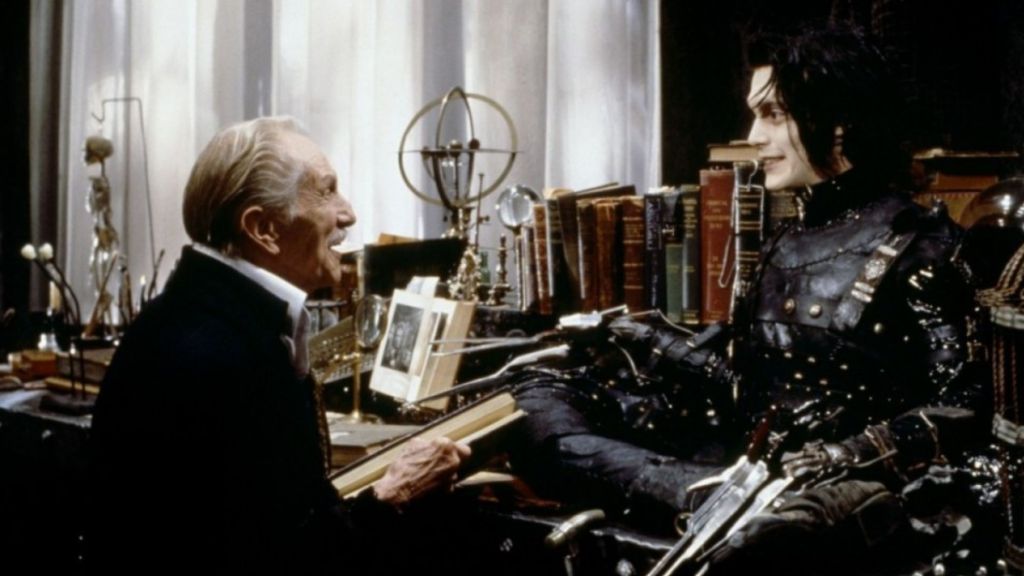
Rewatch it now, and the contrast becomes even clearer: the theatrical, colorful visuals versus the very blunt take on social behavior that honestly hasn’t changed much. Burton had already played with exaggerated production design in Beetlejuice, Charlie and the Chocolate Factory, and Alice in Wonderland, for example, but here the critique isn’t subtle at all. And that’s the point. Depp’s performance works because it embraces discomfort: he’s a protagonist who doesn’t talk too much, doesn’t explain himself, and doesn’t bend over backwards to fit a standard arc of “overcoming adversity.” He simply exists, and that’s enough to expose how fragile the community’s morals really are, while also making the audience instantly sympathetic toward him.
But the oddest thing is how complete the movie feels in people’s memories, to the point that no one ever really wanted a sequel. Burton has already explained why he avoids making sequels to his most beloved films, but in the case of Edward Scissorhands, it always felt like the audience had collectively agreed it was a standalone story. It ends exactly how it should: no franchise setup, no forced cliffhangers, and no expanded-universe ambitions. It’s beautiful, it says what it needs to say, and that’s why it works. Some stories genuinely don’t survive repetition, and that’s part of the charm. Still, that didn’t stop another medium from trying.
Edward Scissorhands Had a Sequel Almost Nobody Knows About
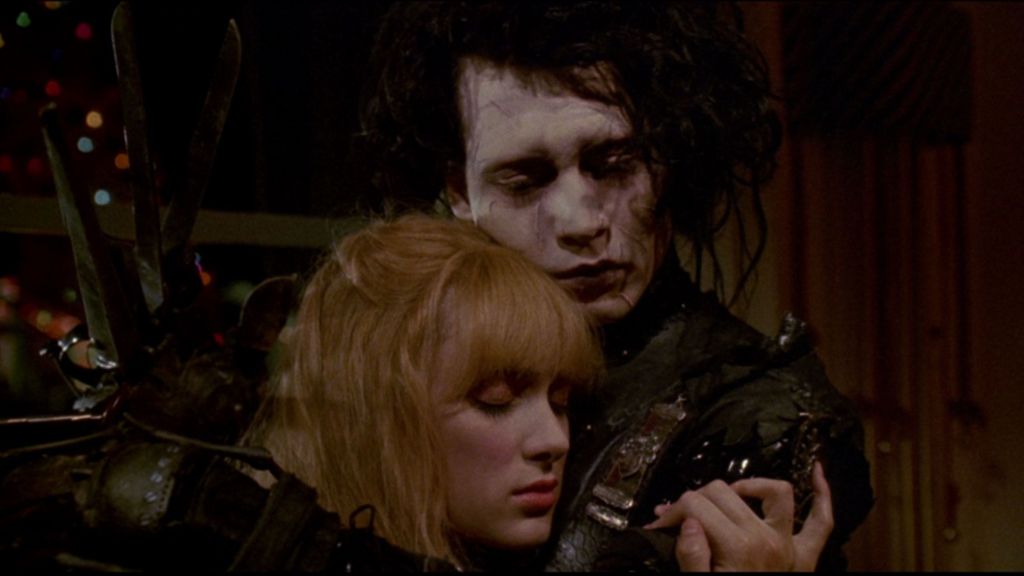
Yes, there is an official sequel to Edward Scissorhands, just not on screen. IDW Publishing released a comic series years later, continuing the story in a way that went (almost) completely unnoticed by the general public. And not because the comic is bad — it actually does exactly what a sequel should do: expand the universe without betraying what made the original work.
The story picks up a thread the film leaves open through Kim Boggs’ (Winona Ryder) granddaughter, now named Megan (Gina Gallagher), who decides to investigate what really happened between her grandmother and Edward. Meanwhile, he’s still isolated in the castle, trying to stay off the radar until a new creation (also made by his inventor) appears as a potential threat. It’s the kind of sequel that doesn’t try to “fix” the movie’s ending or turn Edward into an action hero. The comic keeps things intimate, maintaining the melancholic tone while shifting the focus from romance to a story about legacy and responsibility.
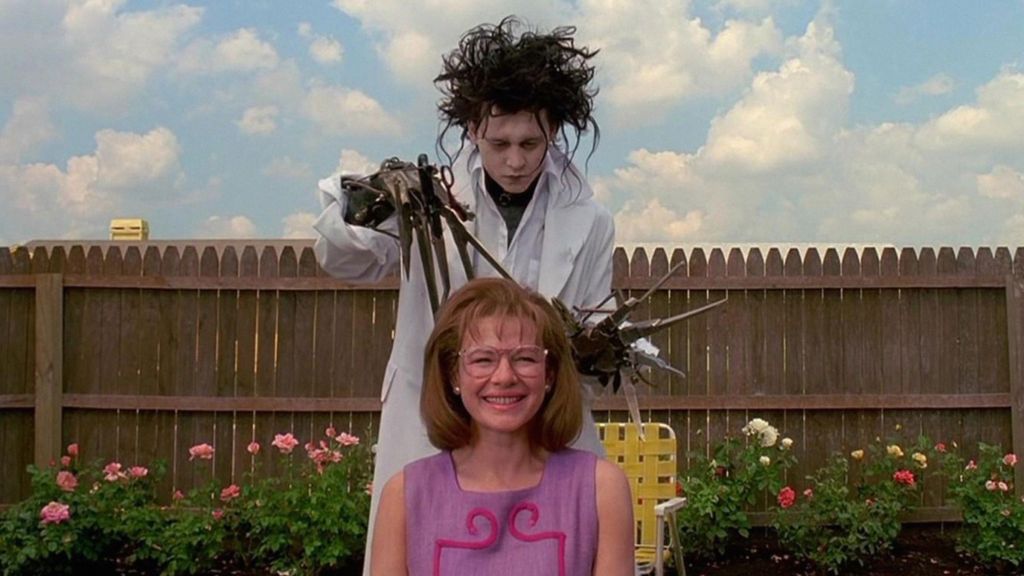
What’s interesting is that even while respecting Burton’s original vision, the sequel never gained traction outside the comic-reader bubble. Probably because the film feels so closed and self-sufficient that any continuation sounds unnecessary to most people. Still, as a bonus piece for fans of the director and the story, the comic genuinely works — and is a great addition. It doesn’t try to compete with the movie, doesn’t mimic Depp in some way, and doesn’t attempt to replicate Ryder as well. Its strength lies in balance: it embraces the film’s aesthetic and tone without becoming a carbon copy. And it answers the question viewers have always had at the end of the movie: what happened to Edward once the Boggs’ lights went out? The comic simply picks up where Kim’s granddaughter’s curiosity (and ours) naturally would.
Edward Scissorhands remains one of the most iconic and beloved films of all time. More than three decades later, it still works because it knows how to deliver great entertainment without needing much. The movie stays relevant not because of flashy effects, but because of a protagonist you can’t ignore and a story that shows, bluntly, how “normal” behavior can be far scarier than being different. On top of that, it’s still a staple holiday watch every Christmas season — the kind of movie that never loses its charm and can always be reintroduced to new generations. It’s hard to find someone who wasn’t completely taken by it.
Edward Scissorhands is available on Hulu.
Have you seen the movie? What do you think? Leave a comment below and join the conversation now in the ComicBook Forum!
Most Viewed
-
A Nintendo 64 console over a collage of game box art from the system's library. -

Image courtesy of Netflix -
Image courtesy of Virgin Films