Given what’s been happening with Star Trek, Doctor Who, Star Wars, and Stargate, you’d be forgiven for thinking the sky was falling for the great genre of sci-fi. But there’s still a lot of great work being done in the most challenging genre we have, with masterpiece TV shows like Paradise and the excellent new Star City lighting up 2026 already. And in terms of big screen projects, Hollywood (and yes, even the streamers) still know how to make great forward-looking stories that speak to humanity’s innate intrepid spirit.
Videos by ComicBook.com
Sci-fi is also, of course, at an interesting point in culture. As the world threatens to adopt AI in deeply transformative ways (whether we like it or not), it’s hard not to look at some of the real world developments and wonder which sci-fi script they were ripped from. Some of that will no doubt provide a net good to humanity, but the relationship between art and technology requires more thought from those happy to engage a little too enthusiastically. In that respect, sci-fi still offers the best morality tales, but perversely, it’s also the genre most happily regurgitated by AI slop merchants, who peddle vapid space operas starring smooth-faced supermodels as high art. With that floodgate open, now more than ever, it’s paramount we celebrate great, real sci-fi. And these are the best of the year so far…
6) War Machine
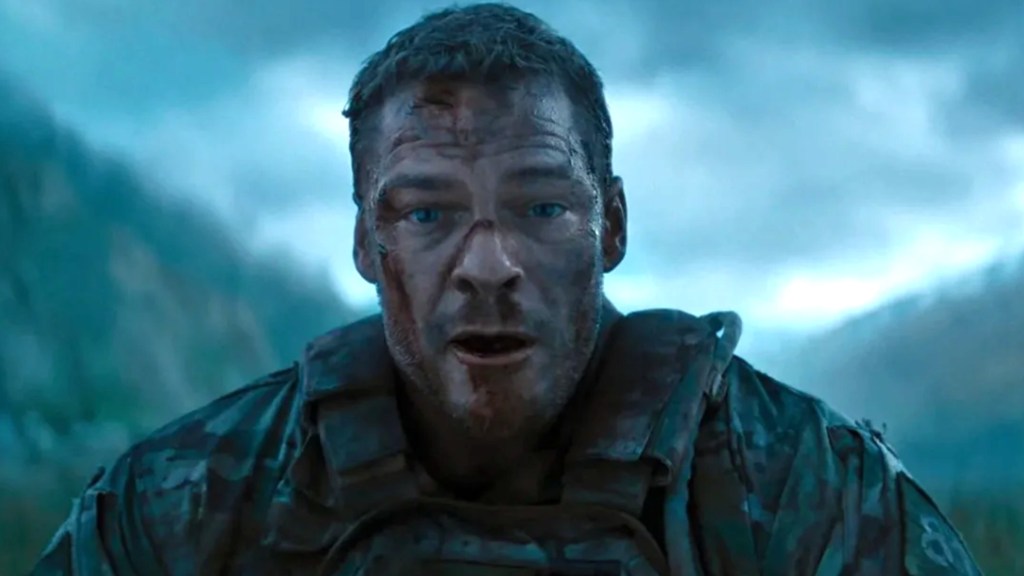
Netflix’s War Machine was quite rightly marketed as an Alan Ritchson vehicle, with the giant Reacher lead’s star power in the ascendancy these days. Given his physique and the brand he’s lately built as the strong, silent type, you’d probably expect him to be a throw-back to the 1990s golden era of action stars, but War Machine‘s still waters run surprisingly deep here. Ritchson’s “81” deals not only with his own personal trauma, but also a near self-destructive fidelity to legacy, and a surprisingly subtle commentary on the frustrating futility of war.
As was said quite widely when it hit Netflix, War Machine is essentially a mash-up of Transformers and Predator, with a near-unstoppable alien war machine wreaking havoc through a highly-trained, but rag-tag group of Army Rangers (yes, there’s something of Aliens in there too). The 1990s throwback comment about Ritchson is also very much true of the film itself, which is a simple robo-slasher with increasingly insurmountable odds and which is uncompromising in its violence and its simplicity. There’s not a lot of story to speak of – alien machine found, activated, all hell breaks lose – but what matters is you care that Ritchson survives, and that he puts up a fight. Because in this kind of sci-fi, humanity really needs incredibly large men to step up. And when it’s this fun, it’s hard to argue against.
6) The Mandalorian & Grogu

Obviously, The Mandalorian & Grogu‘s theatrical “story” has been rather dominated by the box office numbers that everyone reports like sports results, but I simply cannot accept the legitimacy of claims that it is in any way a bad movie. The set-pieces are excellent (Lucas would really have been proud), and the story might feel straightforward, but a lack of challenging narrative didn’t exactly stop A New Hope. Yes, that might seem hopelessly reductive, but that’s what watching the discourse around this charming, entertaining sci-fi has felt like, so I offer no apology. I will, admittedly, never accept that the decision to give voice Jeremy Allen White’s Rotta the Hutt that voice was the best one.
Putting aside the fact that it’s immensely fun and probably fits with exactly the supposedly lost vision of Star Wars that the end of George Lucas’ tenure robbed from nostalgic fans, the movie also achieved exactly what it should have. Despite being a replacement for The Mandalorian Season 4, The Mandalorian & Grogu required largely no intensive homework. Dave Filoni and Jon Favreau spoke extensively of wanting to make an accessible Star Wars movie, and of capturing younger audiences, and watching the film with my 9-year-old was like sitting at the center of an epiphany.
4) Hoppers
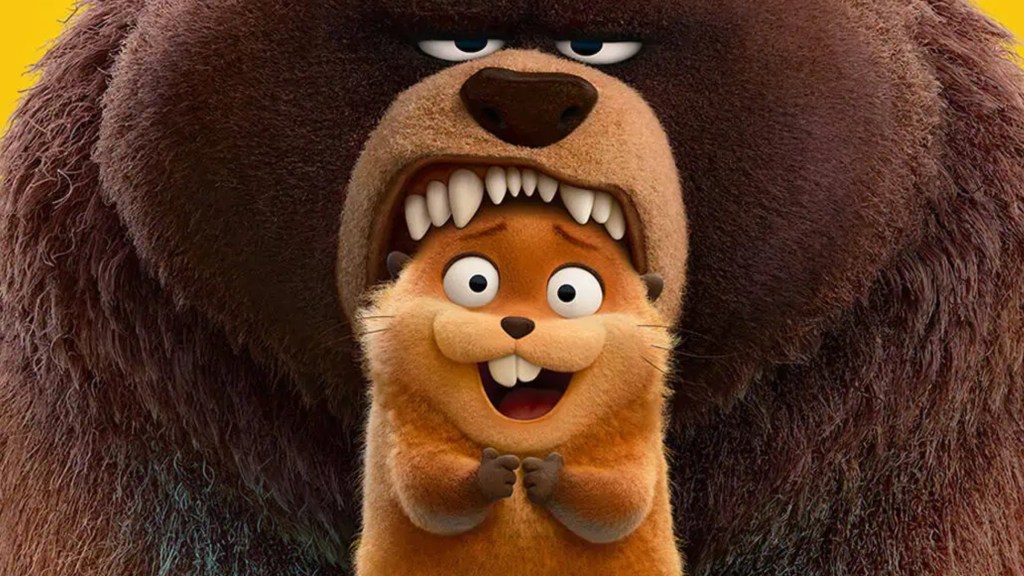
The film itself might comment on its similarities with Avatar, but Pixar’s latest foray into sci-fi (an artistic vein in the studio’s work that has produced somewhat uneven results at times) is great because it’s more like Inner Space. Avatar is about experts and professional heroes in a strange world, but Hoppers is about an enthusiastic amateur given the sci-fi means to change the fate of nature. There’s a great villain – rampant human expansion – some genuine laughs, and the kind of heart that’s almost a cliché to even mention in Pixar commentary.
It may not have made Inside Out or Toy Story levels of money, but Hoppers proves the value that remains in Pixar adapting original stories instead of just becoming a sequel machine. The fish-out-of-water comedy is a great balance to the overt ecological message (which somehow manages to avoid being preachy, when it really could be), and Jon Hamm offers a great performance as human antagonist Mayor Jerry Generazzo. I had immense fun, just as most critics also did, and getting the chance to share this kind of entertainment with my son is exactly why I’ll fight for cinemas until an AI replica of me inevitably replaces me at some point. Speaking of which…
3) Good Luck, Have Fun, Don’t Die
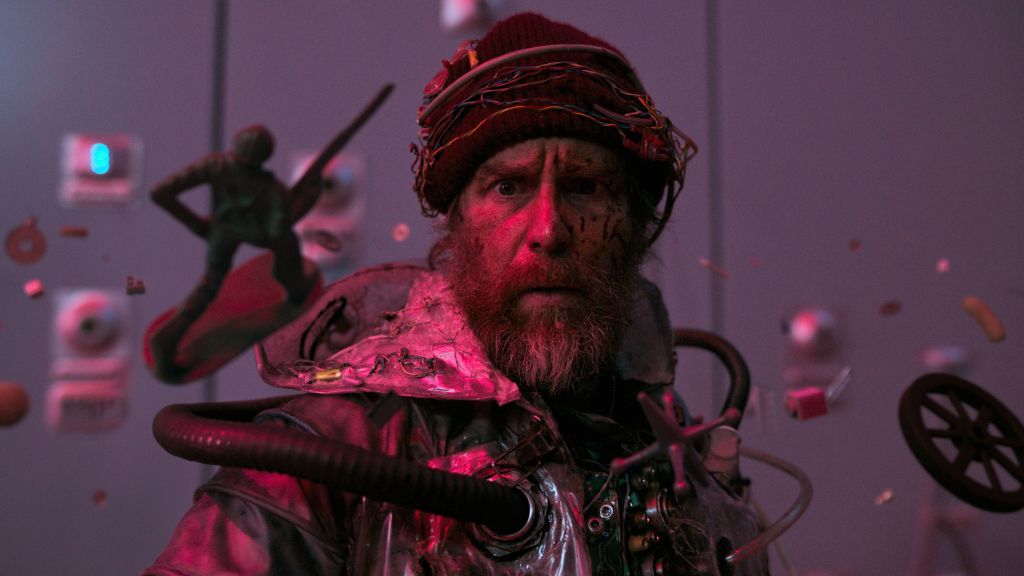
Even when you’re dealing with hugely grave outcomes, as Gore Verbinski’s Good Luck, Have Fun, Don’t Die is, there’s still space for a little silliness. Or a lot, as is actually the case here. Probably best described as an acquired taste – and it’s almost certainly going to grow a bigger cult fanbase over future years – Good Luck, Have Fun, Don’t Die is an urgent call to arms against the world’s current obsession with tech (and what’s presented as the inevitable fallout). It’s sort of a modern Idiocracy, but where nobody actually learned from Idiocracy and human existence became a series of irresistible nightmares. It doesn’t feel so much like a ghost of Christmas future situation as a ghost of Christmas present.
Sam Rockwell, as ever, is excellent as the frantic time traveller sent back in time to stop humanity’s creation of a superintelligence that destroys them. There’s obviously a Terminator vibe, but driven by a far more chaotic imagination, and a more concerningly downbeat outlook. It’s unlike anything else on this list, and unlike most modern sci-fi movies, which should be cherished more than the audience who largely didn’t go and see it in cinemas seem to have. It’s inventive, funny, challenging, charmingly dishelvelled in its delivery, and as subtle as a brick to the face, and this kind of madcap entertainment is all too rare.
2) Disclosure Day
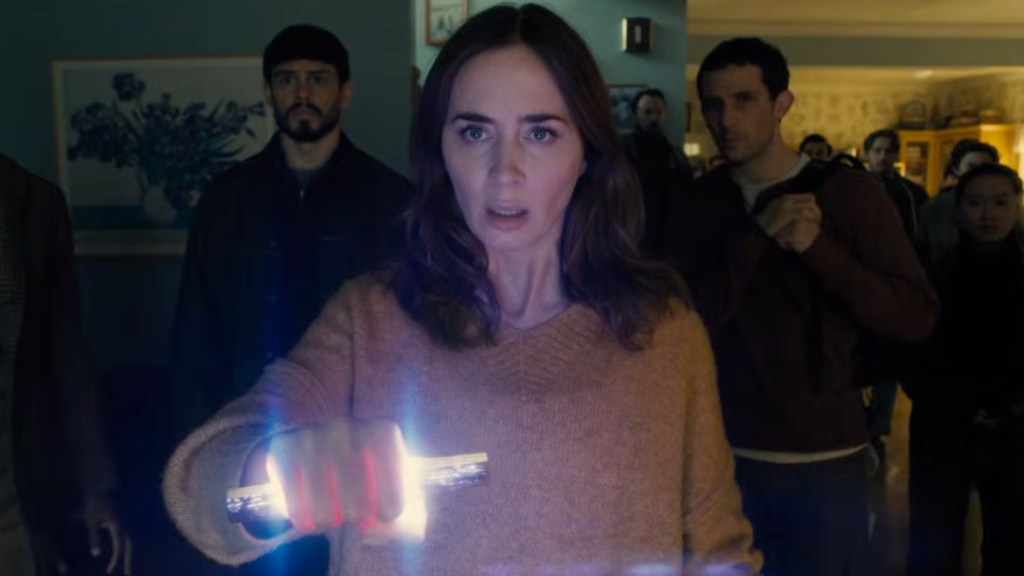
Steven Spielberg was made for sci-fi the same way David Cronenberg was made for disturbing body horror nightmares that drill your way behind your brain and stay there: yes, other people do it too, but you’ll quite often find yourself comparing that work with the masters. Disclosure Day actually wasn’t the slam-dunk some might have expected it to be, but I maintain Spielberg always has to contend with Spielberg chiefly, and when his sci-fi master works ring so loudly in everyone’s memories, there’s always a cost. I found Disclosure Day to be one of the year’s high points so far, and the fact that it’s an original story should not be overlooked in that conversation.
It might take its time, but Disclosure Day is a statement of refined confidence in film-making. Spielberg spins a compelling yarn, but his not-so-secret weapon is Emily Blunt, whose performance might be the best I’ve seen this year in any genre. The film isn’t always up to her high bar, and it’s not one of Spielberg’s best, but his return to sci-fi is still a reminder that few do it as well. He can still put together incredible set-pieces, even in more contemplative movies, and while this is sci-fi, Disclosure Day feels more like it’s been influenced by some of the director’s later thrillers. There’s still the famous hopeful tone, but everything’s a bit more tense, and the ending feels distinctly un-Spielbergian. But, let’s not get it twisted here, he’s earned the chance to do that.
1) Project Hail Mary

How could it be anything else? Project Hail Mary will likely top a lot of people’s film of the year lists when we eventually get to December, and it will take something special to dethrone it for me by then. Much like Andy Weir’s other major adapted movie, The Martian, Project Hail Mary feels like the right kind of human propaganda in a world too eager to cast off humanity as an inefficient liability in the pipeline. That it does so by presenting a largely positive outlook on progressive scientific discovery is shockingly refreshing for a sci-fi. And that it manages to present so much complex science without me wanting to stick hot pins in my eyes to feel something is also pretty impressive.
Ryan Gosling is an excellent fish out of water hero, Rocky is already a Titan of cinema (despite being a pile of rocks), and the peril of the story is quite gloriously gripping. I have no shame in admitting Project Hail Mary made me cry – possibly in places you wouldn’t expect – but the emotion is precisely the thing. It’s a story about a man who goes to space on a last-gasp mission to save the Earth, meets a rock alien, and pulls off the ultimate hero move, but it’s about love, and companionship, and legacy, and you present me with those done well, and I don’t care if one of the stars doesn’t have a face.
What do you think? Leave a comment below and join the conversation now in the ComicBook Forum!
More Movies
-

IMAGE COURTESY OF SIX STUDIOS