There are movie trends that come out of nowhere and lead to a slew of film releases that are purely done to catch the tailwind of an unexpected success story. That has happened recently with the arrival of Mickey Mouse and other popular children’s characters like Popeye and Winnie the Pooh into the public domain. Before all that, in 2023, a horror comedy with a strangely real-life inspiration and a title that left nothing to the imagination arrived in cinemas and became a moderate box office success despite its completely bonkers plot. Like many movies of its kind, Cocaine Bear was then responsible for a whole sub-genre of increasingly gimmicky and low-budget attempts to ride the high and cash in on the idea of drugged-up animals going on killing sprees being box office gold. However, out of all of those that followed, Cocaine Bear remained the kingpin of them all and is now back on top thanks to its recent success streaming on Netflix.
Videos by ComicBook.com
Cocaine Bear‘s premise is a simple one. Loosely telling the story of a real life case from the 1980s, the film throws together a group of eccentric characters as they are caught in the path of a rampaging 500-pound black bear that stumbles across a stash of cocaine dropped in the woods by a smuggling gang. After getting a taste for its new discovery, the bear goes on a wild and murderous journey to protect its haul and search for more of the drug. As the limbs fly and the B-movie feel ramps up, the film’s cast completely buy into the chaos – including Ray Liotta in one of his final memorable roles as drug kingpin Syd Dentwood – which sells the film as a hilarious and gory affair that stands alongside many of the best horror comedies of the last several decades.
Cocaine Bear’s Success Led to Many Imitations
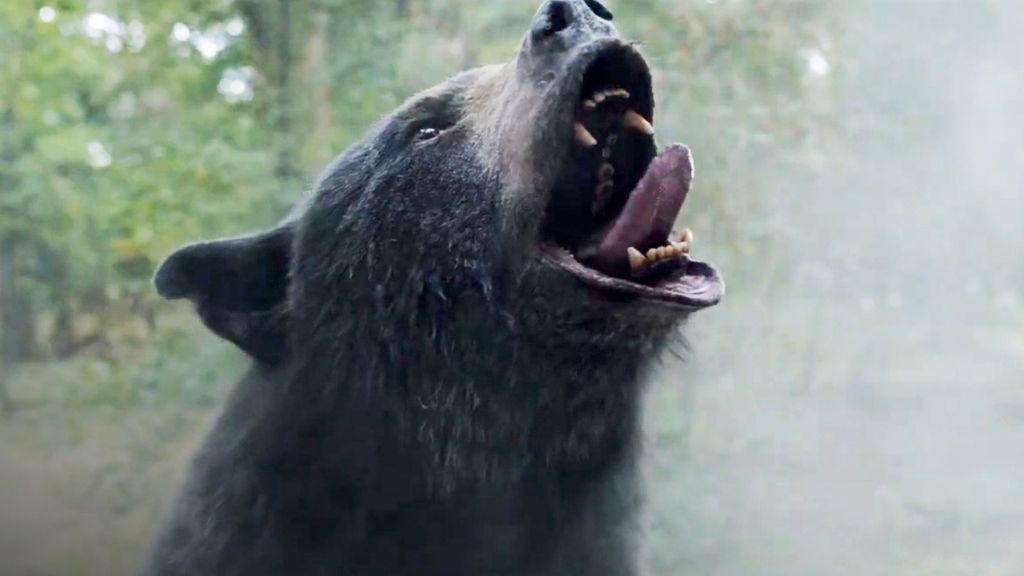
While the true story behind Cocaine Bear, where a bear did indeed discover a discarded stash of drugs in 1985 but rather than going on a bloody rampage died as a result of ingesting the drug, would not have made an interesting movie, Elizabeth Banks’ “what if” scenario hit the spot for many. The film turned its $30 million budget into an $90 million box office success, and even managed to satisfy a decent amount of critics to earn a 65% score on Rotten Tomatoes. Although there was instant talk of a sequel, that has not so far happened, but instead the world was treated a host of other movies that, unlike Cocaine Bear, did not have a true story basis and were created purely to answer the question of “what would happen if a [insert animal here] ended up taking cocaine?”
Of course, these imitators were exclusively independently produced or even crowdfunded, and it showed. Cocaine Shark was one of the first arrivals, pumping a host of fish full of a drug that turns them into rampaging mutants, and Cocaine Cougar turned a big cat into a city terrorizer after it escapes from a lab after being subjected to drug testing. Syfy got in on the act by running the straight-to-video movie Attack of the Meth Gator, which as suggested by the unsubtle title made an alligator the latest of nature’s predators to get a heightened bloodlust from having drugs pumped into its blood. Even those movies were not enough to stop Crackcoon (a crowdfunded affair with a puppet raccoon) and Cocaine Werewolf (yes, this one went supernatural) from keeping the trend alive in 2024. While none of those movies have resurfaced since, Cocaine Bear‘s wildly entertaining story continues to draw in audiences when it appears across various streaming platforms, and right now it is Netflix subscribers that are getting addicted to the movie once more.
Does Cocaine Bear live up to the hype around its blatant titling and B-movie values? Let us know what you think in the comments.
More Movies
-

Warner Bros. Pictures -

Image Courtesy of Marvel Studios