
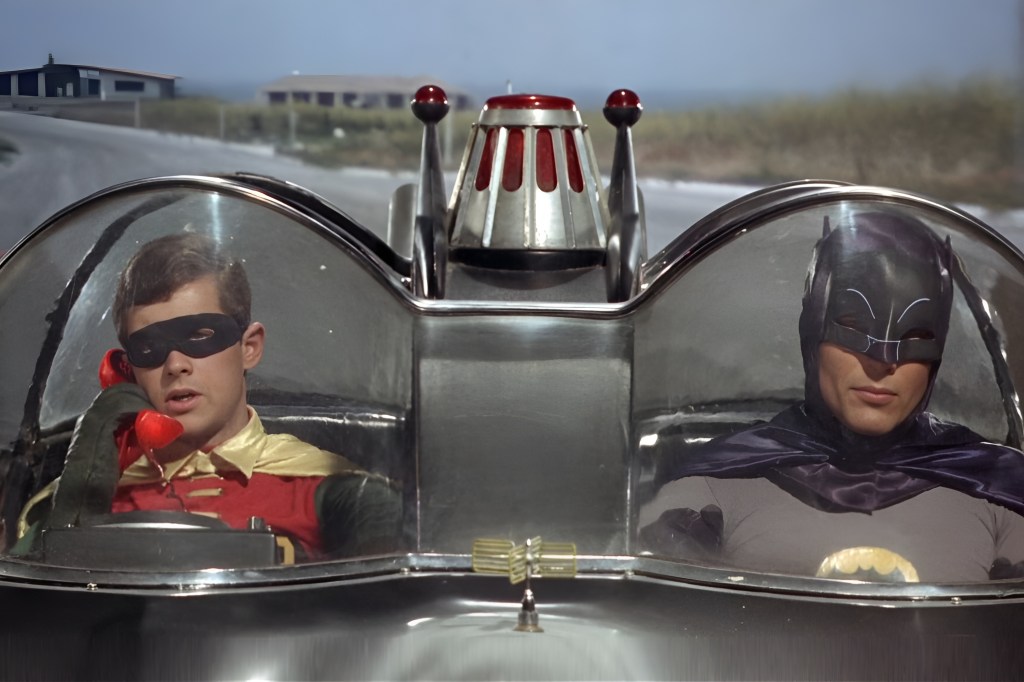
To a modern fan, the Batman of the early nineteen-sixties would be barely recognizable. Stripped of his hard-boiled detective roots and most of his rogues’ gallery by Comics Code Authority censorship, the former Dark Knight had gotten downright goofy. Instead of Two-Face and Catwoman, Batman and Robin were facing off against menaces like the Rainbow Creature and the Polka-Dot Man, or donning disguises like the “Mummy Crimefighters.” It was this iteration of the hero that came into the hands of producer William Dozier, tasked by ABC with adapting Batman to television. Dozier felt that the comics were too silly to be taken seriously, and decided that for a Batman series to work, “It needed to be so bad it was funny.” Under his guidance, Batman premiered in January of 1966 with its tongue firmly in cheek. It was an instant sensation.
Videos by ComicBook.com
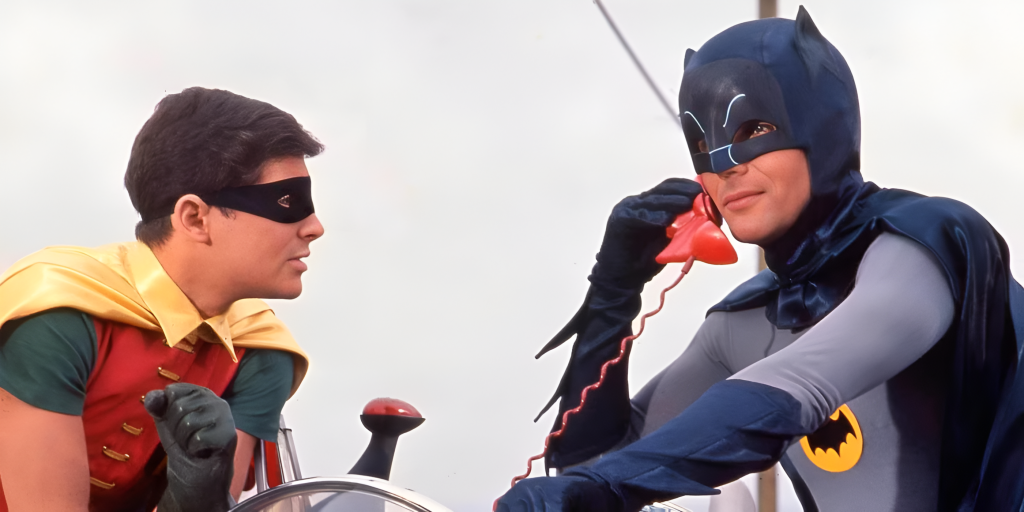
Batman came at the right time: its self-aware, self-deprecating tone captured the era’s zeitgeist, and made it a hit with kids and adults alike. Merchandisers were quick to take notice, and as “Batmania” seized the country in 1966, a slew of bat-memorabilia hit shelves. The most prominent of these were the action figures and role-play items from Ideal Toys, who manufactured an extensive range of some of the first Batman merchandise ever made. Emulating the tone of the series, Ideal’s Batman product was bright, colorful, and fun; it caught the attention of kids in the 1960s, and kept their attention as they grew into adult collectors. Today, Ideal’s Batman items are among the most coveted collectibles of the Caped Crusader, and none is more prized than Ideal’s elaborate utility belt. Complete with more than a dozen pieces, the belt is today worth almost $20k mint in package to Batman fans – and that’s despite breaking one of Batman’s most important rules: this utility belt comes complete with a gun.
A Look at What Was Included with the Ideal Utility Belt
The Ideal utility belt was the first time a toy manufacturer ever put out a product that let kids imagine themselves at Batman. It was accompanied by the sold-separately, almost as rare plastic Batman cowl and cape. The belt itself was newly-made for the product, while the “utilities” within were a combination of new, character-specific items, and existing molds with a Batman logo slapped onto them. The series makes this a little easier to swallow, as Batman was always carrying around things like his famed bat-shark repellent. In fact, Adam West is probably the only version of the Caped Crusader who it’s easy to envision carrying around the bat-flashlight keychain from this set. Still, even if the bat-flashlight is a little silly, it’s more in character than the “Bat-Gun Launcher” and its “Bat Rocket Grenade.”
Any Batman fan can tell you that the Dark Knight has two rules: no guns, no killing. Although less codified then than it’s become now, Batman’s oath never to kill had been in place since 1940. In his earliest appearances, Batman killed criminals with impunity. He even seemed to enjoy it. Editor Whitney Ellsworth felt this was inappropriate, recognizing that these hyper-violent comics were being read predominantly by children who would view these costumed heroes as role-models. Bill Finger, Batman’s creator, agreed whole-heartedly. To Finger, it was out of character for a man whose parents were killed in front of him to ever take a life. As a gun was the weapon that killed his parents, Finger felt just as strongly that Batman would never use one either. Within the confines of the series, this was addressed in brief during pilot episode “Hi Diddle Riddle,” when Batman mentions in passing that “my own parents were murdered by dastardly criminals.”
Batman might instead be more comfortable using the Bat-Gun Launcher’s secondary projectile, a “Message Sender.” This was a hollow tube that could fit a rolled-up paper message, enabling kids to fire a message at their friend across the backyard or playground (in theory, anyway: the toy’s range was terrible in practice). Also a more familiar sight is the plastic batarang, one of the few newly-sculpted pieces of the utility belt, modeled after the batarangs featured in the series. It’s a simplified design, lacking the bat’s head shape that completes the batarang’s bat-silhouette. Just as iconic is the grappling hook and rope that attach to the belt, enabling kids to imagine scaling the side of a building. Batman and Robin did this frequently on the series, making for one of its most memorable recurring visuals, complete with celebrity cameos.
The set was rounded off by a set of bat-handcuffs and a disguised compartment in the belt buckle. The handcuffs were also newly sculpted, and had a bat’s wing motif similar to the batarang. Several packaging variations exist, as well as slight variations on the color and the individual belt components. Seemingly-inconsequential differences like the material used for the flashlight or way that the grappling hook compartment clips onto the belt can add thousands of dollars to the price-tag. Metal flashlights are worth thousands (as opposed to later plastic and vinyl flashlights), while the later-issue metal clip for the grappling hook also adds four figures to the value. One of the coolest packaging variations was the “Batman Equipment Set,” which bundled the utility belt with Ideal’s otherwise sold-separately cape and cowl set.
Why The Ideal Utility Belt is a Batman Collector’s Grail Today
With toy collecting as with anything else, value is driven by two factors: supply and demand. Batman is as popular now as he was when the Ideal Utility Belt was new on shelves, and the very few of the toy survived the sixties. Generally, roleplay toys like this are more difficult to find in good condition, just by merit of the kind of play they inspire. Utility belts make an especially challenging piece because of the numerous pieces included, most of which are not designed to be durable. The flashlight ran out of batteries and was thrown away. The grappling hook broke. Your friend was playing the Joker and snapped the handcuffs when you tried to catch him.
Numerous utility belt toys have been produced over the decades, including numerous updates to and variations on Batman’s utility belt. None are as collectible as Ideal’s, as much for its rarity as its historical significance. It captures the moment Batman went from the brink of cancellation to DC’s most popular hero, and marks the beginning of a nearly-unbroken sixty years of Batman toys on store shelves. Not bad for a toy that forgot one of the most important things about the character it represents.
What’s your favorite Batman gadget? Leave a comment below and join the conversation now in the ComicBook Forum!
More Collectibles
-
Courtesy of Warner Bros. Pictures -

Courtesy of 20th Century Studios


Forum Conversation: Which DC Superhero Has the Most Iconic Costume?
Go to ForumIt’s difficult not to go with Superman here. Batman is the most popular DC character, but Superman and Wonder Woman to me more represent the heart of DC Comics, and regardless of what era you’re from or your exposure to comics, the moment you see a picture of Superman’s costume, you know exactly who it is.
Ever since I saw Godspeed in the tv show The Flash on the CW, it has been my favorite costume. Reverse Flash comes in a good 2nd. Between the tv show, comics, and even animation. They’ve all been good. Ive loved the villians costumes over the superheros
I agree, Superman is probably one of the best examples of a costume being instantly recognizable no matter how much the design changes. Even small changes to the colors or style still make it obvious who the character is. I also really like some of the modern takes on his look, especially the Superman Blue Leather Jacket, which gives the classic character a more casual and contemporary feel.