Sci-fi has always been one of the most important aspects of the comic industry. Even before superheroes ever came about, sci-fi was there on the comic pages. Eventually, it would become the cornerstone of superhero comics and an important part of the modern comic industry. As the indie side of the market grew, readers would start getting original sci-fi stories, and the 21st century at Image Comics, the most powerful indie, was defined by sci-fi comics like Saga, Low, East of West, and many more. The ’10s at Image saw numerous big name writers begin working at the publisher, with many of them telling sci-fi stories, creating their own worlds.
Videos by ComicBook.com
Into this environment stepped one of the greatest writers working in the comic medium. Grant Morrison had started doing more indie work in the ’10s, and that included one of the best sci-fi comics of all time. In 2015, Morrison would team up with their Batman Incorporated artist Chris Burnham, for Nameless. Morrison has quite a reputation for bending minds with their work, but this six-issue series would see them go even further down that road. Nameless is a complicated classic, and it’s time to shout its name from the rooftops.
Nameless Used Gnostic Christianity as the Roots for Perfect Cosmic Horror

There are some fantastic sci-fi comics, but Nameless is in its own league. The premise behind the story is deceptively simple: an occult detective named Nameless is called to help save the Earth from an oncoming cosmic object. Things get extremely weird as the crew approaches the object, and the book’s ending has a very different feel from the beginning, as readers learn that not everything is as they suspected. The book has a huge twist, and it’s one that will that makes it so difficult and rewarding.
Morrison is a practicing chaos magician and has a wide knowledge of the occult. Morrison’s ’90 magnum opus The Invisibles used this knowledge perfectly, and Nameless would do much the same. In the afterword of the collected edition, Morrison talks about blending Lovecraftian cosmic horror with Christianity, specifically Gnostic Christianity, which believes that the entity we call “God” is actually a sinister being, an evil demiurge trying to usurp creation. Morrison basically asked what would happen if God were a monster, and Nameless is their answer to that question.

One of my favorite parts about Nameless is the way it subverts reader expectations. You expect everything to go wrong, but when it does, you’re suddenly thrown into a much more complicated truth than you ever imagined. It seemingly shows you a familiar kind of story and then uses that to tell a story unlike anything you’ve ever seen before. By the end of your first readthrough, you won’t really understand exactly what you’ve read until you get to the afterword, where Morrison takes the reader on a trip through the book, lifting the curtain to show you what they were doing and why they were doing it.
As great as the writing is, this wouldn’t be the same story without Burnham’s art. There are some truly disturbing scenes throughout the book, as God breaks down Nameless and the crew. Burnham’s pencils bring the gruesomeness of numerous scenes to life, while also really bringing the characters and their emotions to the fore of the story. He’s able to convey the mystery of the situation perfectly, something which another artist might have failed at. Morrison has a good working relationship with many artists out there, and that relationship pays off in this book. Morrison plays to the Burnham’s strength, and it helps give readers a near perfect story.
Cosmic Horror Doesn’t Get Better than Nameless
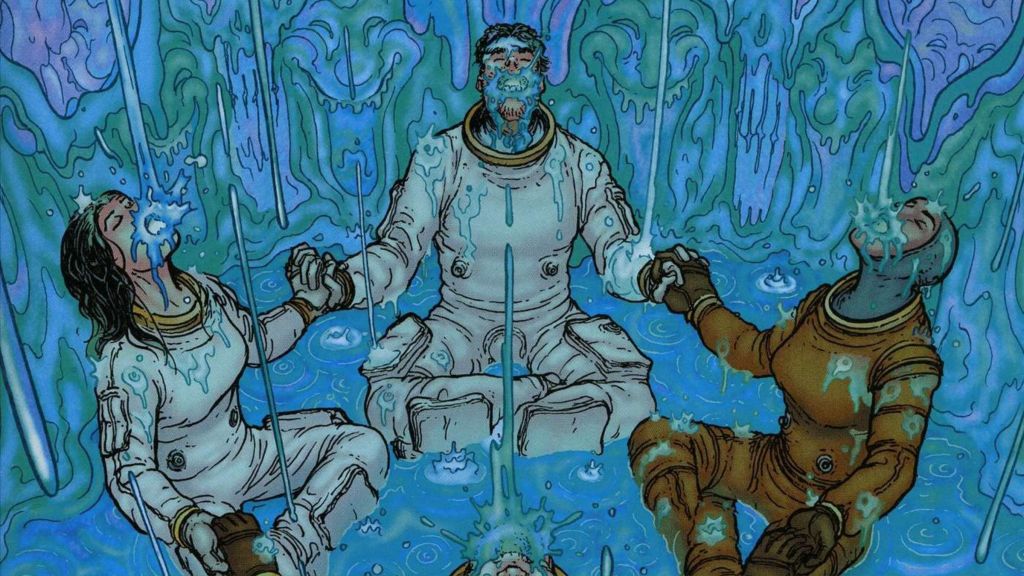
Nameless came at a time when Morrison’s star wasn’t as high as it once was, which explains why it’s not as popular as some of their earlier works. It is a very difficult book, but Morrison and Burnham are able to create a story that takes cosmic horror to a new place. The book is frequently shocking, both because of the grotesque imagery and the ideas within it, which is its greatest strength. It doesn’t get as much praise as it should.
Cosmic horror has gotten more and more popular over the years. There are numerous great video games that tell these kinds of stories, and mainstream superhero comics like The Immortal Hulk have used it brilliantly. Nameless does something that no other cosmic horror does, and that’s part of what makes it so great. It plays with familiar ideas and yet it is very much its own story, one that will keep you guessing til the end.
What do you think of Nameless? Leave a comment in the comment section below and join the conversation on the ComicBook Forums!
Most Viewed
-

Official art by Bastien Lecouffe-Deharme -
Image courtesy of Tor Books/Macmillan -

A photo of the Retrovolt Arcade taken in 2017, showing several classic arcade cabinets and stools. -

Courtesy of TOHO Animation -

Courtesy of Saber Interactive