
The Justice League is DC Comics‘ greatest team and I feel like I’ve written that particular sentence countless times. The Justice League is the ultimate superhero team (and that one), a group of heroes brought together to protect all of reality from the greatest threats ever. For decades, the League was the team that went up against the biggest enemies, battling alongside the greatest heroes of the multiverse. The best way to describe Justice League of America (Vol. 1) is that it was a monthly event book, with the most popular heroes facing off against threats that shook the multiverse itself. Fans loved the team and over the decades, DC has showed various facets of the group and what it can be. There have been many Justice Leagues, but one of them has a special place in the hearts of fans: the Justice League International.
Videos by ComicBook.com
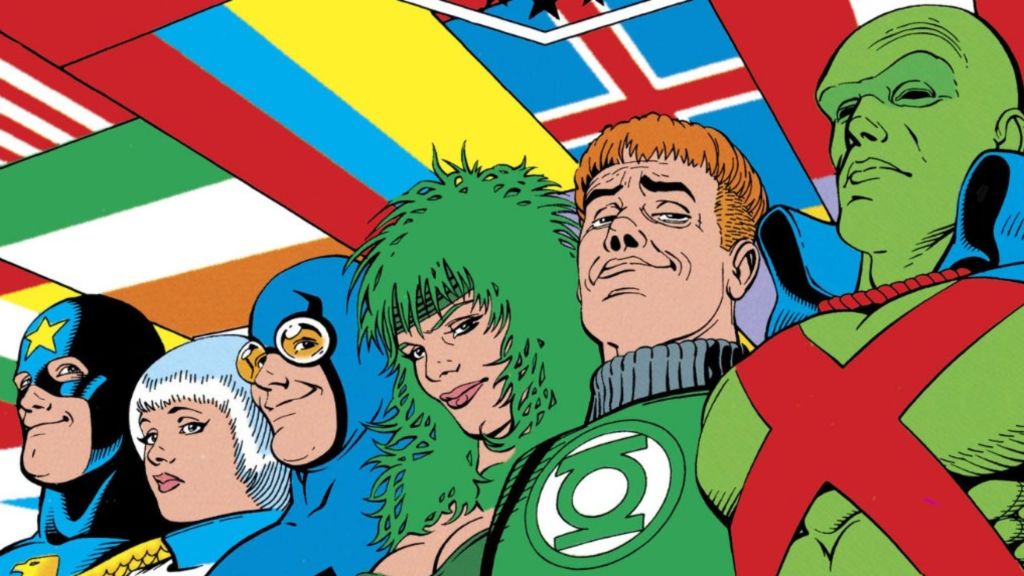
Crisis on Infinite Earths laid the groundwork for this new version of DC’s premiere superteam. DC took a page from their marvelous competition, taking things in a more grounded direction. The team of gods in the satellite above the Earth, passing judgment on those below, didn’t fit the DC Universe anymore. Instead, the Justice League was shifted slightly, taking more of a cue from the Avengers than before, creating a team that combined stars with new heroes. However, this wasn’t the only reason the team became so beloved. Creators J.M. DeMatteis, Keith Giffen, and Kevin Maguire did Justice League stories like no one else, creating the perfect superhero sitcom. This era of the League is a favorite of fans, becoming legendary for numerous reasons.
The Justice League International Took the League Global
The JLI brought together a diverse group of heroes, but it wasn’t the first time that DC tried to change the way the League worked. In the early ’80s, the team left the League satellite and came down to Earth, with Aquaman, Martian Manhunter, Elongated Man, and Zatanna recruiting new heroes Gypsy, Vibe, and Commander Steel. Nicknamed “Justice League Detroit” because of where the team’s new base was, it tried to do big superhero stories without the big heroes and it didn’t work. Fans didn’t want the B-list of the League leading the D-list. Not back then, at least.
DeMatteis, Giffen, and Maguire didn’t want to do the same thing. Well, they did, but they wanted to succeed and they did that by going all in on the humor. Humor had long been an important part of the superhero comic and these three understood that perfectly. The team’s roster – Batman, Martian Manhunter, Black Canary, Power Girl, Booster Girl, Blue Beetle, Mister Miracle, Big Barda, Fire, Ice, Guy Gardner, Elongated Man, Sue Dibney, Rocket Red, G’Nort, Captain Marvel, Captain Atom, Maxwell Lord, L-Ron, and many more – was perfect for this. You had the perfect combination of personalities and they became the star of the book, their clashes, squabbles, and relationships becoming the stuff of legend.
Sure, we still got villains like Despero (and a new, better version of the villain) and Starro and new ones Manga Khan, the book was more about the team and their shenanigans, with Maguire’s adroit pencils helping all of DeMatteis and Giffen’s jokes land perfectly. It’s joined the pantheon of the greatest eras of the Justice League, all because it led somewhere new for the team. One of the interesting things about the JLI is that for fans who haven’t really read the books or know much about post-Crisis DC, they think that it was just a funny book and don’t know anything about the embassy system, which is why it had the word “international” in the name.
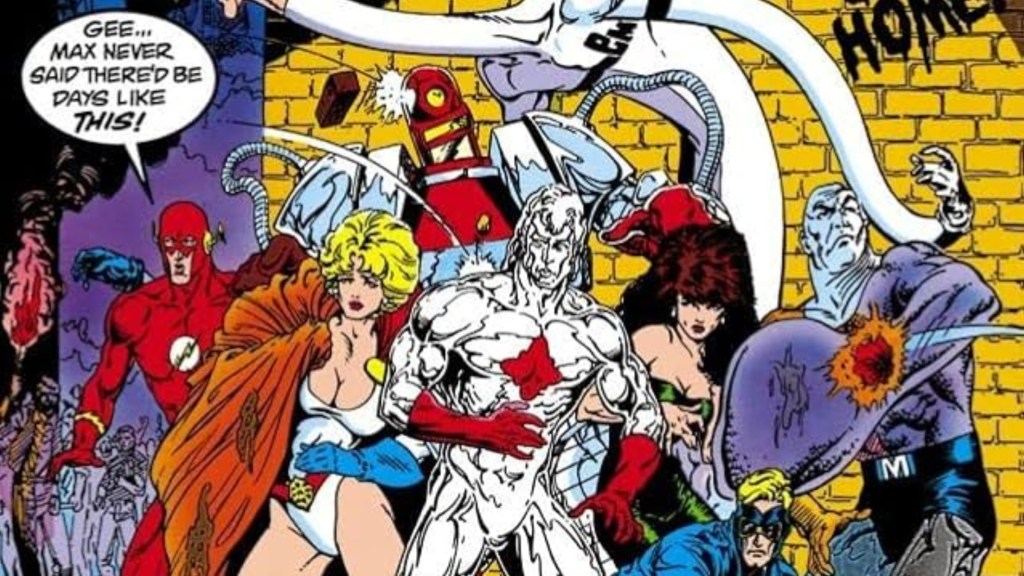
Maxwell Lord, the financier who bankrolled this latest version of the Justice League was able to get the team a contract with the UN and began the embassy system (because superheroing was a for profit business of him, which is a major plot point throughout the era). Every major part of the world was meant to have a Justice League embassy, with Justice League Europe giving readers their decidedly different adventures. It’s honestly very rare that anyone ever talks about this part of League history. This book brought together Aquaman, Animal Man, Captain Atom, Crimson Fox, Wally West, Power Girl, Metamorpho, Hal Jordan, Doctor Light II, Elongated Man, and Wonder Woman, basing the team out of Paris.
DeMatteis and Giffen wrote this book as well, working with artist Bart Sears. The JLE first appeared two years into the JLI run, got its own book, and had adventures until 1993. It was the same kind of character-based sitcom that Justice League International was, with Sears’ beefy, stylized art setting it apart from the softer style of Maguire. However, Sears was as good as Maguire was at character acting and body language, helping the humor of the book along. It was an exciting era of the team; sure, you’d get stories where it was Guy Gardner yelling at everyone for a whole issue, or Wally West and Power Girl sparring verbally, but you would also get exciting sci-fi and superhero adventures.
The JLI era is usually looked at as the time when the League wasn’t so much a superhero team as they were a bunch of superheroes living their weird lives together and this isn’t too far off the mark. It was completely unlike every other era in League history; the team was the focus in a different way. It helped that these books were allowed to dig into the characters. This solved one of the problems with Justice League of America: it was a bunch of characters with books that you couldn’t do much with. It was mostly action, which is great at times, but the JLI era was able to go in an entirely direction. It concentrated on the two Leagues as people, all while introducing a new system that felt perfect for the fading-Cold War world of the late ’80s.
The Justice League International’s Legend Will Never Fade
Justice League of America (Vol. 1) created a dominant paradigm in team comics in the Silver Age, one that would be challenged by Marvel Comics, who basically followed DC’s lead in the beginning before taking things their way. The ’80s were when the superhero soap opera of books like Uncanny X-Men and New Teen Titans became the gold standard and the Justice League International era is an offshoot of that. It took a team of lower-level heroes and let a group of creators go to town with them, telling what were essentially slice of life comics with occasional fights and alien invasions.
We first met the team in 1987, 39 years ago, and this era remains the most unique in Justice League history. In fact, you can look at Justice League history since the end of the JLI years in the mid ’90s as a reaction to this era. I think the reason is this – we all love the other eras of the team, but this is the one a lot of us connect with. It did the most with its characters, fleshing them out in surprising and enthralling ways, taking the Justice League to new places.
More Comics
-

Image Courtesy of Marvel Comics -

Image Courtesy of DC Comics -

Image Courtesy of Marvel Comics -
Image Courtesy of Marvel Comics -
Image Courtesy of Marvel Comics -
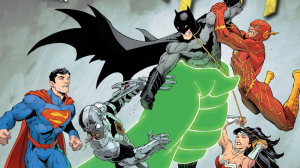
Image Courtesy of DC Comics -

Image Courtesy of Marvel Comics

