Marvel Comics is home to many amazing villains, but there are few of them with the history, or the power, of Apocalypse. The X-Men have battling En Sabah Nur since X-Factor (Vol. 1) #5, the villain taking a lofty role in their rogues gallery immediately. He was a monster in the shadows, a devil who offered people power at the cost of their soul, and soon became one of the most popular X-villains of them all. He’s usually up there with villains like Magneto, Mister Sinister, Cassandra Nova, the Hellfire Club, and the like, and is just as well-known to more casual fans as he is to diehards. He’s been involved in some of the most beloved X-stories of all time, including the all-time classic “Age of Apocalypse”. I’ve often looked at him as the Thanos of the X-Men villains, the all-powerful force who is more formidable than you and knows way more about everything. He’s one of the greats. He peaked in 1991.
Videos by ComicBook.com
Now, that last sentence is where everyone’s going to stop and say, “What the huh?!” 1991 was the year of the biggest X-Men reboot ever, one that Apocalypse didn’t play a part in. However, before this reboot, X-Factor, New Mutants, and Uncanny X-Men were winding down their stories for the upcoming X-Men (Vol. 2) #1, Uncanny X-Men (Vol. 1) #281, X-Factor (Vol. 1) #71, and X-Force (Vol. 1) #1. Apocalypse had been the main villain of X-Factor (Vol. 1) throughout its run and the villain’s story – or at least his story up to that point – was about to come to an end. Looking back over the years Apocalypse spent in the limelight of X-Factor, and comparing them to what has come since, shows just how great the villain was and how that has carried him through decades of mid-storytelling.
Apocalypse Was the Perfect Villain but It All Went Pear-Shaped
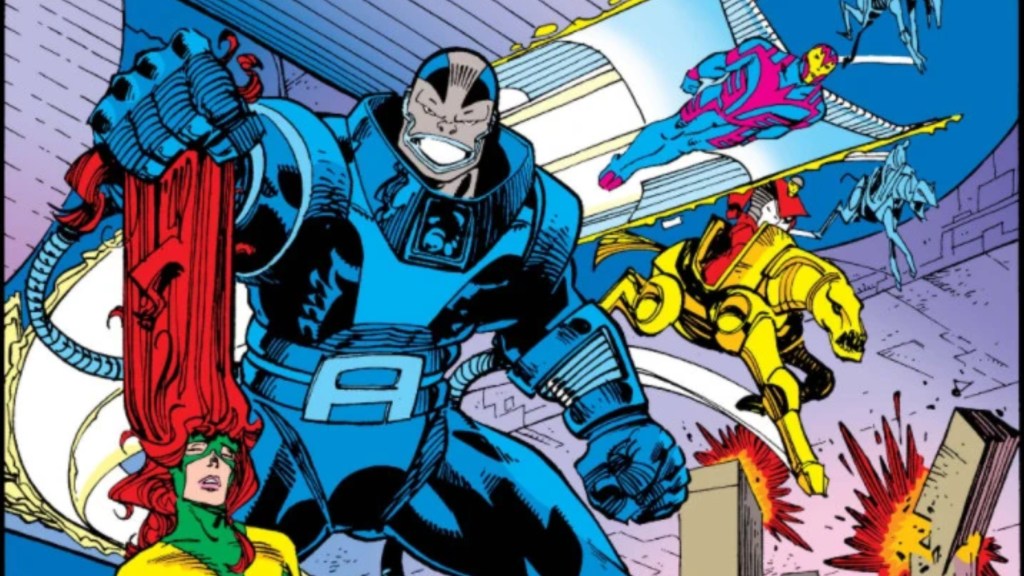
I don’t think a lot of modern readers know this, but X-Factor (Vol. 1) was amazing for just about its entire run, with the first phase of the group starring the original five X-Men to be some of the best X-stories of all-time. Apocalypse was immediately positioned as the main villain of the book, with his lackeys often attacking the group. Writer Bob Layton and later Louise Simonson crafted him into something unique among the X-Men’s amazing villains, with the introduction of the concept of his Horsemen being integral to his development. He was something of a stereotypical “dark lord” type of villain, but it worked perfectly.
The whole Horsemen affair with Archangel showed just how seductive his power could be and added a new layer to the villain, one that creators would build on over the years. His Celestial technology made him an even more powerful threat and the development of his survival of the fittest doctrine over the course of the series fleshed out the character. The introduction of Nathan Summers into the mix – Apocalypse became obsessed with getting his hands on the boy, wanting to take over his body and use his powers to become a true god – added a dimension to his rivalry with the team that made it personal. “Endgame”, which ran through X-Factor (Vol. 1) #65-68, by Chris Claremont, Jim Lee, and Whilce Portacio, saw the end of the whole thing, as Cyclops tapped a new level of power and was able to seemingly kill the villain, putting an end to his threat.
“Endgame” was the first X-Factor story I read in 1991 and I was blown away. The library down the road from me had nearly the entire early run of the book, and I ended up reading it, watching the development of the villain that I had just watched die. Apocalypse was built into the perfect big bad of a title, one whose threat grew as he interweaved himself more into the team’s fiber. These issues were why we love Apocalypse so much nowadays, laying the groundwork of everything that came later. However, the problem was that what came later was mostly, at best, reheated nachos.
X-Factor gave him a story with a beginning, middle, and end, something that few since have been able to do. The villain would only stay dead until 1992’s “X-Cutioner’s Song”, and wouldn’t actually become important in the mainline universe until the end of the decade, when it was revealed that he ruled the future Nathan was sent to at the end of “Endgame” because of the events of the last X-story of old millennium “The Twelve”. It gave his story the kind of personal connection that his run in X-Factor did, but it was basically the same overall plot – En Sabah Nur trying to manipulate events so that he could get ultimate power.
Honestly, having 35 years of perspective over X-Men history, I can honestly say that after X-Factor, Apocalypse didn’t do anything to keep his spot at the top of the villain pyramid. Most of his appearances between 1991 and 1997 were rather unimportant stories that mostly dealt with his resurrection; the only truly important story of the bunch was an alternate universe, the aforementioned “Age of Apocalypse”. After the year 2000, it’s again kind of hard to find a good Apocalypse story. It’s all just the same stuff – Horsemen, Celestials, survival of the fittest.
The Krakoa Era brought massive change to the X-Men and Apocalypse was no different. He was one of the main characters of the “Dawn of X” phase of the era, with readers learning that he was once a leader of Okkara, the mutant supercontinent that would be sundered in a demonic invasion from Amenth. The mutants of Okkara would ride Arakko into the Amenth to fight the demon hordes, with Apocalypse and Krakoa left behind to create a powerful army. His survival of the fittest ethos were sharpened on Okkara and ever since he had been working to create a world strong enough to survive invasion.
This was a huge change to his status quo, but if we’re being honest, it fell flat. It’s one of those retcons that makes little sense when you add into the overall canon. Apocalypse, the most feared X-villain of them all, had actually been somewhat altruistic over the years. If he would have shared his actual purpose, he would have found allies. In a lot of ways it ruined the character. Change can be great for characters, especially one like Apocalypse, who needed something new to shake him out of a decades-long rut. However, this change was basically just there to make “X of Swords” and Excalibur, which cast the former villain as a type of mutant shaman, work; it wreaked havoc on who he was as a character. It all adds up to show just how little direction Marvel has given the villain over the decades. 1991 was the last year Apocalypse was a truly great villain, and I guess I’ll meet anyone under the flagpole who disagrees.
Apocalypse Is Harder to Write Than He Looks But It Is Possible
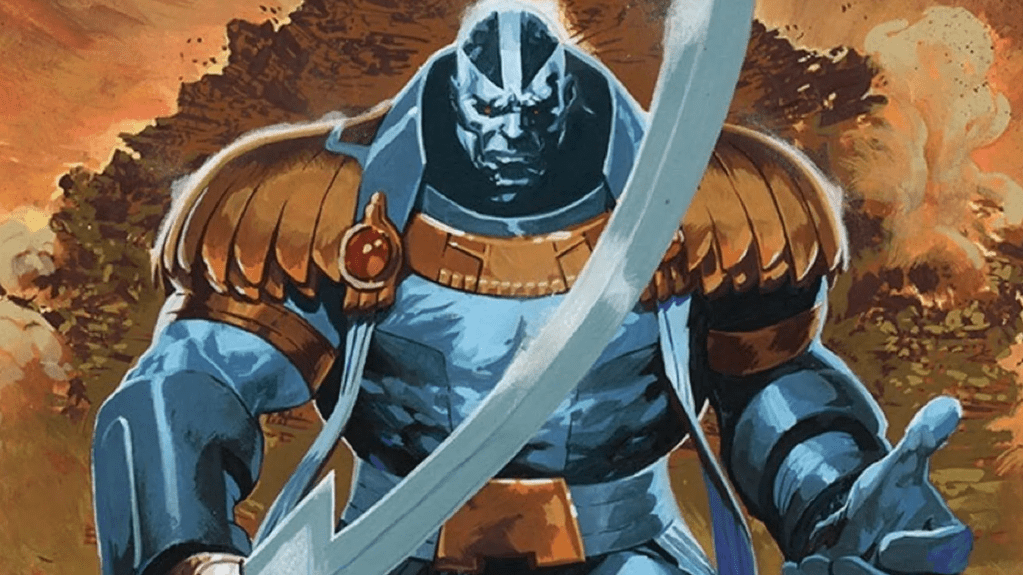
There’s honestly nothing like those old X-Factor Apocalypse stories. I was finally able to get new copies of “Endgame” this year and I love it just as much now as I did then, which isn’t always the case with early ’90s X-books. His growth as a villain, worming his way into the center of the book’s narrative was perfect, earning him his villain top spot. However, if you really look at the history of him as a character, he’s really done nothing over the years to keep that spot. It’s time to admit he peaked in X-Factor (Vol. 1). Look, we all love “Age of Apocalypse”, but other than that, tell me what the villain was doing in 1993. Was it cool? That’s rhetorical, because the answer is no, it wasn’t.
We’ve learned a lot about En Sabah Nur over the years and we’ve definitely gotten some good stories starring him. Rise of Apocalypse, partly adapted for X-Men ’97, was a fantastic miniseries (mostly because of Adam Pollina’s unique art; his X-Force was brilliant), “Blood of Apocalypse” was entertaining even if it was more of the same, and Uncanny X-Force (Vol. 1) fleshed out the character and his mythos beautifully over the entirety of its run. However, for the most part, we’ve gotten the same stuff over and over again, trading on the glories of the past.
Apocalypse is a great villain and always will be, but his biggest problem is just one of the biggest problems with superheroes in general – stagnation. His first raft of stories was so good that every one that came after them carried the same stuff (took this analogy a little too far). There were additions that made various ideas work better, but creators never really put him in the role of big bad in the same way. Instead of being a longterm villain, they’ve made him an event villain and it just doesn’t really work. You don’t have to copy the original Apocalypse story beat for beat, but you can take what made it work – entwining him in the narrative for five years and allowing him to grow with his foes – and bring it to the current day, allowing him to finally reach the level he should have.
More Comics
-

Image Courtesy of DC Comics -
Image Courtesy of DC Comics -
Image Courtesy of DC Comics -
Image Courtesy of Marvel Comics -

Image Courtesy of Marvel Comics