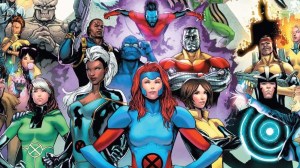
The Multiverse Saga is building to a head in Avengers: Doomsday, when universes collide. According to Doctor Strange in the Multiverse of Madness, “An incursion occurs when the boundary between two universes erodes, and they collide. Destroying one, or both, entirely.” The idea is lifted straight from the comics, where incursions played a huge part in the setup for 2015’s Secret Wars event. In Doomsday, we’re currently expecting no less than three universes to crash together; the MCU’s Earth-616, an X-Men universe, and the Fantastic Four’s timeline.
Videos by ComicBook.com
That said, the “rules” of the MCU’s multiverse have been remarkably fluid over the course of the Multiverse Saga. According to Kevin Feige, Marvel convened a meeting about the multiverse’s rules in July 2021 – a couple of months after filming had wrapped on Doctor Strange in the Multiverse of Madness. The strange sequencing perhaps explains a little why the Multiverse Saga has been so disjointed. Now, in the buildup to the Avengers: Endgame Encore and Doomsday, Marvel seem to have switched things up again.
Marvel Comics Just Changed What an Incursion Means
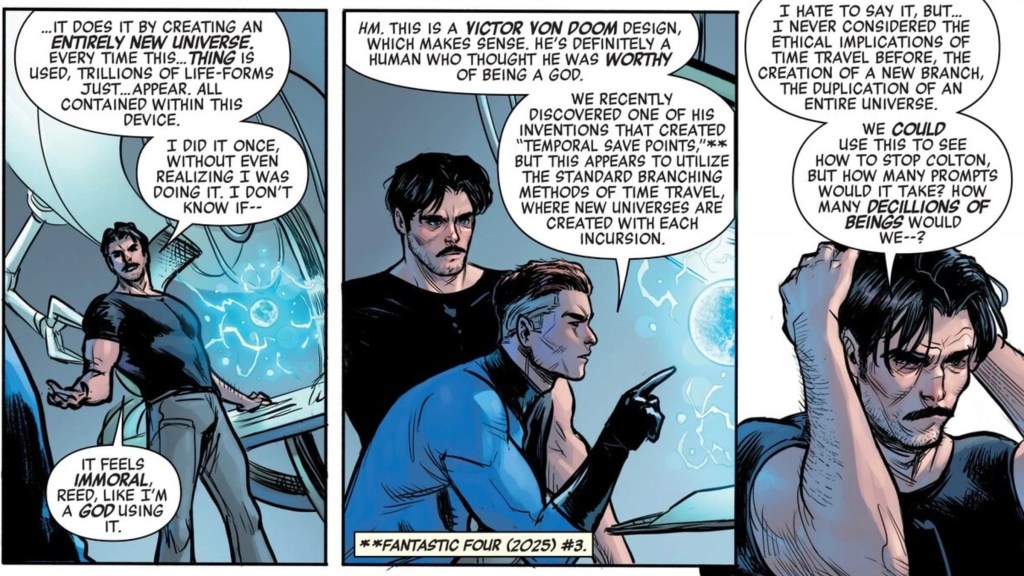
Chip Zdarsky and Ario Anindito’s Avengers: Armageddon #3 quietly introduces a whole new definition of “incursions.” Here, Mr. Fantastic and Tony Stark investigate a piece of Doom technology designed to predict the future. To Reed’s amazement, this “appears to utilize the standard branching methods of time travel, where new universes are created with each incursion.” That may all sound pseudo-scientific gibberish, but it goes something like this: imagine a time traveler decides to hop back in time five years, perhaps saving their father’s life. Their “incursion” creates a branch; now there are two timelines, one where reality changed, the other where it didn’t.
Until now, we’d associated the word “incursion” purely with the destruction of one or more timelines. Now, the word is being used to refer to a time travel event that led to the creation of new branches. It’s a subtle difference, but an important one; it means incursions can be both creative and destructive. What’s more, this solidifies the relationship between time travel and the multiverse; although branches can create naturally (when a person turns left instead of right), the biggest incursions will be created by time travel.
This Changes Our Understanding of Avengers: Endgame
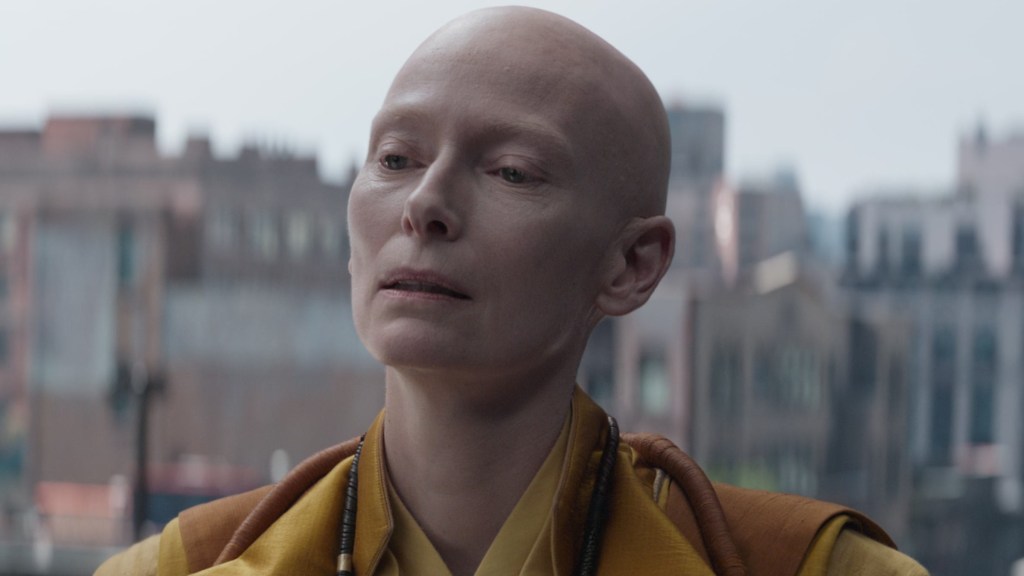
It’s true that this is only in the comics. But here’s the catch; Marvel Comics and Marvel Studios are increasingly trying to synergize. What’s more, this new model of incursions matches with a discussion the Ancient One had with Bruce Banner in Avengers: Endgame. She believed removing the Infinity Stones would have a catastrophic effect, “splitting” what she called “the flow of time.” In other words, the Avengers’ time travel missions would create branching timelines. “For each stone you remove, you’ll create a new, vulnerable timeline,” she concluded.
it does, technically, make sense to refer to this as an “incursion” – albeit a smaller-scale event. In this case, the incursion is not one universe crashing into another, but rather one time traveler stepping into a different period. The interesting question is whether the Avengers did indeed manage to seal the branches off when they returned the Infinity Stones, as they intended to, or whether every single one of those interactions created a branching timeline. Perhaps there’s a timeline where Thanos vanished and the snap never happened, courtesy of Thanos’ pursuit of the Avengers in Endgame.
More Comics
-

Image courtesy of DC Comics -
Image Courtesy of Marvel Comics -

Image Courtesy of Marvel Comics -

Image Courtesy of DC Comics -
Image Courtesy of Marvel Comics