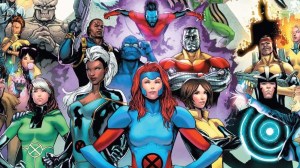
When the X-Men arrived in Marvel Comics, it ushered in a new era for heroes with mutants, characters born with superpowers. This laid the seeds for the bigotry and hatred that would grow in the world toward mutants, something that Chris Claremont would establish over a decade later. For every good mutant, though, there had to be evil mutants, and that is where The X-Men #4 (1964) by Stan Lee and Jack Kirby remains such an important issue in comic book history. Magneto debuted in the first issue of the classic series, and then in the fourth issue, he was back, and this time he had his own supervillain team.
Videos by ComicBook.com
In The X-Men #4, Marvel Comics introduced the Brotherhood of Evil Mutants, a villainous team that has both tormented the X-Men and made life hard for all mutants on Earth for the six-plus decades since.
The X-Men #4 Brings Evil Mutants Into Marvel Comics

In The X-Men #1, the team brought in a new member, Jean Grey, and ended up being forced to stop a terrorist act by the mutant named Magneto. After this, the team fought a villain known as the Vanisher in the next issue, and then in the third issue, they tried to forcibly recruit a mutant named the Blob, only for him to fight back because he didn’t want to join. This third issue really made the X-Men look antagonistic as they demanded the Blob join them or else, and when he finally rejected them outright, Professor X wiped their existence from his memory.
While this made the team look terrible, it led to the fourth issue, where they fought mutants who were even worse than that. This was where Marvel drew the line between the X-Men’s seeming militant stance on mutant rights and a team that was actually evil, made more so by naming them the Brotherhood of Evil Mutants. To show how dangerous this team really was, Marvel had Magneto, the X-Men’s first enemy, form them. They then set out to achieve Magneto’s dreams of conquest, before later also attempting to recruit mutants for their side of this war between ideals.
The members of the Brotherhood of Evil Mutants in this debut appearance included Magneto, Mastermind, Toad, Quicksilver, and the Scarlet Witch. This was the first-ever comic book appearance of every member of the team other than Magneto. What was really impressive was that the book opened with the X-Men training together as almost a family unit, while the Brotherhood was mismatched and treated each other horribly. Everyone bullied Toad, Mastermind made unwanted advances on the Scarlet Witch, and Quicksilver was often cruel, while also extremely protective of his sister. It was obvious what the differences were between the two mutant teams here, helping to ease the discomfort of watching the X-Men in the previous issue try to force themselves onto others.
The issue ended on a curious note, as Quicksilver stopped Magneto from destroying a nation with bombs he placed, but he and Scarlet Witch remained with their master for a time, and the X-Men were unable to beat this evil mutant team. What happened after this was that the Brotherhood of Evil Mutants became the X-Men’s most persistent villains, returning in the next few issues as they attempted to recruit Namor, the Blob, and Unus the Untouchable. Over the next few decades, the team added some of the most powerful mutant villains in Marvel Comics to their lineup, and the X-Men always struggled to stop this powerful team.
The X-Men #4 Is Also Important for Introducing the World to the Scarlet Witch
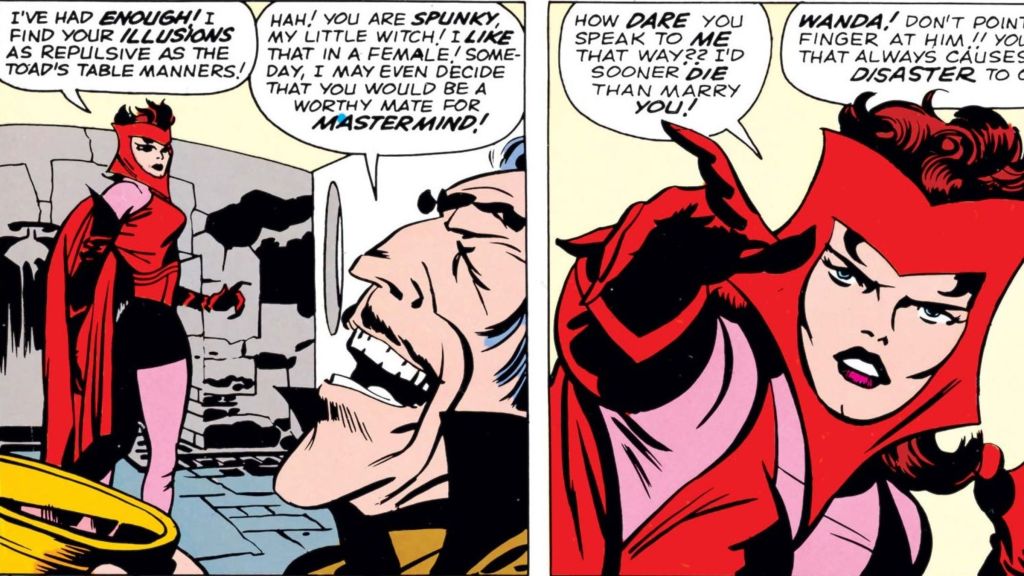
While introducing the Brotherhood of Evil Mutants was important, The X-Men #4 was even more important for the debut of the Scarlet Witch. From this very first issue, Marvel showed that Wanda Maximoff was not a villain at heart. Magneto had saved her from a mob that wanted to kill her for being a witch, and her brother, Quicksilver, wanted to protect her. By the time a year had passed, both the Scarlet Witch and Quicksilver had left the Brotherhood of Evil Mutants and joined the Avengers.
Since that time, few Marvel characters have been as important as the Scarlet Witch. She has caused some of Marvel’s most devastating tragedies, from killing several Avengers in the “Avengers Disassembled” storyline and changing the world in “House of M” to decimating the mutant population by just saying, “No more mutants.” She has also been important in the MCU, with her role on the Avengers team, her own Disney+ series, WandaVision, and her descent into the role of a villain in Doctor Strange in the Multiverse of Madness. None of that would be possible without her original introduction in the pages of The X-Men #4.
More Comics
-
Image Courtesy of Marvel Comics -

Image courtesy of DC Comics -
Image Courtesy of Marvel Comics -

Image Courtesy of DC Comics -
Image Courtesy of Marvel Comics