The Justice League brought together the greatest heroes of DC’s Silver Age, following in the footsteps of the Justice Society. Everyone knows a hit when they see one; the team’s massive success led to the rebirth of Marvel as a superhero comic publisher. Since then, some of the biggest stories in the history of comics have come from group and the best heroes in the DC Multiverse have all joined the team. The Justice League has become one of the most popular teams ever, starring in one of the coolest superhero animated series in Justice League/Justice League Unlimited (and a movie that we try not to talk about very much) and has had crossovers with everyone from the Avengers to Sonic the Hedgehog and Godzilla.
Videos by ComicBook.com
The Justice League has starred in some amazing stories over the years, helping define the team and what a superhero team can be. These milestones have changed the way fans look at the group and have given readers some of the coolest stories ever. These ten Justice League milestones are the biggest in their existence.
10) DC All-In #1
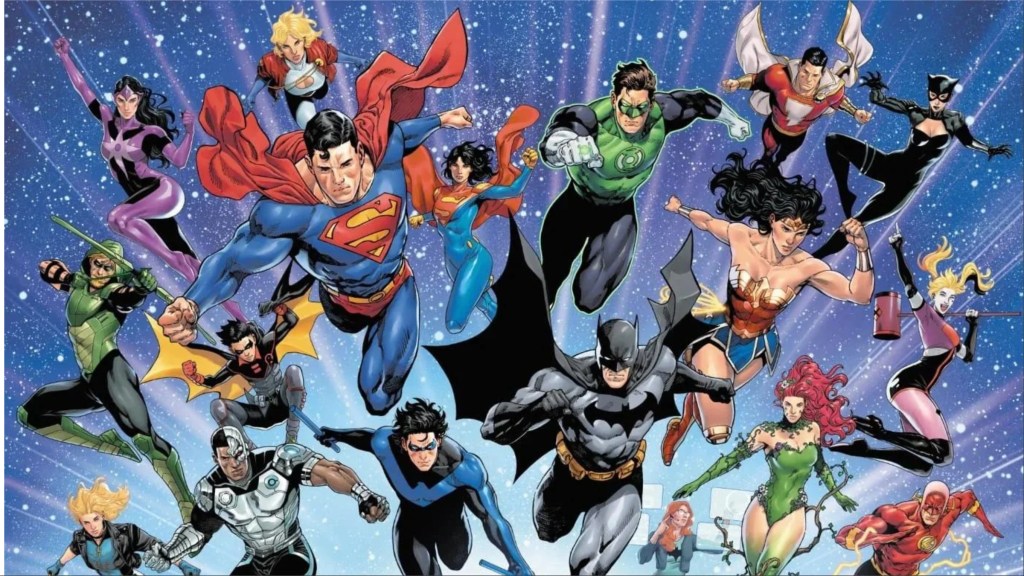
DC All-In has made the publisher more popular than ever, and has led to some amazing Justice League stories. DC All-In #1, by Joshua Williams, Scott Snyder, Daniel Sampere, and Wes Craig, brought the team back to prominence. This new version of the Justice League was given a new satellite headquarters and brought basically every hero on Earth onto the team. This led to Justice League Unlimited, from legendary writer Mark Waid and the greatest artist currently working in comics Dan Mora (search your feelings, you know it’s true). The past year and a half of the team’s stories have been fantastic and showed that the League is the best of the best.
9) “Tower of Babel”
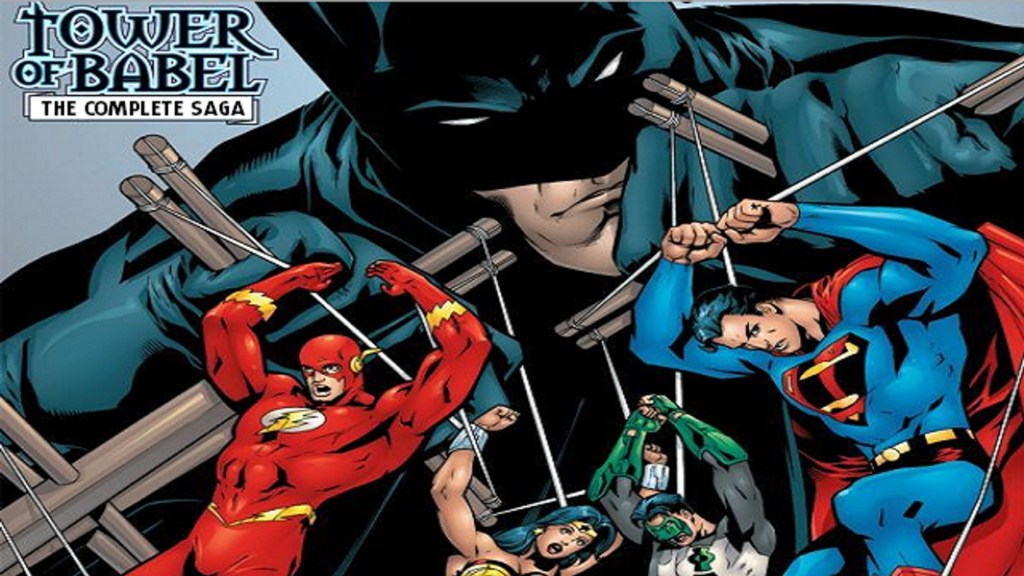
“Tower of Babel”, by Mark Waid and Howard Porter, added a major idea to the DC Universe that would change the dynamic of the Justice League after their return to prominence in JLA. Ra’s al Ghul attacked the team, easily taking each of them out. Batman quickly realized how the villain did it — by stealing the plans the Dark Knight made to destroy the team. This changed everything for the group, with the team losing their faith in Batman, planting seeds that would hatch years later in the run-up to Infinite Crisis. It marked the end of the Grant Morrison era of the team and has become a legendary story.
8) Kingdom Come
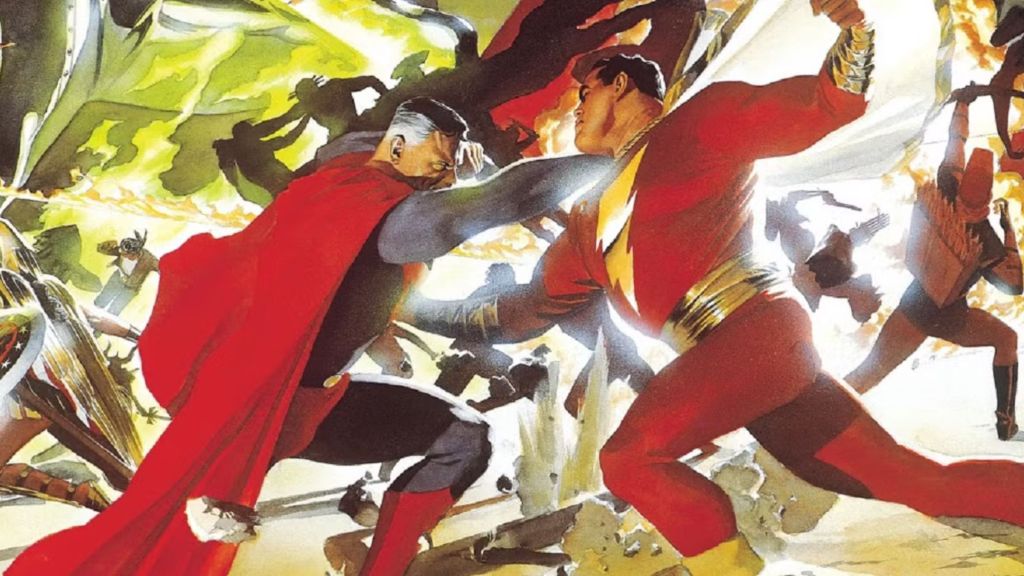
Kingdom Come is one of the most beloved DC stories ever. While it is an alternate universe story that doesn’t technically “count” in the history of the League, Mark Waid and Alex Ross’s four-issue masterpiece gave readers one of the best stories in the team’s history. Taking readers to a future where Superman’s retirement led to a violent new breed of heroes taking over, this story talked about why true heroism never goes out of style. Waid and Ross gave readers a story that has weathered the test of time and showed why the Justice League was the most important team in comics.
7) The End of the Justice League

The Justice League has always seemed somewhat unbreakable, but this wasn’t the case. In the mid ’00s, DC hit the team with a one-two punch that would lead to the end of the Justice League as an extant entity. First was Identity Crisis, which revealed the Justice League mindwipes of both villains and Batman, which would lead into “Crisis of Conscience”, a story that saw the team come to blows when the truth is revealed. This led them to blows and basically everyone would quit the team. Afterwards, the JLA Watchtower was destroyed by a mysterious red-caped assailant (it was Superboy-Prime, but we didn’t know that at the time). It was a huge moment in the team’s existence and doesn’t get talked about nearly as much as it should.
6) Infinite Crisis
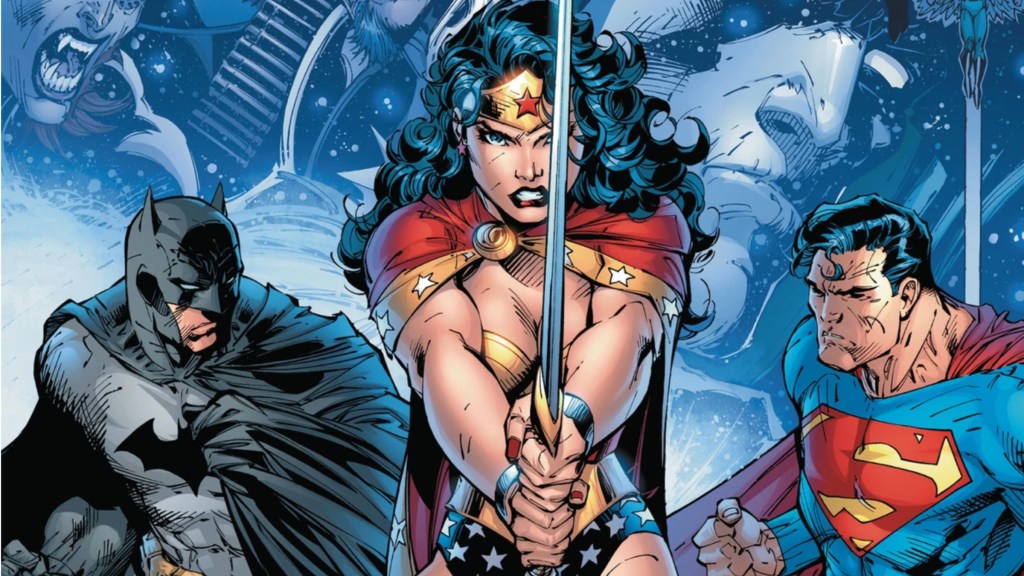
Infinite Crisis is a major DC milestone and changed everything for the publisher. The Justice League had just ended, and suddenly the superhero community found themselves under attack from the Society, a secret organization of villains, Brother Eye and its OMACs, and two mysterious manipulators. One of the main points of this story was to show how important the Justice League is to the heroic community, how they’re unity made everyone stronger. As the sequel to Crisis on Infinite Earths, this story undid a lot of the retcons that classic story enacted and opened the door for a neo-Satellite Era in 2007. It’s a huge moment in the team’s history, even if they weren’t actually around at the time.
5) Crisis on Infinite Earths
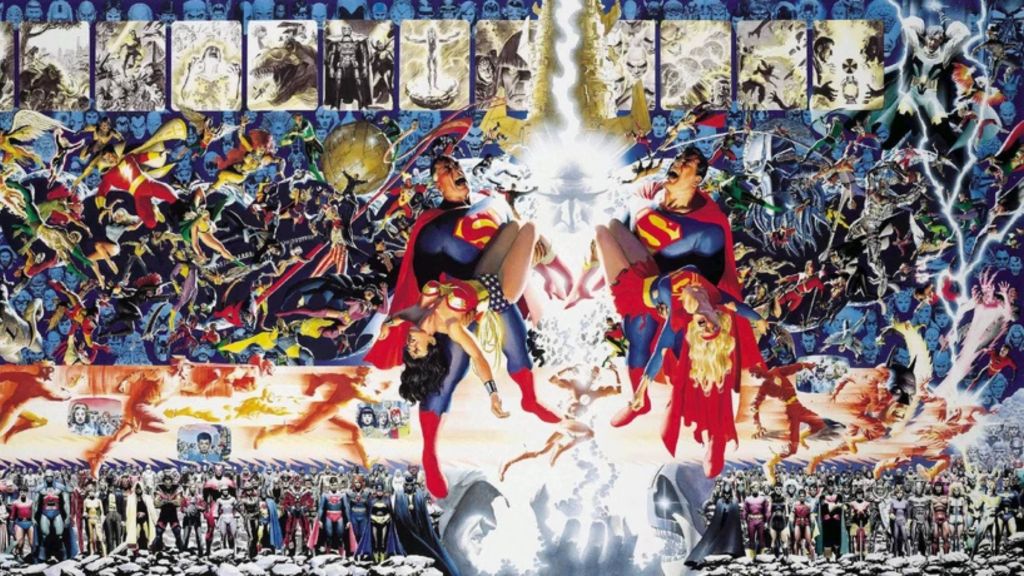
Crisis on Infinite Earths changed DC history, in more ways than one. The 12-issue epic from Marv Wolfman, George Perez, and Jerry Ordway pit the heroes of five Earths against the Anti-Monitor. Barry Allen, Supergirl, and numerous other heroes were killed and by the team the smoke cleared, the DC Multiverse was dead, replaced by a singular universe. Crisis saw the destruction of the Justice League Satellite, and laid the groundwork for a new era of the team. It’s an amazing part of comic history and one of the most important books in comics, if not the most important.
4) The Beginning of the Satellite Era
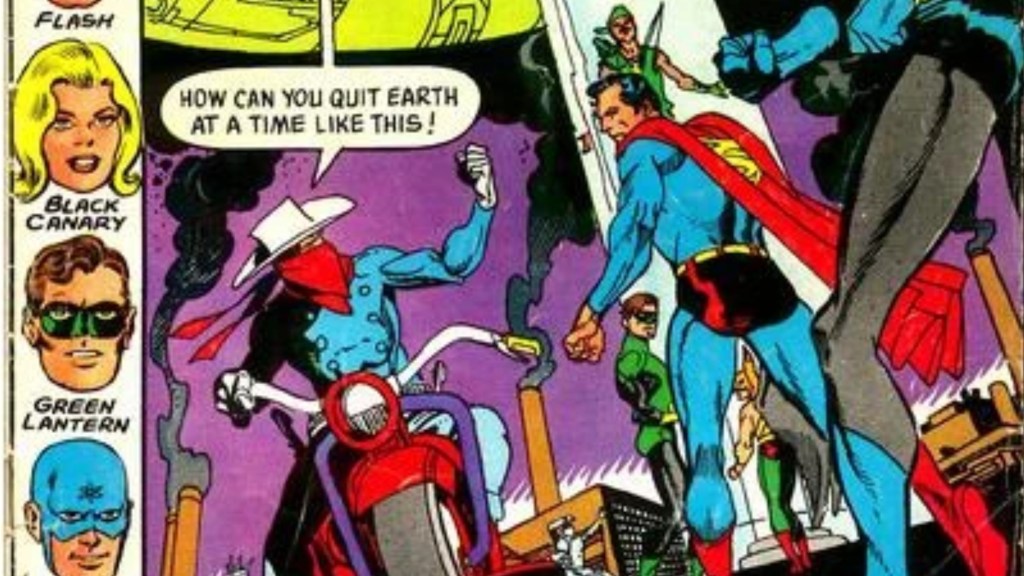
The Satellite Era is one of the most beloved eras of the Justice League. There was something about the idea of the pantheon of the most powerful heroes on Earth — Superman, Batman, Wonder Woman, Barry Allen, Hal Jordan, Black Canary, Green Arrow, Hawkman, the Atom, Aquaman, Elongated Man, Sue Dibney, Red Tornado, Martian Manhunter, and Firestorm — in a space-borne base. It allowed them to not only watch more of the planet at once (bringing the concept of “monitor duty” to the team) but also keep an eye out on outer space. The Satellite first appeared in Justice League of America (Vol. 1) #78, by Denny O’Neil and Dick Dillin, giving readers the era that defined the team.
3) The First Justice Society Crossover
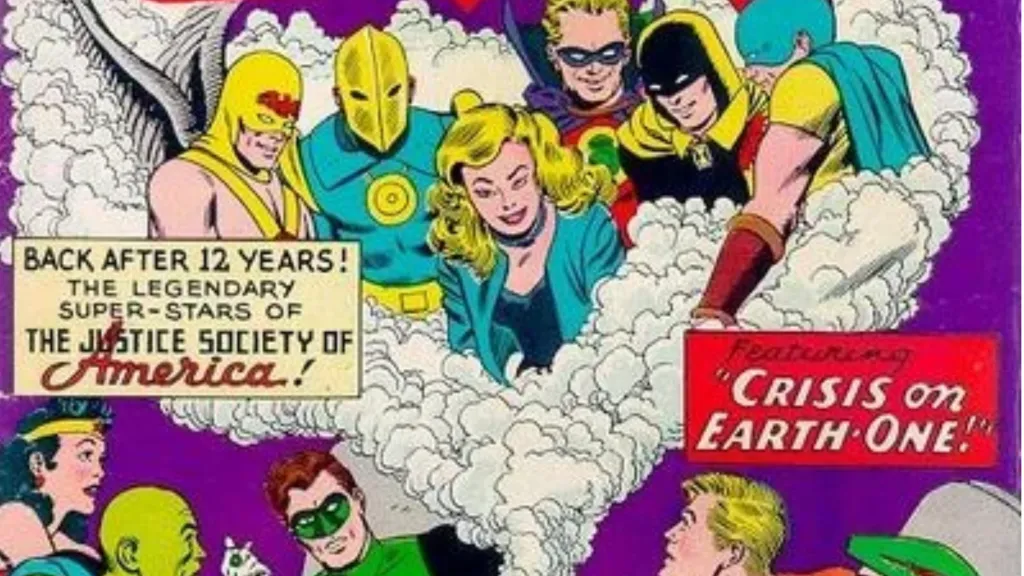
The multiverse was extremely important to the history of DC Comics, with the Justice League comics being ground zero for these kinds of stories. Earth-Two first appeared in The Flash #121, bringing back the original Golden Age Flash, opening the door to more crossovers. Justice League of America (Vol. 1) #21, by Justice Society co-creator Gardner Fox and Mike Sekowsky, brought the rest of the Justice Society to the ballgame. This was the first of the yearly crossovers between the two teams, and would prove extremely popular with fans. This story is still awesome all these years later, and led to one of the important ideas in the group’s illustrious history.
2) The Justice League International
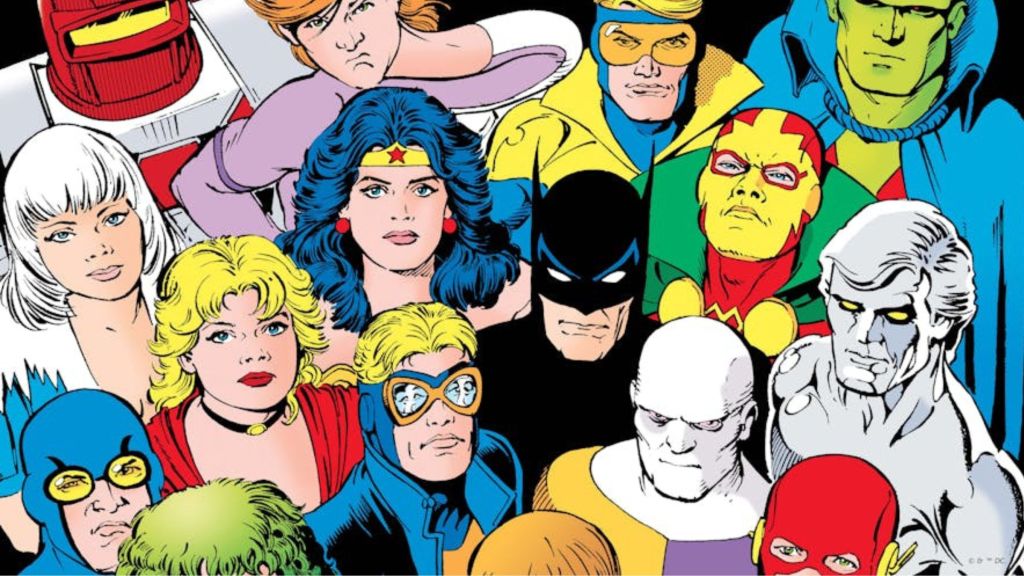
The Justice League International is massively popular even almost 40 years later. Crisis on Infinite Earths ended the old League and Legends introduced a new version of them. The Justice League International would first appear in Justice League (Vol. 1) #1, as Batman, Martian Manhunter, Blue Beetle, Black Canary, Captain Marvel, Doctor Fate, Doctor Light, and Mister Miracle came together with Maxwell Lord as their financier. Eventually, members like Metamorpho, Booster Gold, Fire, Ice, Elongated Man, Sue Dibney, Rocket Red, Power Girl, and more would come to the team. J.M. DeMatteis, Keith Giffen, and Kevin Maguire gave readers the perfect superhero sitcom, a classic that has lasted the test of time.
1) JLA (Vol. 1) #1-4
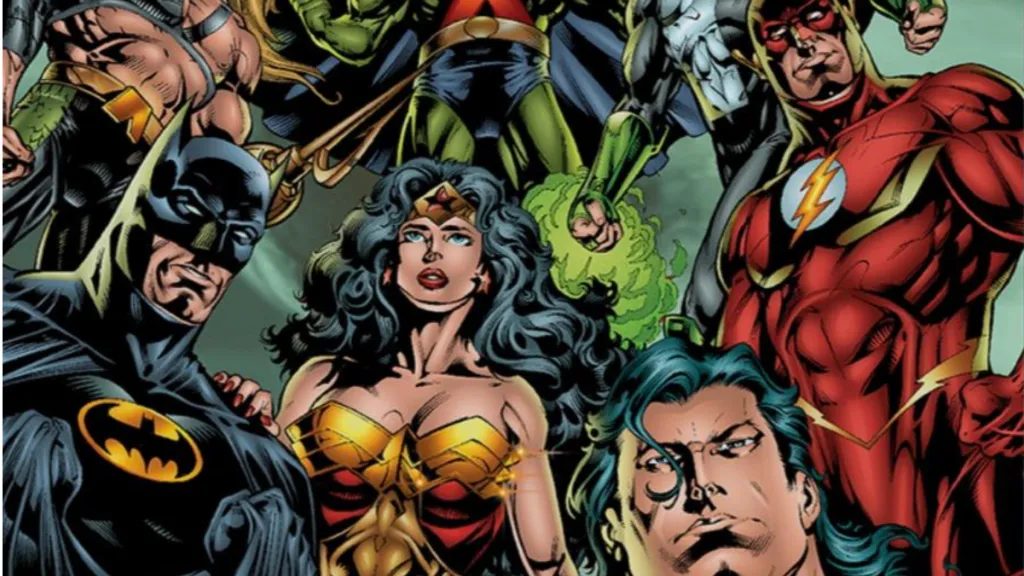
As great as the Justice League International was, the concept damaged the Justice League and it fell precipitously down the charts. DC decided something needed to be done. First, they put out Justice League: Midsummer’s Nightmare, by Mark Waid, Fabian Nicieza, Jeff Johnson, and Darick Robertson, bringing together the Big Seven again: Superman, Batman, Wonder Woman, the Flash, Green Lantern, Aquaman, and Martian Manhunter. This led into JLA #1-4, from Grant Morrison and Howard Porter. This new era of the team took them back to basics, throwing the biggest threats in the world against the best heroes. This four issue story, “New World Order”, was basically flawless and it opened up a whole new chapter in the team’s history.
What are your favorite Justice League milestones? Leave a comment in the comment section below and join the conversation on the ComicBook Forums!
Most Viewed
-

Image courtesy of Warner Bros. Pictures -

image courtesy of Studio Ghibli