Alan Moore’s Watchmen is among the most profound and subversive works of literature in the 20th century. Published under DC Comics from 1986 to 1987, Watchmen is a scathing critique of the superhero genre, morality, and politics. The comic follows an original cast of “heroes” set in an alternate 1985 when the world is on the brink of nuclear war and costumed crimefighters are outlawed. It begins when the vigilante Rorschach investigates the murder of the former hero the Comedian and he reunites with his old crimefighting partners. The story goes on to tackle dark themes in such a nuanced and mature way that it forever changed how people viewed superhero comics. To this day, these moments in Watchmen are recognized for their overwhelming impact on the superhero genre.
Videos by ComicBook.com
Watchmen contains plenty of iconic moments created by writer Alan Moore and artist Dave Gibbons. Countless comic book artists and writers were inspired by the pair’s success, leading to a significant tone shift as many comics became darker and grittier. Forty years later, Watchmen is still considered a masterpiece of written and visual storytelling.
7) Rorschach’s Prison Brawl
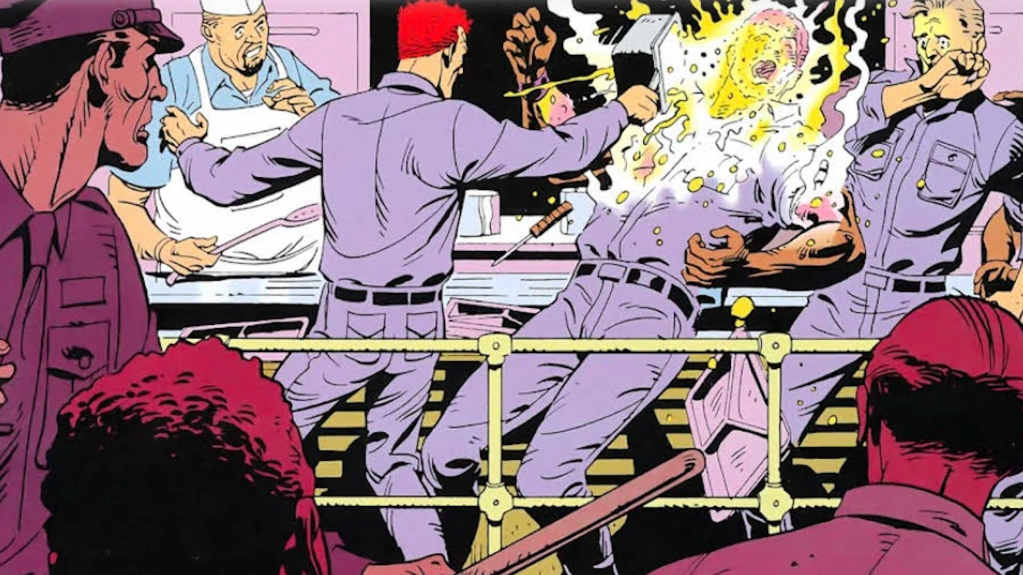
A significant theme of Moore’s Watchmen is that the “heroes” aren’t very heroic. Many of them are selfish, bigoted, cruel, and vicious. The best example of this is Walter Kovacs, aka Rorschach. When Rorschach is sent to prison, naturally every inmate wants to kill the notorious vigilante. At first, it seemed that Rorschach had no chance of survival in the slammer. When in line at the cafeteria, a prisoner tries to stab Rorschach with a shiv. But before the prisoner could react, Rorschach casually grabbed a canister of boiling oil and tossed it straight in the guy’s face, leaving him blind and suffering from third-degree burns. As Rorschach is dragged off into solitary confinement, he screams one of his most chilling and threatening lines: “I’m not locked up in here with you. You’re locked up in here with me.” Unlike traditional superheroes, Rorschach is unbound by feelings of morality and restraint. The sheer brutality and anger displayed in this moment by Rorschach show his unflinching resolve that crosses into insanity.
6) The Comedian’s American Dream
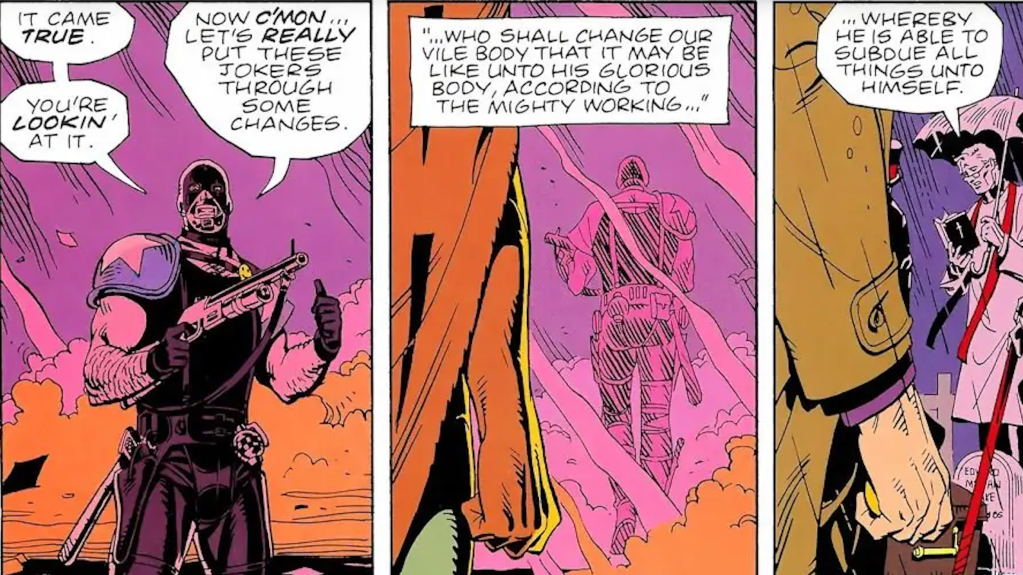
The murder of the Comedian is what kickstarted the entire plot of Watchmen, but numerous flashbacks showed that he definitely deserved his untimely demise. The Comedian was a vile, depraved rapist and murderer who committed atrocities for the American government because he saw life as one big meaningless joke. During the Comedian’s funeral, fellow hero Nite Owl recounts when they had to work together to quell a riot. There, the Comedian quickly lost his cool and fired rubber bullets into the crowd, making everyone flee. When Nite Owl asked what made them so violent and what happened to the American Dream, the Comedian coldly responded that it came true. The Comedian’s response is a striking argument as to what the United States is beneath all the myths and propaganda. It’s a nihilistic look into America’s history of might-makes-right mentality both overseas and locally in oppressing others to ensure its own supremacy. The Comedian serves as the ultimate embodiment of cynical nihilism and the darkest parts of both America and humanity.
5) Doctor Manhattan’s Origin
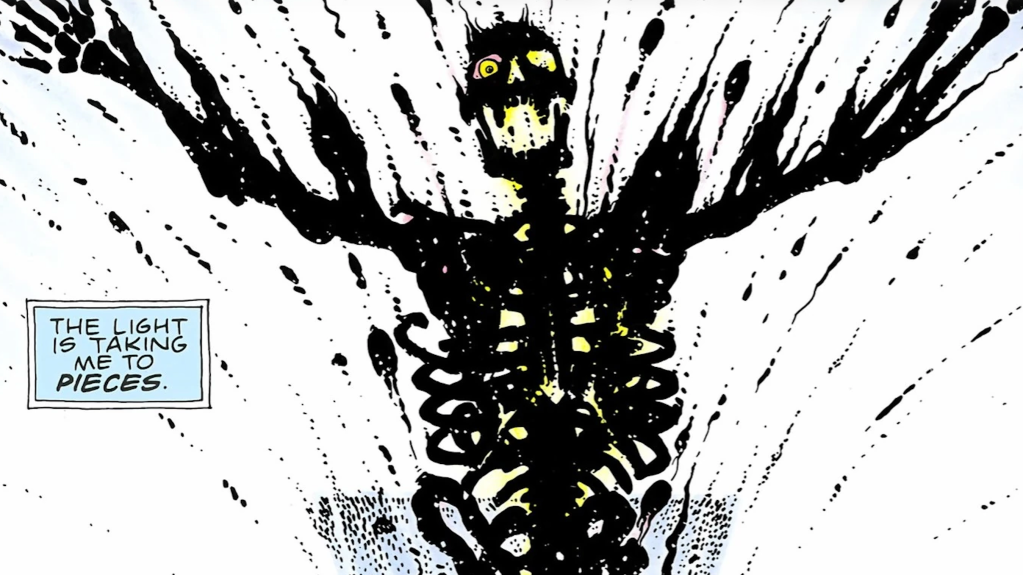
In the world of Watchmen, the closest thing to a Superman-like figure is the all-powerful Jon Osterman, aka Doctor Manhattan. Although for most of the series he’s detached and aloof, we eventually discover his human origins. In a classic comic book trope, Jon finds himself stuck in a lab accident that goes horribly wrong. However, the results are truly nightmare-inducing. Jon is literally torn apart atom by atom in an instant, leaving nothing behind. Grotesquely, Jon eventually pulls himself back together, first as a nervous system, then a circulatory system, then a muscled skeleton, until he finally becomes a blue entity with the powers of a god. However, unlimited power and omniscience lead Doctor Manhattan to become detached from humanity and lose touch with his emotions. It’s an origin that’s equal parts disturbing, tragic, subversive, and poignant as it shows the real-life psychological implications of a human having god -like power and shedding their mortal form and identity.
4) Rorschach’s Kidnapping Case
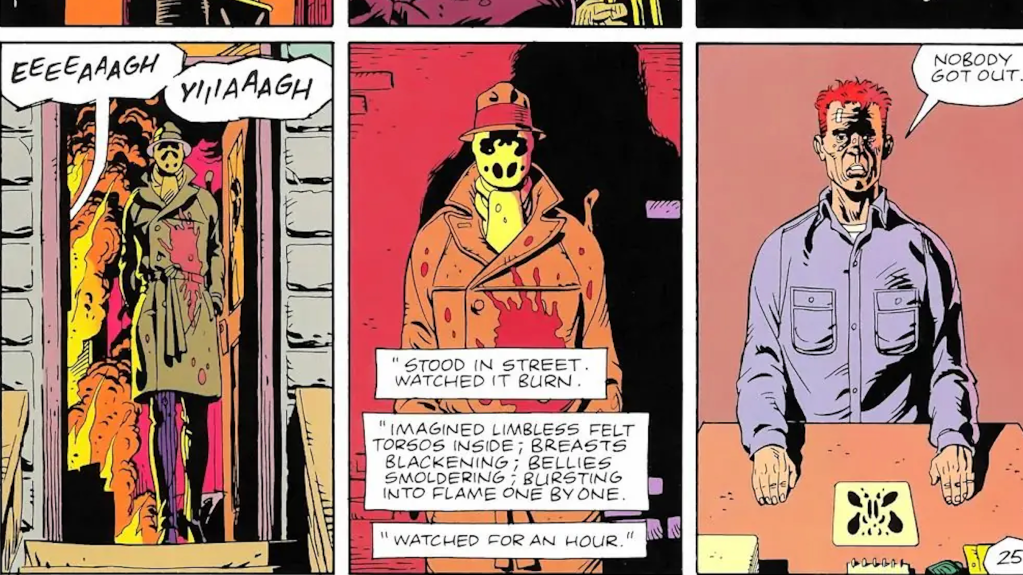
From his introduction, it was clear that Rorschach was a fundamentally broken and angry individual who viewed humanity with contempt. In his sessions with prison psychologist Malcom Long, Rorschach reveals in gruesome detail the day that he learned that the world was beyond saving. Although Rorschach already had a troubled and abusive upbringing, it wasn’t until he worked on a case involving a kidnapped little girl that he truly snapped. While investigating a suspect, Rorschach makes the horrifying realization that the man had murdered and butchered the little girl before feeding the remains to his dogs. After killing the dogs, Rorschach chained the kidnapper up before burning his house down with him inside. It was the day that Walter Kovacs died, and Rorschach was born. It’s an incredibly haunting confession that leaves both Malcom Long and the readers shaken to their very core. After witnessing the absolute worst of humanity, it’s not hard to see how Rorschach abandoned his idealism and became a ruthless vigilante.
3) Doctor Manhattan and Silk Spectre on Mars
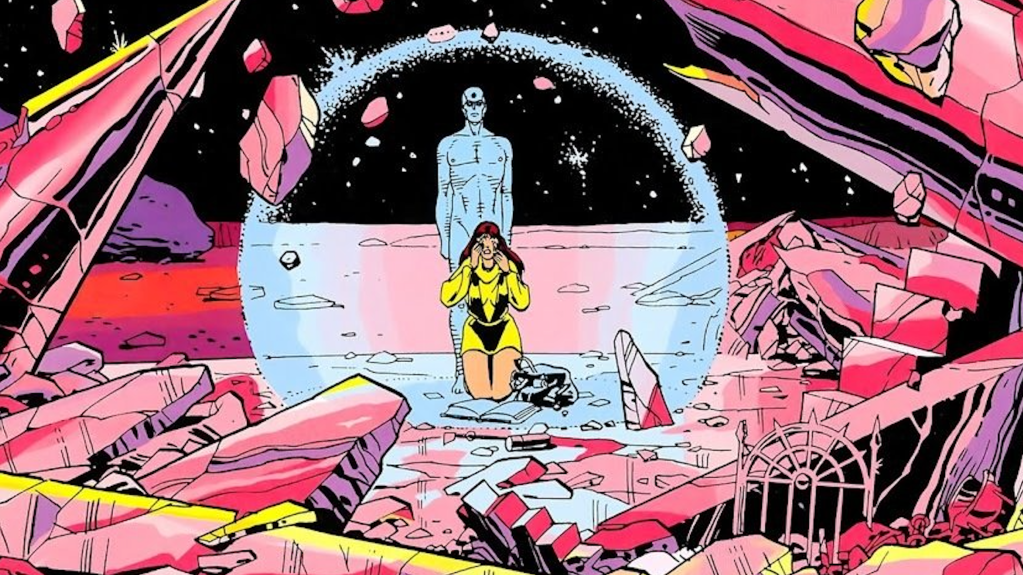
When Doctor Manhattan abandoned Earth and made a new home on Mars, his ex-girlfriend Silk Spectre was determined to have him return and help save the world from impending nuclear war. Doctor Manhattan brings Silk Spectre to Mars, and she desperately tries to convince him that he still has a stake in the world and that humanity has meaning. And as the pair discuss the nature of destiny and humanity’s worth and place within the universe, Silk Spectre comes to a horrifying realization. She understands that her father is none other than the Comedian, the man who had once assaulted her mother, Sally Jupiter. After a lifetime of denial, Silk Spectre’s suppressed memories and rationalizations all come flooding back to her as she breaks down at the thought of the Comedian being her father. Surprisingly, it’s this discovery that convinces Doctor Manhattan that humanity has meaning. For if a relationship as distorted and unlikely as the Comedian and Sally produced a child as incredible as Silk Spectre, then everyone is a miracle as well. It’s a thought-provoking exploration into familial trauma and finding beauty in the randomness of existence.
2) The Death of Rorschach
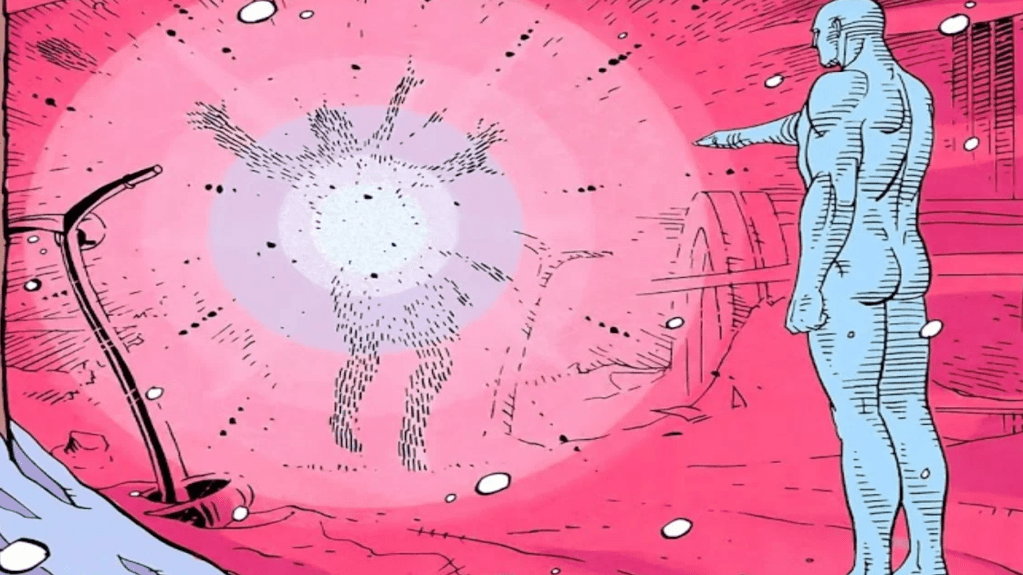
In the end, Rorschach’s black-and-white morality and insatiable need to punish evil led to his death. After Ozymandias’s blood-soaked plan to achieve world peace and prevent a nuclear war seemed to have worked, most of the Watchmen agree to stay quiet to ensure that the peace remains intact. However, Rorschach refuses to make compromises and plans to expose everything Ozymandias had done to the world, even if it risks Armageddon. Standing in Rorschach’s path is none other than Doctor Manhattan, who can’t let the vigilante risk the safety of the world. Rorschach removes his mask to reveal his tear-stricken face and demands that Doctor Manhattan kill him. Doctor Manhattan obliges, and in an instant Rorschach is reduced to a bloody mist. It’s a real credit to Moore’s writing that he managed to make the death of a deranged and sociopathic person like Rorschach so gut-wrenching. The death is made even sadder by the fact that it’s left ambiguous if Ozymandias will ever be exposed for his crimes.
1) Ozymandias’s Victory
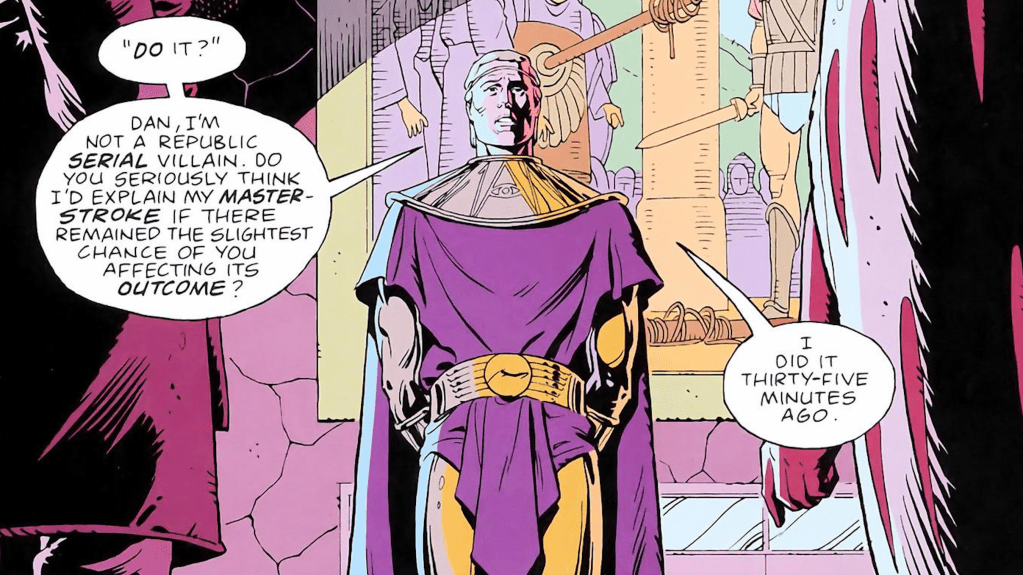
No moment in all of Watchmen was more iconic and subversive than the heroes trying to stop their fellow crimefighter Ozymandias’s twisted plot. Not only did Ozymandias kill the Comedian, but he planned to stage a fake alien invasion by teleporting a giant telepathic squid monster into New York to kill millions so that the nations of the world would end the Cold War and band together to fight a common enemy. At this point, it seems like the story’s going to go in a cliché direction, with Ozymandias spilling his master plan only for Rorschach and Nite Owl to stop him and save the day. However, in a shocking twist, Ozymandias reveals that he had already enacted this grand plan 35 minutes ago. That one statement shattered all expectations and hope the heroes and readers had. Even crazier, Ozymandias’s solution, at least in the short term, seemed to have worked as the Cold War immediately came to a halt. This profound ending embodies Watchmen’s core philosophy and themes centered on the egos of its “heroes,” the absurdism of world politics, and the existence of moral grayness.
What do you think? Leave a Comment below and join the conversation in the ComicBook Forum!
More Comics
-
Image Courtesy of DC Comics -
Image Courtesy of Marvel Comics -
Image Courtesy of Marvel Comics -
Image Courtesy of Marvel Comics -
Image Courtesy of DC Comics -
Image Courtesy of Marvel Comics -
Image Courtesy of Marvel Comics