Feats are an often underrated part of Dungeons and Dragons, as they can give your character extra abilities beyond their class, subclass, or equipment for more diverse builds. The newer 5.5e rules for the iconic TTRPG make Feats widely available compared to past editions of the game, allowing characters to take them not only when they level up, but also as part of their origins and backgrounds. With this in mind, there are far more Feats in the tabletop experience than ever before, with several new ones in the latest expansion giving players even better paths to choose from.
Videos by ComicBook.com
Besides Fighting Styles and Epic Boons, which are Feats that are only applied to characters under very specific conditions, D&D divides Feats into two major categories — Origin and General. Origin Feats come with your character’s background in D&D, which also determines things like your skill proficiencies and Ability Score improvements. Alternatively, General Feats are something you can take instead of raw Ability Score increases at certain levels your character reaches, allowing them to adopt a wider range of skills rather than statistical benefits.
5. Arcane Omens (Origin)

The latest D&D expansion is called Arcana Unleashed, which focuses primarily on magic with Feats like Arcane Omens. If there was any Feat in the new book that exemplified its theme of mystical magic, it would be this one. Arcane Omens immediately gives your character the Guidance cantrip, with them using Intelligence, Wisdom, or Charisma as the the spell casting ability for that skill. This makes the Feat widely available for a number of character, even if magic isn’t the core of their character.
Guidance is one of the best cantrips your party can have, as it allows allies to enhance your d20 for any ability check, such as Persuasion, Perception, Athletics, or even Arcana. Yet, while having Guidance available at all times is nice, the secondary benefit of this Feat is what makes it truly special. The other ability of the Feat is called Helpful Premonition, a skill that calls back to the ever-popular Divination subclass for the Wizard. This feature activates when a creature your character can see within 30 feet of them fails a saving throw, triggering a special Reaction.
This Reaction allows you to roll 1d4 and add the number to the saving throw’s total, possibly saving your ally by turning their failure into a success instead. This could help them take half damage from a deadly spell, or recover from being stunned for an entire round of combat. Since you can use this part of the Feat a number of times equal to your proficiency bonus, this ability can be the saving grace of your party often. When combined with Bardic Inspiration or other supportive abilities, this Feat can be consistently life-saving in the right hands.
4. Portal Jumper (Origin)

Movement is a constant problem for spell casting classes, especially ones like the Sorcerer or Wizard, who sometimes can only get out of a jam by spending a Level 2 spell slot on something like Misty Step. This is why the Portal Jumper Feat is so interesting, as it provides an otherworldly boost to your character’s agility. The main feature of this Feat is Portal Step, which only works when you choose to spend 15ft of your character’s natural movement speed. Doing this allows you to teleport to an unoccupied space you can see within 15ft of yourself.
Doing this gets around Opportunity Attack options from enemies, who may have close to be within melee range of your character. Much like the Helpful Premonition part of Arcane Omens, this Feat can be used a number of times equal to your proficiency, recovering all uses after a Long Rest. This makes the ability a frequent help in battle, without ever requiring you to spend an Action or Bonus Action doing it. For characters with slow movement options, this Feat can be excellent for covering a weakness in mobility.
However, that’s not all this Feat does, as those who take Portal Jumper also get access to an Otherworldly Resistance. When taking this Feat, you can choose to gain a Resistance to Necrotic, Radiant, or Psychic damage. While some of these damage types don’t come up too frequently, they can be very dangerous when they do. For players looking to avoid a Synaptic Static spell from a Mind Flayer or a Lich’s necrotic magic, a certain resistance might be the right call.
3. Spell Resistant (General)
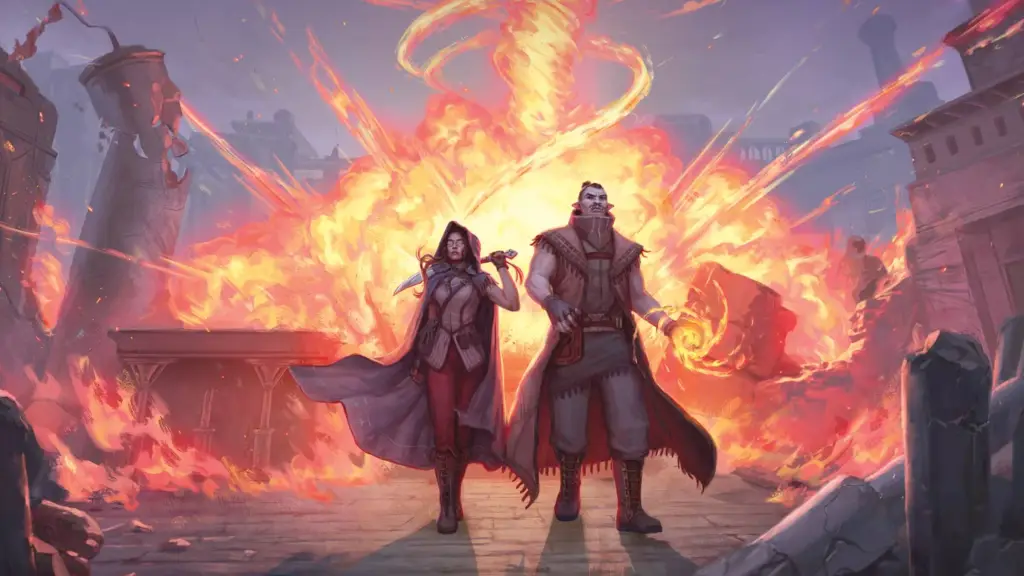
The Spell Resistant Feat is a General Feat, meaning it is only available when you reach Level 4 with your character. It can also be selected at other phases of your character’s progression, such as at Levels 8 and 12. No matter when you take this Feat, doing so will increase either your Dexterity or Constitution Ability Score, making you more powerful regardless of which route you go down. A Barbarian character may want the Constitution increase for an even larger health pool, while a Bard or Rogue could benefit from greater elusiveness through the Dexterity bonus.
Much like Portal Jumper, Spell Resistance gives you, well, a resistance to magical damage. Players with this Feat can choose to be resilient against Necrotic, Psychic, Radiant, or Thunder damage, once again broadening their defenses. That being said, the biggest benefit of this Feat comes with having a greater Magic Resistant effect for your character. To be Magic Resistant means that whenever you fail a saving throw against a spell or magical effect, you can roll a 1d6 and add that number to the save’s total.
Even against the strongest spell casters in D&D, having a +1-6 bonus to saving throws can be an extraordinary way not to suffer the worst effects of some magics. For example, those trying to use Lightning Bolt forces your character to make a Dexterity saving throw. If you’re playing a Rogue with Evasion, success on that saving throw means you take no damage at all from the high-level spell. Through the Spell Resistant Feat, your odds of success are greatly increased, giving you the tools to fight some of the game’s toughest opponents.
2. Transmuted Anatomy (Origin)

Low-level characters often struggle to face off against effects that target their Constitution, such as poison effects or abilities that Stun or Paralyze them. Those conditions can be some of the worst to gain in D&D, as any Monk would tell you with their Stunning Strike. Transmuted Anatomy is a Feat that diminishes the fear of your Constitution failing you, as it allows your character’s body to be prepared for such effects. Simply taking this Feat gives you Lengthened Stride, adding +5ft to your movement speed right away.
This alone is nice to have, but the Resilient Anatomy feature is why the Feat really shines. Automatically, your character has Advantage on saving throws that would shape-shift them against their will, including a variety of magic. Anything that would turn you to stone, transform you into an animal, or otherwise change your form now has a much tougher time doing so, making you prepared against a broad variety of magic. This isn’t a limited feature either, as it isn’t given a restricted number of uses.
The other ability of Transmuted Anatomy activates when your character fails a Constitution saving throw, such as against one of the spells trying to shape-shift you. When you fail, you can use a Reaction to roll a 1d4 and add it to the result of the roll, possibly turning the failure into a success instead. Although this part of the Feat is limited, it only adds to the many ways you can prevent your character from turning into something harmful instead of helpful to the rest of your party.
1. Familiar Friend

There is probably no better Feat in Arcana Unleashed than Familiar Friend, an Origin Feat designed around the spell Find Familiar. Ordinarily, this spell is a simple one, allowing your character to conjure a spectral animal ally to help you out with various tasks. Although spells like Battle Familiar in Arcana Unleashed can enhance the Familiar’s combat skills, it is mainly a harmless creature only spell casters usually have access to. Through this Feat, any character can have Find Familiar prepared, without even using a spell slot or Material components too.
With Familiar Friend, your Familiar companion is even stronger than it would usually be as well, with its maximum and current Hit Points increasing by twice your character’s Level. Whenever your character makes a skill check within 5ft of the Familiar, they also gain Advantage in doing so, as long as you had proficiency in that skill first. This adds so much utility to your character’s actions, while also providing a charming depth to their personality through the assistance of a magical pet.
Those who take Familiar Friend through their Origin Feat can also strengthen it further with other Feats gained at later Levels, such as:
- Elemental Familiar – Familiar is imbued with Acid, Cold, Lightning, Fire, or Thunder damage based on your choice, gaining resistance to that type. It can unleash whatever damage type selected through an Energy Pulse AoE attack.
- Otherworldly Familiar – Familiar gains resistance to Necrotic, Poison, Psychic, Radiant, or Thunder damage. Creature also can move through creatures and objects as if they were Difficult Terrain.
- Soothing Familiar – Familiar can create an aura of restorative magic as long as it is within 120ft of your character. Any ally within a 5ft Emanation of the Familiar can treat any rolls of 1 or 2 on dice being used to restore Hit Points as a 3 instead.
- Warlike Familiar – Your character gains the Battle Familiar spell always prepared, with the ability to cast it without using a spell slot. The Familiar can also use its Reaction to intercept an attack made against an ally, increasing their Armor Class in the process.
While all the additional General Feats for Familiars require the Familiar Friend Origin Feat first, the paths offered are all quite strong. The staggering variety in Familiar options make the Familiar Friend Feat worth taking for just how many routes you could go, for almost any character build imaginable. The possibilities behind Feats in Arcana Unleashed are exciting, encouraging you to create a character that utilizes them in smart ways for your next Dungeons and Dragons adventure.
More Gaming
-

Courtesy of Netflix -

Image Courtesy of Rockstar Games -

Nintendo Switch 2 games -

Courtesy of Santa Monica -

Courtesy of CD Projekt Red