Earlier this year, Overwatch rolled out its most ambitious update to the game in years. Not only did five new characters drop in the hero shooter on the same day, but the team had an ambitious slate of new maps and even more characters that would roll out through the year, including a commitment to making narrative a key piece of the game experience. As we reach the end of 2026 and the conclusion of “The Reign of Talon” story arc, the answer to “What’s next?” for Overwatch will be here sooner than you think. Even as Season 6 wraps up the storyline, the team is looking to revamp the game once again in 2027. The first 10 years of Overwatch are wrapping up, and the next ten are starting.
Videos by ComicBook.com
ComicBook had the opportunity to speak with Overwatch Game Director Aaron Keller and Associate Game Director Alex Dawson, both of whom opened up about the success of the game after their big year and how they’re learning from the whole experience to inform what comes next for the game. These February “expansion moments” have become a key thing for Overwatch over the last two years, but Keller notes that even though they want each of them to have an impact on the game every year, they don’t want fans to assume it will be the same thing each time.
“We don’t want players to feel like there is this like tight playbook that we’re following every year and using those expectations to maybe not get quite as excited about what we’re going to release,” Keller said in a group interview. “So yes, every year we do want to release something big. The team has been working on the release that we’re now starting to drive towards this coming February for quite a long time. We’ve been planning it for quite a while. But hopefully when it releases, people see all the different features in there. And I think there is going to be some new content…I think that surprise is what people ought to be able to get sort of like talking about ahead of time.”
Keller revealed that player confidence in the future of a game is one of the key drivers they see in keeping players focused on something, with these February releases solidifying this not only for the Overwatch community but new players that may want to jump in. He adds that the consistency in these releases may be even more important than the content of each one, noting: “It shows that we, as a team, really as a company, are massively committed to this game, and we will be for years to come….We’re not just releasing new heroes and new maps and things like that for these releases and a lot of our other ones, but we’re creating systems that we think make the game better. We’re looking at like the parts of the game that players like really engage with and always improving those.”
With the addition of 10 new heroes to the roster in 2026, and a new update lingering for next year (and many more to come), the team opened up how they make sure that the game doesn’t become too unwieldy for both new and current players. Dawson revealed it’s something the team wrestles with “all the time,” not only because of new characters that keep expanding the roster but adding new systems with those new heroes that players may not expect.
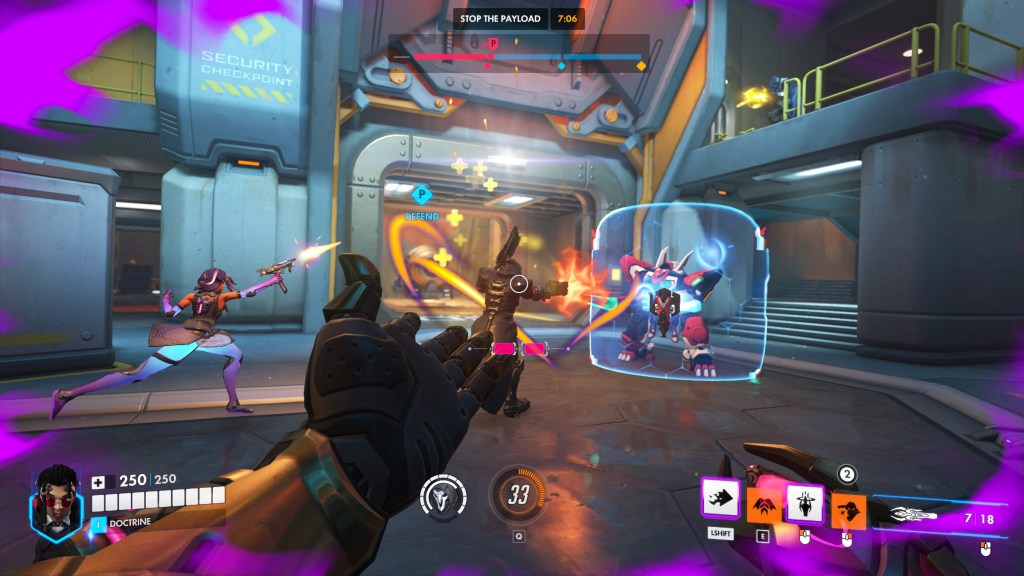
“We always have this question to ourselves when we’re play testing is, ‘Does this feel like Overwatch?’ And that’s this inherent thing on the team that we have a very core understanding of. So sometimes we’ll be playtesting with a bunch of new heroes in playtests and then they might be in very different balance states, very different production states, but at the end of the day, ‘Does this still feel like Overwatch?’”
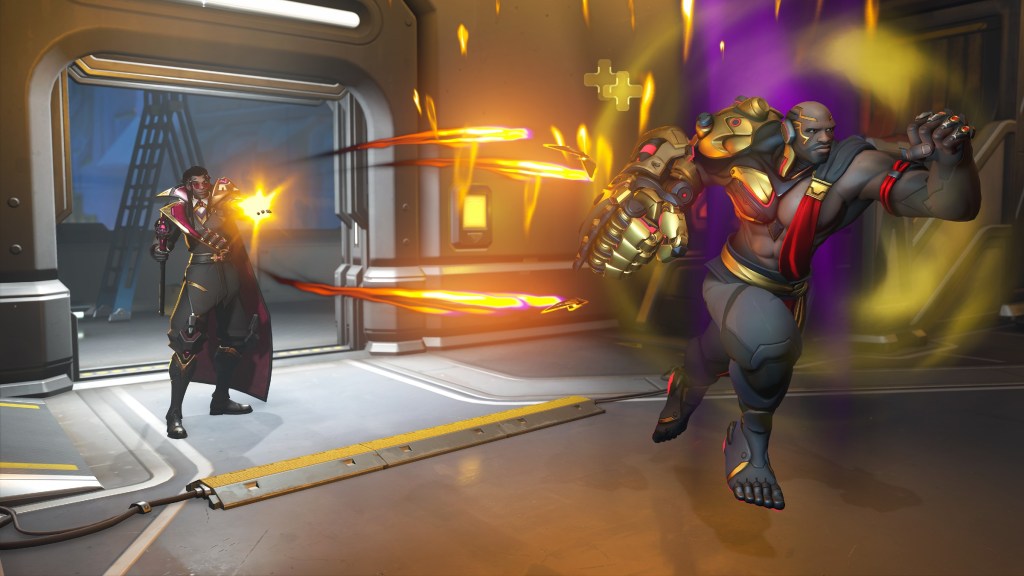
Dawson admitted that “it’s gotten maybe a bit more difficult as we’ve continued to add more and more,” but revealed that the team has gotten “smarter in how we Playtest.” Keller went on to note that new additions to Overwatch still have a lot of room to explore, like the new hero Doctrine delivering the game’s take on what a “vampire in Overwatch might be.” He adds, “I think that there’s still a lot of like fantasies and archetypes out there for us to mine, but we do recognize that at some point, hopefully it’s in the distant future, where we might have to start shifting on that. We’re not there yet, but that day can be coming, and it’s something that we still talk about internally.”
With all the new characters getting added to the game, though, a pattern has started to develop that gamers have been quick to latch on to: the distribution of cosmetics for each character in the game. A quick perusal of the in-game shop reveals not only new skins every week for heroes, but the recurring presence of the likes of Mercy, Kiriko, and Juno. It’s become something of a meme that some heroes, like Wrecking Ball, haven’t had a new “legendary” skin in over two years.
Keller opened up about the disparity, though, confirming that not only is the team aware of it, but that the choice comes down to keeping the game functional. Not only do the new additions of characters and maps continue that, but even the new lore drops mean that players are still asking about when their favorite will get the chance in the spotlight.
“It’s tricky for us,” Keller admitted. “We have been, over the past few years, constantly expanding our capacity and our throughput for the amount of skins that we make. And as we do that, it allows us to not just make skins for a lot of the heroes that, if I’m being honest, do more to support the actual bottom-line business for the game, and it also allows us to start making cosmetics for some of our other heroes.
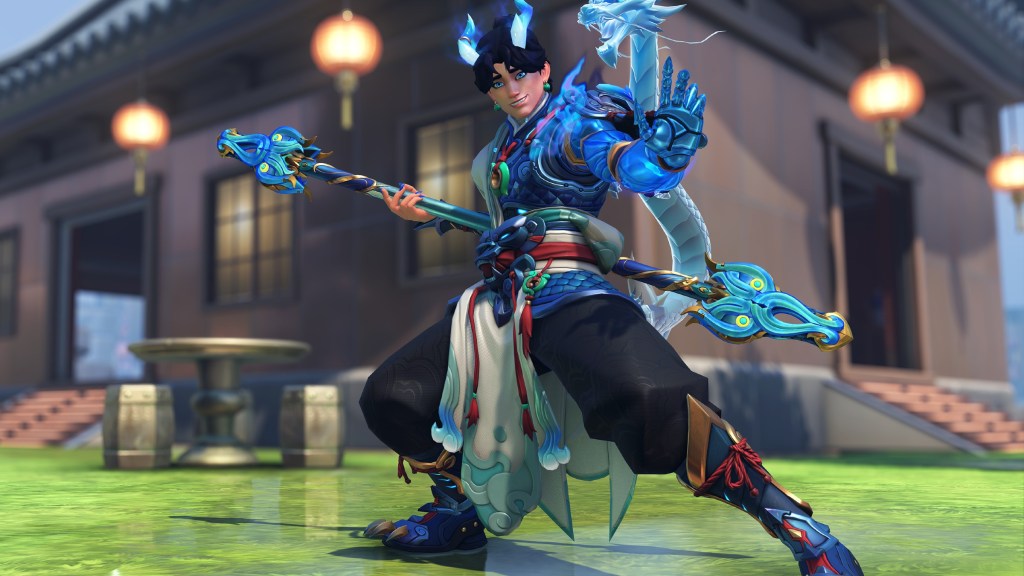
Keller revealed that the game’s transition to multiple “mythic” skins per season is where players can see this in action. He added, “Typically one of those is going to be for a hero that we think is actually going to really drive a lot of that support for the business. And then another one is going to be for a hero that typically hasn’t gotten either a mythic or a lot of other skins in the recent past….We want to be doing as much of it as we can, but we still always want to be doing it in a way that’s also responsible. And we know that we can continue supporting this game going forward.”
The good news for fans is that 2027 will be here before they know it. Dawson added, “We’re curators and also caretakers at the same time.
We’re curating this great moment for everyone at the beginning of the year for a bunch of new stuff, big shiny things. But we’re also caretakers; we need to make sure the game is in a very healthy state. We need to be listening to our core players to make sure we’re delivering on things, even if it’s a little bit smaller that they are really passionate about.. Our mission isn’t just to add on top of Overwatch until Overwatch breaks. It’s to make sure Overwatch is very coherent and a very stable experience, but also at the same time is going to excite you and is going to change in different ways.”
More Gaming
-
Image Courtesy of Stubby Games -

Image Courtesy by Sony -

Courtesy of Rockstar Games