This year is shaping up to be huge for several films already promising big surprises. Two of them are The Odyssey, directed by Christopher Nolan, and the epic conclusion of Denis Villeneuve’s franchise, Dune: Part Three. And while one is a historical fantasy epic set in Ancient Greece, filled with gods, ships, and a hero trying to find his way back home, the other is pure sci-fi with interplanetary political intrigue, religious wars, power games, and a young messianic emperor. Hard to find any real connection between them, right? But there is one, and it comes from a very real foundation hidden deep within Frank Herbert’s saga.
Videos by ComicBook.com
And this is only because Herbert didn’t write Dune as a clean, futuristic world as if the past had been erased. He did the opposite: he built a universe where everything feels ancient, with tradition, old names, religion intertwined with politics, and noble houses that behave as if they’re still living in a kind of space-age Middle Ages. In other words, the kind of future where a story like The Odyssey doesn’t feel nearly as distant as it should. But how exactly do all these elements connect?
How The Odyssey Takes Place Before the Events of Dune
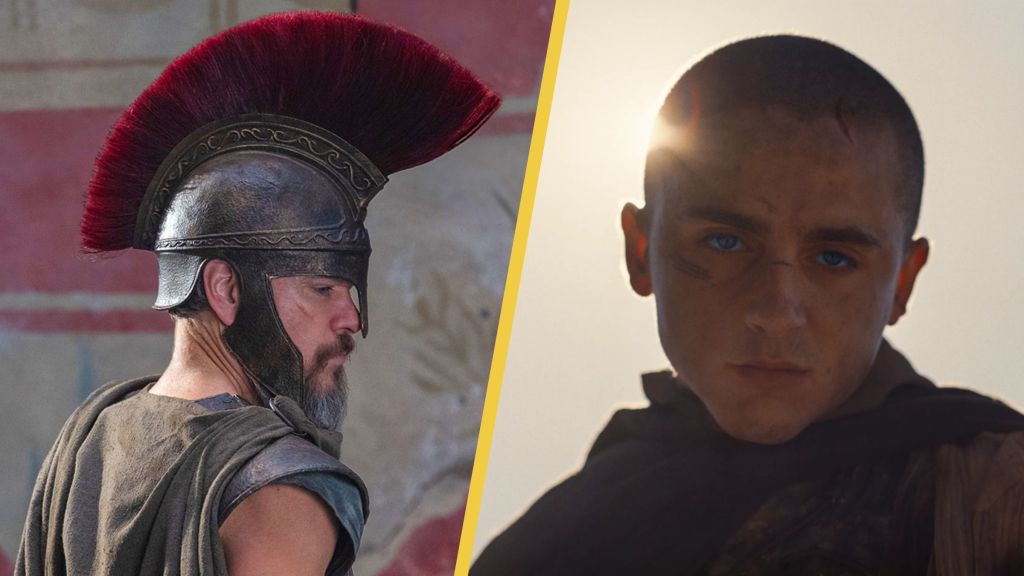
The story Nolan is adapting is, at its core, about the hero Odysseus spending years trying to return home after the Trojan War, facing monsters, traps, interfering gods, and his own reputation becoming a burden. Meanwhile, back in Ithaca, his wife Penelope is pressured by suitors trying to take his place, as if his absence is already a political death sentence. But in the middle of all this, the story also makes sure to remind us who won the war: kings like Agamemnon, leader of the Greeks, and a symbol of both power and tragedy. And this is where the direct connection to the Dune universe comes in: House Atreides. According to the books, Paul Atreides’ family carries a name derived from Atreus, Agamemnon’s father. And no, this isn’t a theory or interpretation — it is literally the origin of the name. It’s canon.
Within the sci-fi narrative, the Atreides present themselves as descendants of an ancient lineage, and Herbert chose exactly the most cursed and blood-soaked lineage from Greek mythology. Atreus isn’t just a random name, but a symbol of toxic inheritance, family revenge, and power built on horror. And if you know the story of the House of Atreus, you remember that this family doesn’t just carry prestige, it carries a very specific kind of fate: collapse. So now it starts to make even more sense when you look at Paul’s journey, Duke Leto’s path, and even the legacy of Paul’s grandfather.
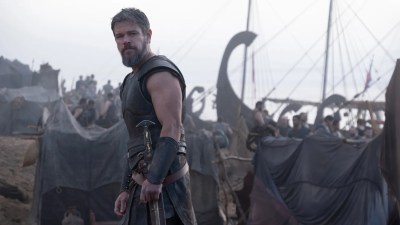
And in fact, the books briefly expand on this in moments where members of the Atreides bloodline, like Alia, access ancestral memories and direct references to ancient figures like Agamemnon himself. In Children of Dune, the character hears him say, “I, Agamemnon, your ancestor, demand audience!” And in God Emperor of Dune, this is also referenced by Paul’s son, Leto II, as he states that his ancestry traces directly back to the Greek original.
What Was the Intention Behind Connecting The Odyssey to Dune?
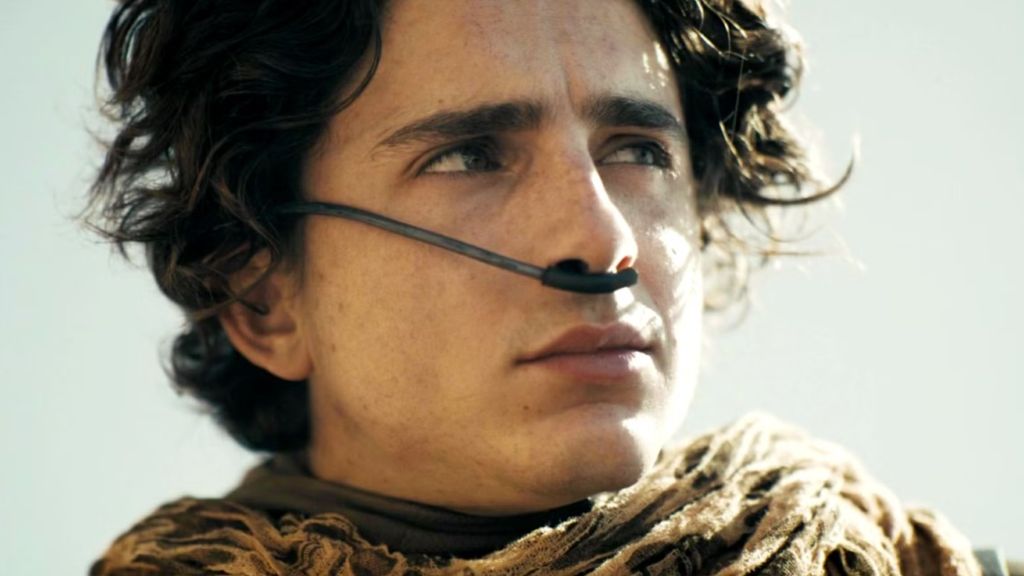
When you look at Paul’s arc and the story of House Atreides, the answer becomes fairly simple: Dune plays with the idea that these voices from the past are less like history and more like presence, influence, almost a hereditary curse. The protagonist’s lineage is marked by internal betrayals, assassinations, and political collapses across generations. This appears both in the books and the films (even if more subtly), especially when you look at their relationship with the Harkonnens and the Empire itself. Whenever the Atreides rise to a position of power, they are betrayed, isolated, or used as a political piece — this is one of the central engines of the first part of the story.
Dune is about what happens when a powerful family becomes a symbol, when a man becomes a myth, when war becomes religion, and when the hero realizes too late that he never had real control. Duke Leto enters Arrakis thinking he can still play fair, only to die because the system was already rigged against him. Paul seems destined for greatness, but ends up trapped in the consequences of the role he is forced to assume. And Agamemnon represents exactly the kind of power that looks grand from the outside but is rotten underneath: he is the king who wins the war but cannot win his own home; a leader who makes decisions that affect others, but ends up being hit by the consequences of those choices. You see the connection?

Plus, The Odyssey also serves as a prequel to Dune in a cultural sense: Villeneuve’s story feels like the final chapter of human civilization, while Nolan’s adaptation represents one of the earliest foundational pillars of Western narrative tradition. If you wanted to build an imaginary timeline of what humanity has been telling itself across thousands of years, The Odyssey would sit at the beginning, and Dune would sit at the end. That’s why it’s also interesting that both movies are being released in the same year, because one inevitably becomes the primordial version of the kind of tragedy the other later transforms into space opera.
The House of Atreus is defined by an inescapable downfall, and House Atreides follows the same pattern.
The Odyssey hits theaters on July 17, followed by Dune: Part Three on December 18.
What do you think? Leave a comment below and join the conversation now in the ComicBook Forum!
More Movies
-

Image Courtesy of Netflix