The story of Dune, written by Frank Herbert, has had a devoted fanbase for decades. But ever since Denis Villeneuve brought it to the big screen, interest in the saga keeps growing bit by bit. And obviously, you can’t talk about it without mentioning Paul Atreides, one of the most complex protagonists in sci-fi. In Dune: Part 2, we saw him played by Timothée Chalamet, starting to rise on Arrakis with a brilliant strategy against House Harkonnen, plus his almost mythical image as the Kwisatz Haderach. But even with all that impact, what really defines Paul isn’t the power he gains or the victory — it’s what comes after. How so?
Videos by ComicBook.com
Herbert never wrote the protagonist to be a traditional hero; he wrote him as a warning. And that message lands pretty well. But throughout the books, that warning gets diluted, and in the movies, there’s a real chance to deliver it the right way. For audiences who have followed two massive films focused on a young leader becoming a messianic emperor, the ideal conclusion for Dune: Part 3 needs to be direct, impactful, and above all, consistent with what’s already been built. Let’s break it down.
Warning: Spoilers ahead for the Dune book series.
Paul’s Ending Could Have Been Stronger and Dune: Part 3 Must Do It Justice
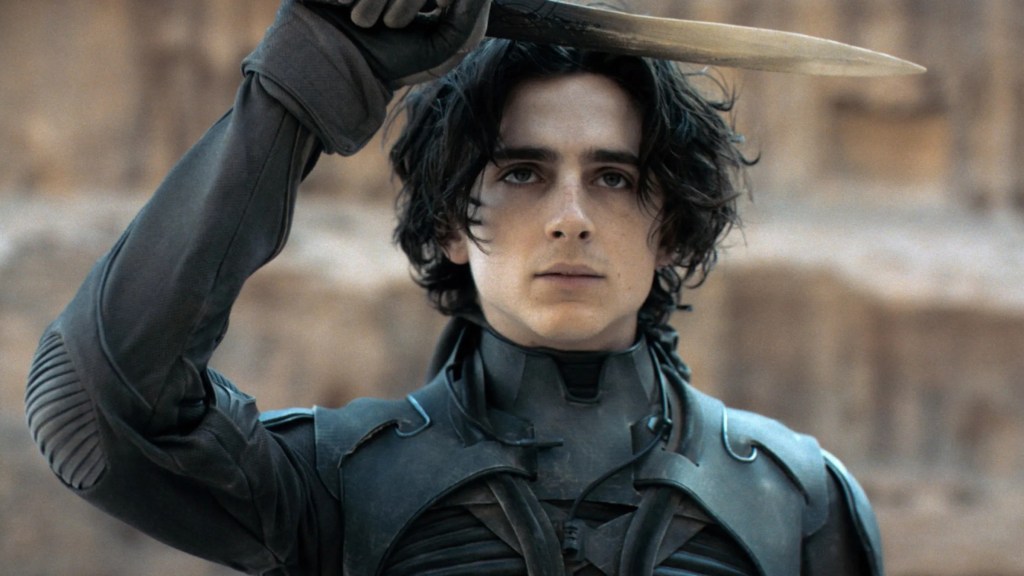
Everyone knows there’s a huge difference between an open ending and one that’s weakened by too many sequels, right? Inception gets the audience involved in interpretation, while Matrix Revolutions suffers from fatigue. The classic Fight Club didn’t need a sequel because the internal journey already hit its peak. But Terminator 3: Rise of the Machines had a strong and emotional ending that became weakened because the franchise insisted on rebooting the same threat. And when it comes to Dune and Paul, he’s always worked best as a tragic figure, not as a recurring part of an ever-expanding mythology.
Dune: Part 3 will be the final chapter on screen since Villeneuve has made it clear he intends to wrap up the story in this third film (adapting the events of Dune Messiah). The plot takes place years after the victory on Arrakis, with Paul now ruling as emperor while the Fremen jihad spreads across the galaxy in his name, leaving billions dead. At the same time, he starts facing political conspiracies involving the Bene Gesserit, the Spacing Guild, and remnants of the old imperial order. But instead of consolidating his power, the movie is expected to show an empire that’s already corroded from the inside.
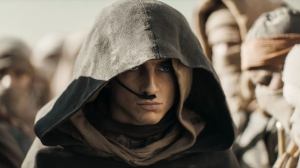
And this point is crucial because it prevents a simplistic reading of the first book and the films so far. Victory over the Harkonnens was never the end — it was just the start of the problem. Paul knew the jihad was a real possibility, but he believed he could control it. However, in Messiah, he realizes he was wrong. His prescience, once seen as a strategic advantage, becomes a prison: he sees all possible paths, and they all lead to disaster (and this issue was already planted as a subtle seed toward the end of Dune: Part 2). And that’s way more interesting to watch and explore than just battle scenes and wars.
So what’s Paul’s final trajectory? In the original material, the ending is simple but heavy for both the character and the reader. After losing his sight and going through a series of betrayals and personal losses, Paul walks alone into the desert, following a Fremen tradition for the blind. It’s a deeply coherent and grounded ending, perfectly in line with Herbert’s critique of hero worship. But he does come back older in the third book, Children of Dune, which officially closes his arc. And okay, that doesn’t mean the choice is bad or ruins the saga — he has reasons to return. But if we’re talking specifically about creating a character like him, it might have been more powerful to leave him in the desert permanently, without diluting the dramatic impact of his abdication.
Why Exactly Does Dune: Part 3 Need to Close Paul’s Arc Differently
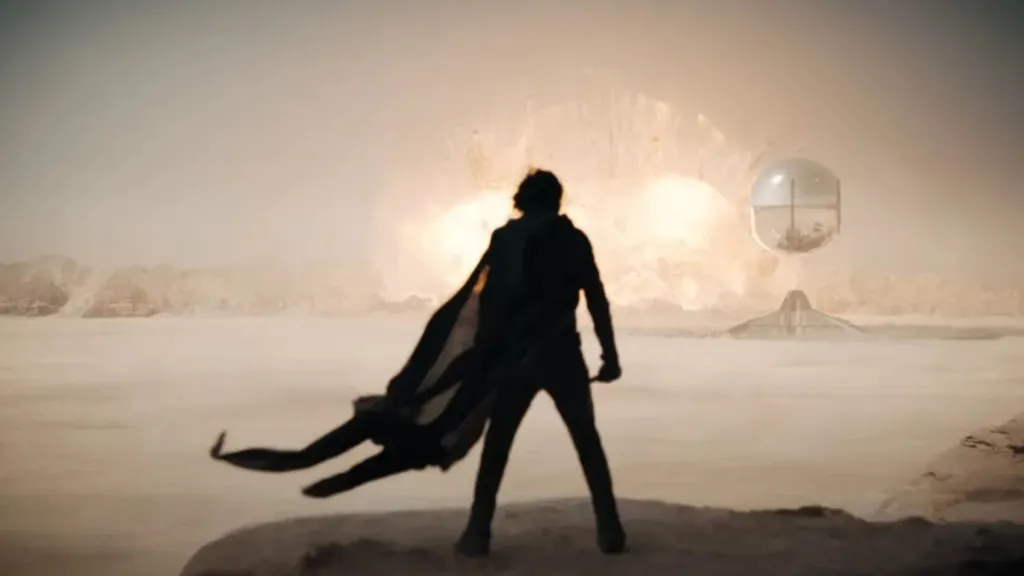
It’s not hard to assume that the third movie will likely end with Paul isolating himself in the desert. But nothing’s confirmed, and as we saw in Dune: Part 2, things can change. We know that Villeneuve is a fan of the books and knows what he’s doing — he stuck closely to the essence of the saga, and the changes he made were smart for adapting a story this complex, long considered impossible to bring to the screen. However, at this point, we can only trust and speculate that he won’t drastically alter the conclusion of the franchise.
At least the director has admitted he shares Herbert’s view of Dune and Paul’s message. Even with some tweaks, we saw his relationship with Chani (Zendaya) gain political and emotional tension, and the marriage deal with Irulan (Florence Pugh) shift from being a strategy to a personal rupture, right? That was a choice to reinforce the more problematic side of Paul’s rise. Part Two emphasized how he chose power, even knowing the cost, setting the stage for a third act that doesn’t need to soften anything.
So, knowing all this, it’s expected that Dune: Part 3 will actually end where Dune Messiah does — and that’s it, no going beyond that. It’s the most logical and also the boldest choice. Paul doesn’t need to die in battle or make a grand sacrificial gesture. He just needs to recognize that he became what he feared: a symbol out of control. The raw impact is in the abdication, not in glory. And film has the tools to make this even stronger than the book: showing the consequences of the jihad, putting faces to the victims, and highlighting the psychological weight of his leadership would make his final walk into the desert devastatingly powerful rather than just symbolic.

Besides, there’s also the franchise saturation factor, since audiences are used to universes that never end, which can be exciting but sometimes makes stories lose focus. Sure, no one knows if Children of Dune will ever be adapted, maybe under a different director than Villeneuve (Warner Bros. reportedly has interest), but finishing the story in three films creates something rare and cool: a trilogy with a clearly defined beginning, middle, and end. Rise, reign, and fall — it works dramatically, thematically, and most importantly, respects one of the greatest characters in sci-fi. Paul doesn’t need epic redemption; he needs consequences. Let’s just hope the new movie delivers exactly that.
Dune: Part 3 hits theaters on December 18.
What do you think? Leave a comment below and join the conversation now in the ComicBook Forum!
Most Viewed
-

Official art by Bastien Lecouffe-Deharme -
Image courtesy of Tor Books/Macmillan -

A photo of the Retrovolt Arcade taken in 2017, showing several classic arcade cabinets and stools. -

Courtesy of Saber Interactive -

Courtesy of TOHO Animation