While promoting his directorial debut film, California Schemin’, James McAvoy has frequently been asked about his time playing Charles Xavier/Professor X in 20th Century Fox’s X-Men films, and the news that Christopher Abbott has been cast in the role for the Marvel Cinematic Universe’s X-Men reboot. In one of his most recent interviews, McAvoy was also asked to reflect on the comic book film genre more broadly and name what he considers some of its best entries. Along with two other common favorites he argued that his own second X-Men movie, Days of Future Past, is among the upper echelon and while he did so in a humbly self-deprecating way, he’s absolutely right that it’s one of the genre’s best.
Videos by ComicBook.com
On the Happy Sad Confused podcast, host Josh Horowitz asked McAvoy what he considers the best comic book movie. After jokingly naming Wanted, another film he starred in, McAvoy echoed common praises for Christopher Nolan’s The Dark Knight, and Heath Ledger’s performance as the Joker, and noted that he is similarly fond of the MCU hit Avengers: Infinity War, before saying, “And not just because I’m in it, Days of Future Past.” He elaborated that the 2014 film, “felt like it was right at the beginning of all these mashups of cast, and mashups of time, and mashups of this and that, but actually really pulled it off brilliantly.” McAvoy’s point about how X-Men: Days of Future Past, often referred to as “DOFP,” by fans, seemingly contributed to the more frequent uses of storytelling devices like time travel and the multiverse seen in the superhero and other genres in recent years is accurate, as is his larger assertion that it’s simply one of the strongest cinematic comic book adaptations.
Days of Future Past is based on the classic storyline of the same name from issues #141 and 142 of The Uncanny X-Men comic, originally published in 1980. It features both many returning cast members from the original X-Men film trilogy that began in 2000 and the 1960s prequel X-Men: First Class in which McAvoy first appeared as Charles. In a dystopian, futuristic 2023, the older Charles (Sir Patrick Stewart) and members of his X-Men team are some of the only surviving superhuman mutants left in the world, constantly hunted by robotic assassins called Sentinels and their bigoted human allies. After learning that Kitty Pryde/Shadowcat (Elliot Page) has developed the ability to move other people’s minds through time into the bodies of their younger selves, Charles and his friend and former rival Erik Lehnsherr/Magneto (Sir Ian McKellen), send the nearly immortal Logan/Wolverine (Hugh Jackman) back in time to 1973 to recruit their younger selves in the hopes that they can alter history and prevent their nightmarish present from ever existing.
X-Men: Days of Future Past Influenced Later Superhero Crossovers

As McAvoy stated, DOFP was released several years earlier than other projects which similarly brought together casts from different eras of media franchises, including those in the MCU’s ongoing Multiverse Saga, some of which have featured members of the Fox X-Men ensemble reprising their roles. But while its influence on those projects is clear, DOFP isn’t really itself a multiverse film. While projects like Spider-Man: No Way Home famously unite different actors’ iterations of the same characters by having one or more of them travel to different universes, DOFP confirms that the worlds of First Class and the original X-Men films are one and the same. While this does create some frequently discussed inconsistencies in continuity, it’s crucial to making DOFP as strong as it is.
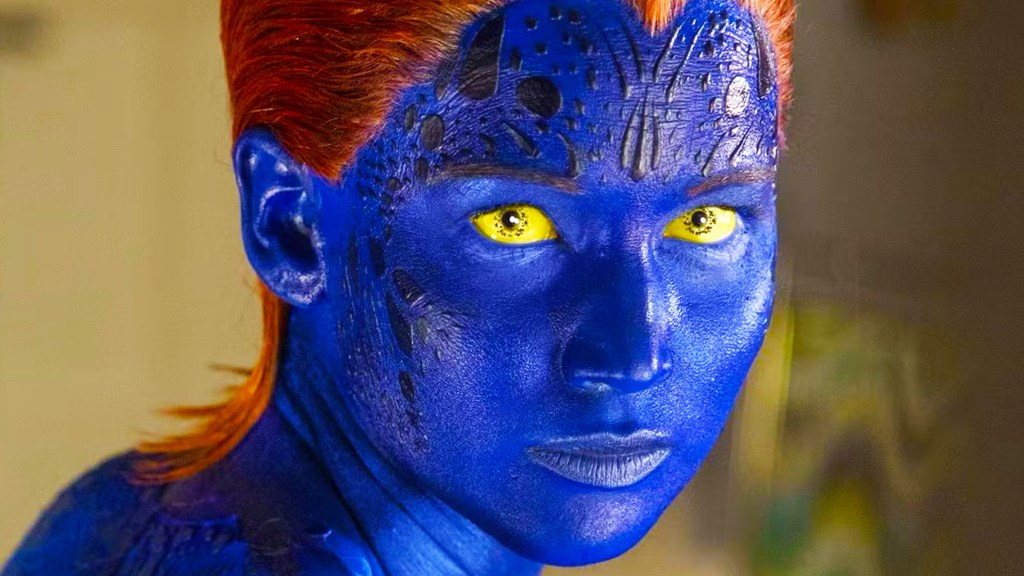
DOFP reintroduces McAvoy’s Charles as a hermit in the depths of a years-long battle with depression and other mental health challenges. His heartbreak over Erik (Michael Fassbender) and his adopted sister Raven Darkhölme/Mystique’s (Jennifer Lawrence) departure to form a militant mutant society at the end of First Class has been exacerbated by the drafting of many of his mutant students and colleagues into the Vietnam War and caused him to lose control of his telepathic powers. Charles is effectively addicted to a medication Henry “Hank” McCoy/Beast (Nicholas Hoult) developed that suppresses his powers and allows him to walk despite the spinal injury Erik unintentionally inflicted on him. In a reversal of his dynamic with Stewart’s Charles, Logan must help the younger man recover so they can accomplish his mission to stop Raven from attempting to assassinate the Sentinels’ creator, Bolivar Trask (Peter Dinklage.)
Despite admitting that he’s ill-suited to a mentorship role, Logan does make some progress helping Charles, which in turn highlights how much the former character has grown over his previous films, but a telepathic conversation with his older self is the real key to young Charles regaining his passion for helping other mutants. The dialogue scene between McAvoy and Stewart is one of the most iconic in comic book cinema, partially because of the straightforward dynamic between the two versions of the character. Plenty of scenes of characters meeting their multiversal variants, such as those in No Way Home, are epic and emotional in their own ways, but despite their shared names and bits of history the differences in their universes mean they’re still essentially different people. In DOFP McAvoy and Stewart literally play the exact same person, just at different ages, and this makes the older version’s assurance that the younger will get through his current emotional struggles especially impactful, as Stewart’s Charles already did so.
Keeping its time travel rules and plot points relatively simple also benefits Days of Future Past in other ways. It’s interesting to imagine how other members of the original trilogy and First Class casts would interact, but the choice to only allow Logan and Charles to actually travel across time, in the latter’s case only for the one scene, prevents the plot from becoming confusing and emphasizes how important all of the characters’ words and actions are, as they are never sure what could change history for the better or worse. This simplicity is maintained throughout the film, with the ending explicitly confirming that the heroes successfully change the timeline. After Charles convinces Raven not to shoot Trask on the White House lawn, Logan wakes up in a new, peaceful version of 2023, with Charles’ school full of mutant students and many of the X-Men who were killed off both in the dystopia and the original trilogy living happily. The film’s final scene sees Raven pulling Logan’s 1970s body from a river in which he nearly drowned, with Raven disguised as William Stryker (Josh Helman), the man behind the experiment that bonded adamantium to Logan’s bones in the original timeline, indicating that Logan’s personal history could also change.
Days of Future Past is a Perfect X-Men Crossover
McAvoy also told Horowitz that, ironically, he initially doubted whether the planned approach to DOFP would work. He was concerned that aspects like time travel and the return of the original cast would move the film too far away from the period style that made First Class successful. But as he acknowledges, this fortunately was not the case, with the film blending the two eras of the franchise seamlessly.
The filmmakers embraced aesthetic and cultural trends from the ‘70s just as enthusiastically as the First Class team did for the ‘60s, giving the past scenes a style that contrasted with both the superhero action, which is more overtly fantastical in DOFP than previous films, and the bleak version of 2023. Raven’s continued prominence as a main, heroic character in the last two entries in the First Class series was criticized by many fans, and Lawrence herself infamously admitted to becoming less passionate about the franchise as it continued. But the character’s role in DOFP is both completely sensible, and one of the film’s many strengths, and Lawrence is clearly still fully invested, with the Oscar-winner delivering a performance that easily stands alongside some of her more famously acclaimed roles. The comics version of the storyline also revolves around stopping Mystique from committing an assassination and the viewers’ knowledge of how ruthless a killer the older version played by Rebecca Romijn in the original films was imbues the scenes leading up to Raven’s ultimate decision with wonderfully dramatic tension. Charles convincing Raven to work for mutant/human equality in more peaceful ways is one of the biggest victories his gentle ideology gets in any of the movies.
The optimistic endings cement Days of Future Past as one of the most satisfying explorations of the themes at the heart of the X-Men franchise. Overall, the film easily achieves a similar level of quality as more frequently acclaimed superhero films like the franchise’s own Logan, with its relatively lighter tone also making it much easier to watch than that movie. The drastically reduced quality of McAvoy and company’s subsequent entries, Apocalypse and Dark Phoenix, and the problematic behavior of director Bryan Singer and some other cast members make it unfortunately understandable why Days of Future Past isn’t always ranked alongside its most celebrated peers, but hopefully as time goes on more will come to agree with McAvoy that based solely on its storytelling merits, it should be.
Do you agree that X-Men: Days of Future Past is one of the best comic book movies? Discuss in the comments.
More Movies
-
Warner Bros. Pictures -
Image Courtesy of Marvel Studios -
Image Courtesy of Paramount Pictures -
Image Courtesy of DC Comics -
Image courtesy of Warner Bros. Animation -
IMAGE COURTESY OF WARNER BROS.