
It was supposed to be Big Superhero Summer this year. Not only is Spider-Man: Brand New Day hitting theaters in just a few weeks, but the season kicked off with Supergirl, the eagerly anticipated second film in James Gunn and Peter Safran’s DCU, in June. However, what most hoped would be a triumphant sophomore outing for the superhero franchise and a tone-setter for the summer box office didn’t quite deliver. To date, the film has been a commercial failure and received mixed reviews from critics and, perhaps most notably, prompted a lot of discourse about the future of the DCU, superhero movies more broadly, and just about every side topic you can imagine in between. Everyone, it seems, has an opinion on Supergirl’s apparent failure.
Videos by ComicBook.com
But it’s within those opinions that something more interesting emerges—and it’s less about Supergirl itself and more about the DCU on the whole and our greater expectations for superhero entertainment. When you zoom out and take a bird’s eye view of Supergirl and it’s reception and performance, the idea of “failure” starts to get a little less clear. Certainly, the film did poorly at the box office, but the audience response to the film doesn’t match the critical disdain (there’s a roughly 20% difference between how critics and audiences saw the film), and while much of the discourse has clear misogynistic tones there are some salient points as well. In a real sense, Supergirl isn’t so much a failure itself but more a realization that our expectations for the DCU are out of whack—and it’s something we need to consider.
The DCU Isn’t The MCU (And Was Never Meant to Be)

One of the things that I think we don’t talk about enough and that became a lot more clear in looking at some of the discourse around Supergirl is that there is an expectation that the DCU should simply be a DC-flavored clone of the MCU. By that I mean that audiences expected that any movie after Superman would have a direct connection not only to Superman but pave the way for the next film, creating a sort of cinematic walking path to a larger, greater saga and team up. No one can truly fault audiences for that; it’s largely how the MCU has operated for a long time now and even though one can argue that even the MCU didn’t really start out that way, that is what it’s become. Each movie ties to the next with an expectation that we’re getting one big story and these are just chapters.
But the DCU isn’t exactly doing that. Superman introduced us to the new DCU in the biggest way yet, brought several new characters to the scene, and opened the door for more stories—such as Supergirl—but never really deviated from being Superman’s story. It had its own tone and structure and it never suggested that the next movies in the DCU would match it. We, as audiences made that assumption so when Supergirl arrived and was a completely different concept in many regards, we never really stopped to consider if part of our disappointment wasn’t of our own making. We expected the formulaic nature of Marvel’s structure, but DC isn’t doing that. It never claimed to be.
We also kept assuming that because James Gunn is one of the heads of DC Studios and this version of Supergirl very much falls into the category damaged underdog characters that Gunn has excelled at telling stories with, Supergirl would be a Guardians of the Galaxy variant just with DC figures. When that turned out not to be the case and the film ended up being a good bit darker and more serious, some audiences were not only disappointed but felt like it made the movie less than. The truth is, Gunn is the studio head but it wasn’t his movie and even with reports that there were some creative differences between Supergirl director Craig Gillespie and Gunn, the expectation that Supergirl would be a Gunn-esque film really just highlights that we expect Kevin Feige level control over the DCU that realistically may have never been a part of the franchise’s intended DNA.
We’re Holding the DCU to a Higher Standard Than We Should
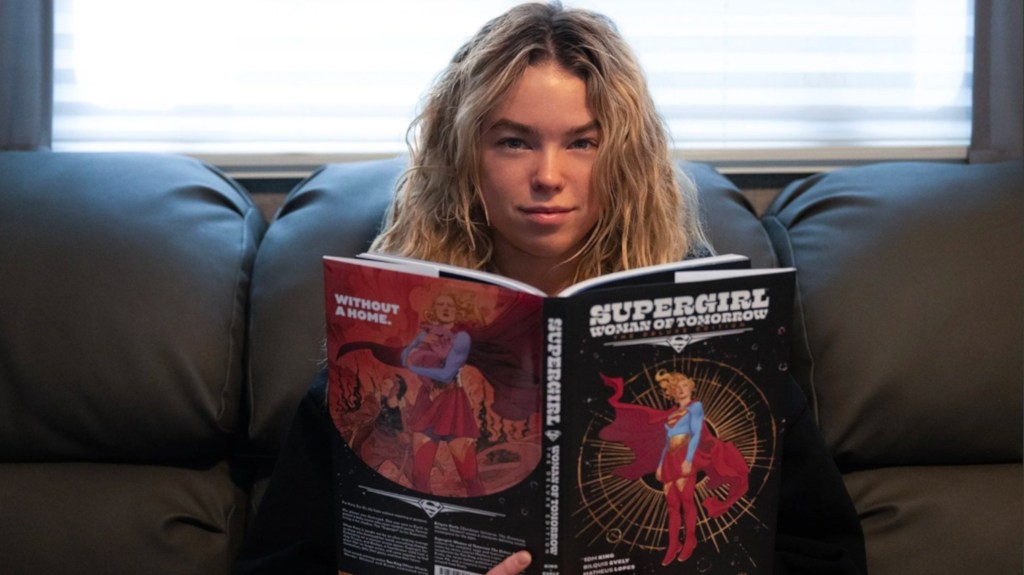
Even beyond the expectation that the DCU will be more like the MCU, we’re also holding the DCU to a standard that is higher than we should—and one that is higher than we hold the MCU to. This is particularly apparent when talking about its faithfulness to comics. One of the areas of discussion that I saw repeated in particular was in regard to the changes Supergirl made to Tom King’s comic, Supergirl: Woman of Tomorrow. People took issue with the shift in Krem’s criminal motivations, but they very specifically were bothered by Supergirl’s actions in regard to Krem at the end of the movie. There were cries that the movie didn’t understand the comics somehow, but here’s the thing: there are multiple ways to adapt any story. There are literal adaptations, faithful adaptations, and loose adaptations and Supergirl falls very much into the faithful category. You have a majority of elements that align but some things get shifted.
Those sorts of shifts are sometimes necessary when taking a story from page to screen and we see several in Supergirl. Krem’s criminal motivations, the interpretation of Kara’s actions at the end, and even the very structure of the overall storytelling are a bit different, but they make the story easier to tell on screen. It is, fundamentally, the same story, but for some reason much of the discourse has leaned towards the idea that if it’s not a line-by-line adaptation, it’s invalid somehow. That sort of standard for adaptation is an odd one just in general, but it’s especially strange considering that we don’t hold Marvel to it. Civil War? The Infinity Saga? Both very, very different from comics but there wasn’t that much outrage about it. We accepted those changes because they were necessary to bring the story to live-action life. It’s energy we should also be giving Supergirl specifically but the DCU broadly and operate under the acceptance that one story can be told a handful of ways and still be the same tale.
Ultimately, there is truly no denying that Supergirl did underperform and wasn’t a great superhero movie in the way that some superhero movies achieve greatness (I will continue to die on the hill that Black Panther is a truly great superhero movie as well as just a great movie). No one here is arguing that Supergirl is without flaw. But it’s also worth stepping back to see what larger issues that failure shines a light on and much of that lands squarely with expectations, what we’ve told ourselves something has to be, and a lack of understanding that the DCU and the MCU will never be the same thing and, perhaps most importantly we don’t want them to be. What’s great about comics is that we get something different from Marvel than we do from DC. We should remember that the movies need to be different like that, too.
What do you think? Leave a comment below and join the conversation now in the ComicBook Forum!




![The Exorcist: Martyrs Director Mike Flanagan Confirms A Major Franchise Element Absent From Sequel [EXCLUSIVE]](https://comicbook.com/wp-content/uploads/sites/4/2026/10/scarlet-johansson-exorcist-martyrs.jpg?w=300)


