
The Odyssey is rightly regarded as another cinematic triumph from director Christopher Nolan (The Dark Knight, Inception, Oppenheimer). This time, Nolan is bringing his modern filmmaking sensibilities to one of the oldest known texts in the world: Homer’s poem The Odyssey, the second part of his epic saga about Greece’s downfall via the Trojan War, and the godly wrath that followed.
Videos by ComicBook.com
The story of Homer’s Odyssey is a nearly three-thousand-year-old text, so the spoilers are pretty well known by now. More to the point: the mythology of the Odyssey has been so prevalent that now many fans know of fantastical creatures like the Cyclops, or events like the Trojan Horse, without truly knowing their literary source. For that very same reason, there may be some fans who don’t truly understand the major swerve that Nolan makes with the ending of his film, compared to Homer’s original. Allow us to explain.
The Odyssey Ending Explained
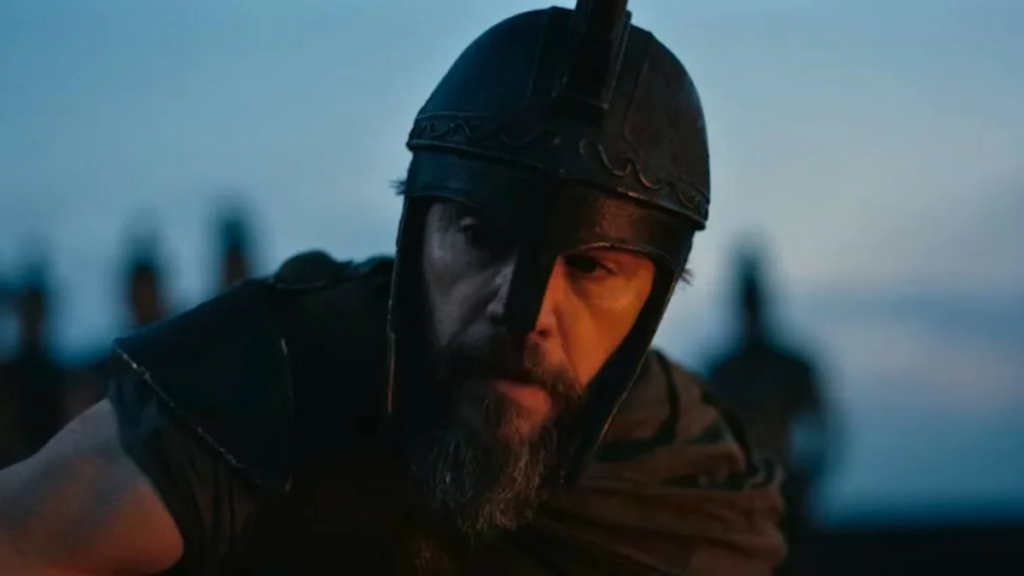
Nolan’s The Odyssey follows the epic poem pretty closely, most of the way. King Odysseus of Ithaca (Matt Damon) proves to be one of the cleverest generals in Agamemnon’s (Benny Safdie) company when he finally breaks a ten-year siege on Troy with the idea of using the Trojan Horse to sneak behind the city’s impregnable walls and deploy a small squad to infiltrate and unlock the gates from the inside. The plan succeeds, and Troy falls in a vicious, bloody massacre.
However, because Odysseus betrayed the sacred custom of “Zeus’ Law”, and the pact of civility between hosts and guests (like a gift not being used for an ambush), he incurs the wrath of the gods, who doom his voyage from Troy back home to Ithaca with detours into nighmarish places and encounters, that slowly wittle Odysseus’ crew down to the last man, and strip years of time off of his life with his wife Penelope (Anne Hathaway) and son Telemachus (Tom Holland).

After 20 years (10 years of war, 10 years sailing home), Odysseus finally makes amends with the gods for his transgression (as guided by the nymph Calypso), and is delivered back home to Ithaca. However, when he gets there, Odysseus finds his house is in disorder with suitors trying to marry his wife and take his throne, and must clean house. Disguised as a beggar, Odysseus secures his son’s help and tips off his wife that he is hiding in the crowd. Penelope sets up a challenge she knows will bring things to a climax: stringing Odysseus’ bow and completing an arrow-shooting contest. It works as intended: Odysseus waits to go last, before revealing himself by stringing the bow and making the impossible shot with the arrow. The suitors realize too late that the trap is sprung, and Odysseus kills them all in a massive brawl to the death, while Telemachus kills the traitor helping the suitors.
However, Odysseus gets a black mark for killing members of various noble families under his roof. He abdicates the throne to his son and takes exile as his punishment (both externally and internally), sailing westward with Penelope to live out his days healing from the trauma and guilt of what he’s wrought in the world.
Why The Odyssey Movie Ending is So Different From The Original Poem
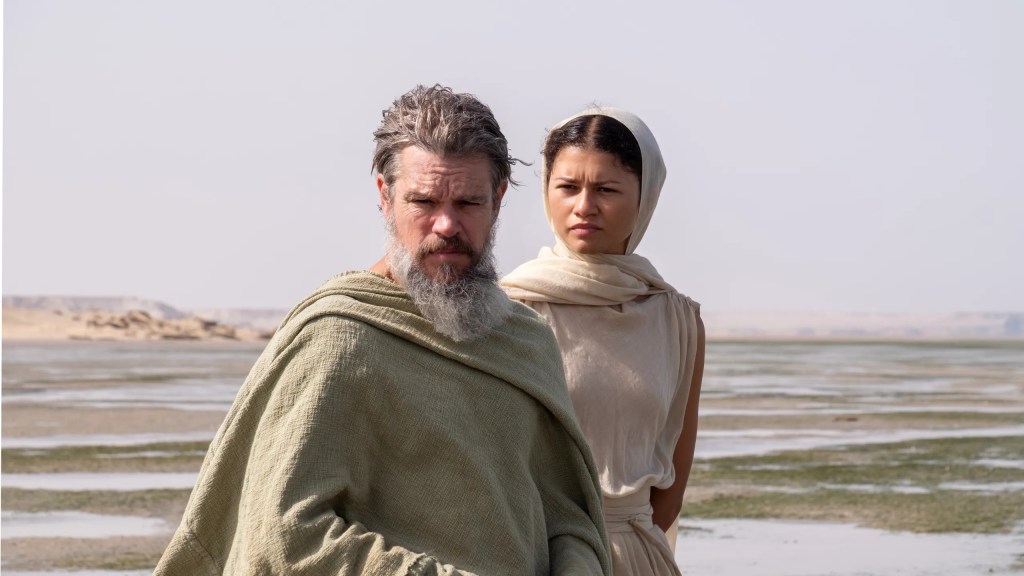
Nolan’s ending to The Odyssey is a culmination of the film’s thematic arc. While the ‘punishment from the gods’ subplot to Odysseus’ wayward journey is still very much intact, Nolan added more subtext to make the film a relevant adaptation today. Odysseus goes through the film tormented by what he did with the Trojan Horse, as the tactical subterfuge was in direct violation of “Zeus’ Law”, which dictates rigid rules and customs of hospitality between hosts and guests (like a peace offering being a genuine gift, and not a means of ambush). After returning, Odysseus confesses to his wife and son that the Fall of Troy represents the fall of civilization, and his plan to reclaim and then abdicate the throne is, in part, a self-imposed penance for breaking the civilized world. It’s a powerful metaphor for modern times, where ideas of civility in everything from warfare to daily life are being put to the test, with civilization once again hanging in the balance. But it’s not at all like the original ending Homer intended.
Homer’s Odyssey actually provides a happy ending to its tale of faith and sacrifice. Odysseus confronts and kills the suitors after pretending to be a beggar (like in the film), but the outcome is very different. In the poem, Odysseus doesn’t reveal himself to Penelope until after slaughtering the suitors, and has to prove his identity by answering the riddle of moving their marital bed, which is actually unmovable, having been carved from the trunk of an olive tree. (In the film, Odysseus proves himself by returning the pin Penelope had him wear while at war.)
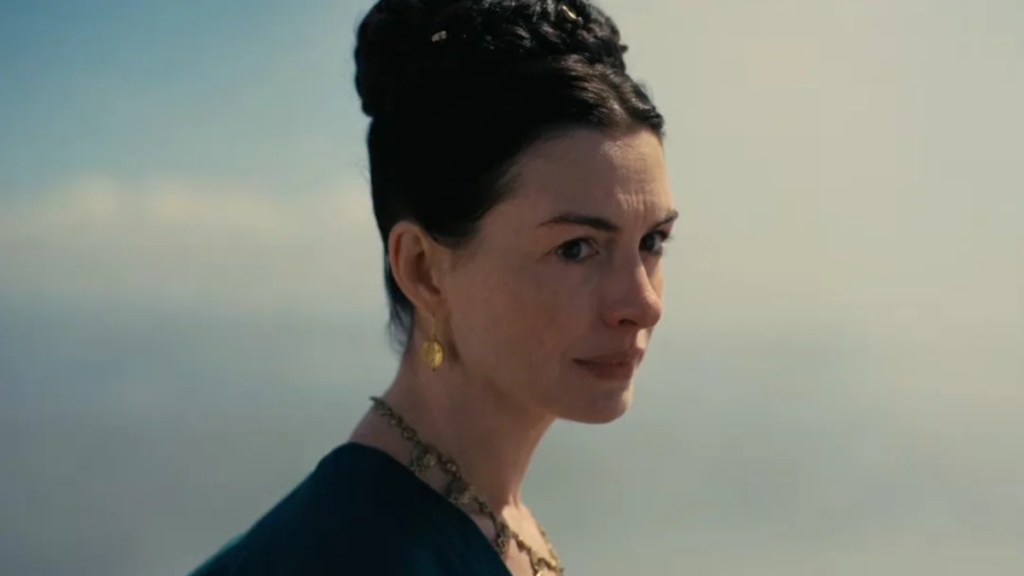
Homer’s poem follows the predicted path: the noble families of the slain suitors do not take Odysseus’ actions lying down; they rally their forces to go to war with him, but never get the chance. Athena appears and stops the conflict, proclaiming an end to all bloodshed. The nobles relent, and Odysseus remains king of Ithaca, ruling happily with Penelope until the end of his days.
The differences in endings aren’t hard to explain: Homer wrote one of the first great epic adventures, and gave it a fitting heroic ending for Odysseus. In modern times, Nolan (and the world) views the Fall of Troy (and really the Fall of Rome) in a much different context, and the entire thematic point of The Odyssey film is questioning how a civilized world ever came to an end, while providing fantastical examples of the torturous ills that come of it.
Do you like the ending of Nolan’s The Odyssey better than the original? Let us know on the ComicBook Forum!
More Movies
-
Image Courtesy of Warner Bros -
Image Courtesy of Universal





Forum Conversation: THE ODYSSEY Reactions & Discussion (SPOILERS)
Go to ForumNot my cup of tea, to be honest. I appreciate that Nolan wanted to make a point, but he stripped back a lot of Odysseus’ wit and humor in the push to make him a more serious character. It was a technically well made movie, but it dragged at points for me.
I wasn’t familiar with Zeus’ law (xenia) so I appreciate the excellent analysis in the review posted here. The priestess that was killed made me think of a kid being bullied by ICE agents. I really appreciated the diverse cast and the constant reference to Zeus’ law. The cyclops was incredible. What a film!
I actually completely forgot about that part until I saw this lol