
J.R.R. Tolkien’s Elves stand apart from virtually every other fictional race in the history of fantasy literature. Across decades of world-building, Tolkien constructed multiple distinct Elven peoples—the Noldor, the Sindar, the Teleri, the Vanyar, and the Silvan—each with its own mythology, political history, and linguistic identity. For instance, the Noldor forged the Rings of Power and waged wars against the original Dark Lord across three full Ages of the world. Mwanehile, the Sindar built forest kingdoms and preserved ancient lore. In addition, the Teleri crafted ships that reached the shores of the Undying Lands. No other invented race in fiction has been constructed with this degree of internal complexity, and the result is a civilization so layered that Tolkien spent the better part of his life filling in its edges.
Videos by ComicBook.com
For this list, the focus is exclusively on individual Elven characters who appear or are meaningfully present within The Lord of the Rings, encompassing both Tolkien’s three-volume novel and Peter Jackson’s film trilogy. The wider legendarium contains hundreds of named Elves across The Silmarillion, Unfinished Tales, and the History of Middle-earth series, and including all of them would demand an entirely different article. The characters here range from background counselors with a handful of lines to the most powerful immortal beings standing in Middle-earth at the dawn of the Fourth Age, ranked by the full measure of their power as Tolkien defined it.
11) Erestor

Erestor holds the position of chief counselor to Elrond (Hugo Weaving) at Rivendell, a role that places him inside the Council of Elrond, the most consequential political meeting in the history of the Third Age. In the books, Erestor argues for sealing the One Ring away in the deepest vaults of the sea, a proposal the council ultimately rejects. His intervention demonstrates real strategic intelligence, but Tolkien assigns him no combat history, no ancient feats of power, and no meaningful role beyond that single scene. Peter Jackson’s extended edition of The Fellowship of the Ring composited Erestor with the character of Lindir, giving him a slightly larger screen presence than the source material warranted. Still, his influence is institutional, derived entirely from proximity to Elrond’s authority rather than from any independent capability.
10) Gildor Inglorion

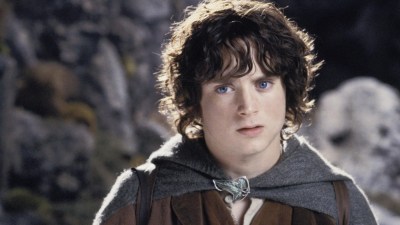
Gildor Inglorion is the first Elf Frodo Baggins (Elijah Wood) encounters after leaving the Shire, leading a wandering company of Noldor through the Woody End on their way to the Grey Havens. Tolkien identifies him as a member of the House of Finrod, which connects him to one of the greatest dynasties of the First Age, though the precise nature of that connection is never clarified. Gildor provides Frodo with the first real intelligence about the threat of the Ringwraiths, tells him to make for Rivendell without delay, and delivers the Elvish proverb that Gandalf will later echo. He exits the narrative entirely after that single encounter, and Jackson cut Gildor from the films altogether, making his presence purely textual. Within the books, he functions as a knowledgeable and respected leader whose ancient lineage places him above the average Silvan Elf.
9) Haldir

Haldir serves as the Marchwarden of Lothlórien, responsible for enforcing the eastern borders of the most protected Elven realm remaining in Middle-earth during the War of the Ring. In the books, Haldir escorts the Fellowship through the Golden Wood and then withdraws entirely from the narrative. Peter Jackson’s The Two Towers significantly expanded his role by deploying him at Helm’s Deep as the leader of a Galadriel-sent Elven force, a deviation from Tolkien’s text that gave the character a dramatic death during the Uruk-hai assault. Craig Parker’s performance made the moment land with genuine emotional weight, and the decision is one of Jackson’s more defensible departures from the source material. As a Marchwarden, Haldir is a trained and experienced Silvan warrior operating at the peak of his role.
8) Arwen

Arwen Undómiel (Liv Tyler) is the daughter of Elrond and the granddaughter of Galadriel, which makes her the descendant of some of Middle-earth’s most powerful Elves. Tolkien describes her as the most beautiful Elf of the Third Age and the living image of Lúthien Tinúviel, the greatest of her kind who ever lived. In the books, Arwen’s role is largely ceremonial, as she appears at Rivendell and at Aragorn’s (Viggo Mortensen) coronation, with her full story told in the appendices. Jackson’s films transferred Glorfindel’s dramatic river-crossing scene to her, granting her a moment of active magic that the novels never assign to the character. Her power is real but largely latent, a deep spiritual and ancestral force rather than the demonstrated martial or magical abilities of the Elves above her on this list. Still, the choice to surrender her immortality for Aragorn makes her the most consequential Elf of the Age in narrative terms, even if raw power is not her defining attribute.
7) Elladan & Elrohir
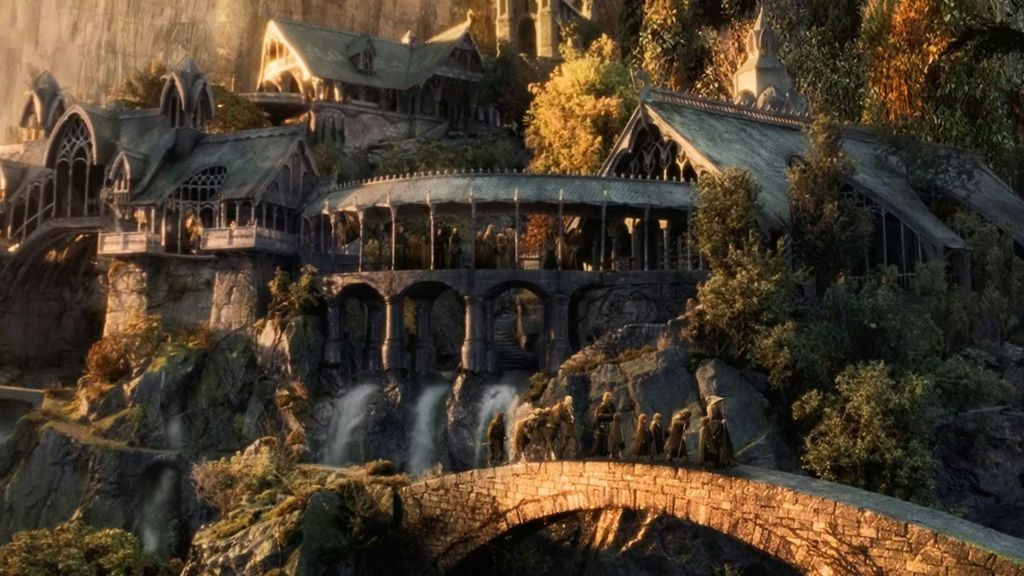
Elladan and Elrohir are the twin sons of Elrond, half-elven by birth and warriors of significant experience by the time of the War of the Ring. Their mother, Celebrían, was captured and tortured by Orcs in the Misty Mountains, and the twins spent the centuries since conducting a relentless campaign of retribution across Eriador that Tolkien describes in stark terms. In the books, they ride south with the Grey Company, fight on the Pelennor Fields alongside Aragorn’s forces, and are among the most active Elven combatants in the entire war. Jackson omitted them from the films entirely, making them one of the most significant book-only presences on this list. Elrond’s bloodline and the full resources of Rivendell’s training place them clearly above the border warriors and wanderers beneath them.
6) Legolas
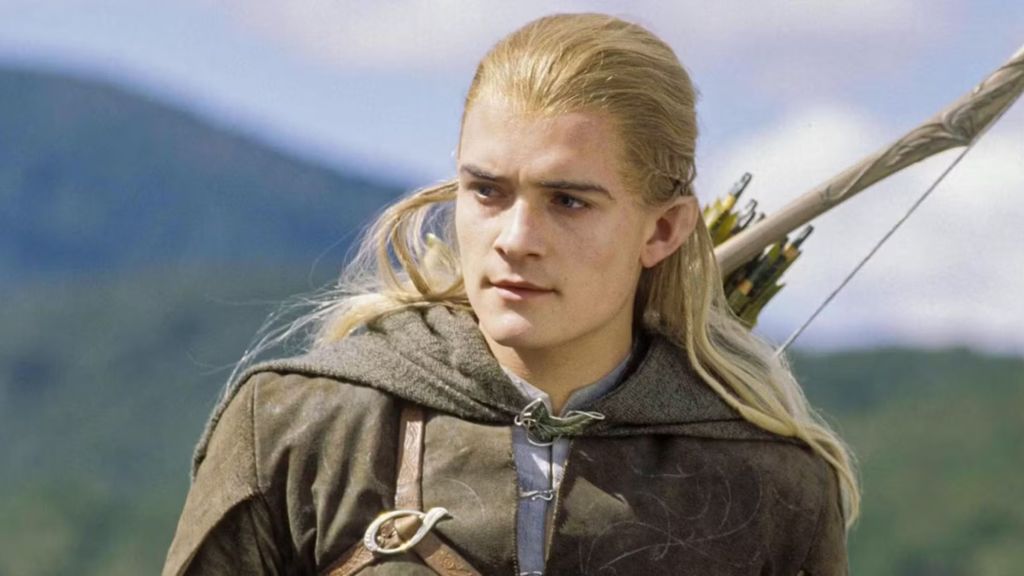
Legolas (Orlando Bloom) enters The Lord of the Rings as a representative of the Woodland Realm of Mirkwood and one of the nine members of the Fellowship of the Ring. As the son of Thranduil (Lee Pace), King of the Woodland Elves, he carries the status of a prince, but the Silvan Elves of Mirkwood are generally considered less ancient and less inherently powerful than the Noldor or Sindar who dominate the upper portion of this list. What Legolas contributes is near-perfect archery, physical agility that allows him to move across snow without sinking, and the ability to perceive threats at distances no other member of the Fellowship can match. His role in battles from Helm’s Deep to Pelennor to the Black Gate makes him the most visible and active Elf in both the books and the films, even if his lineage places him below the great lords of earlier Ages.
5) Celeborn
Celeborn is the Lord of Lothlórien and one of the most ancient Sindar still present in Middle-earth at the time of the War of the Ring. His precise origins are a subject of significant scholarly debate, as Tolkien revised his history multiple times, but the most coherent reading connects him to the royal house of Doriath, which would make him kin to Elu Thingol, the greatest of the Sindarin kings. During the War of the Ring, Celeborn leads the military assault on Dol Guldur, Sauron’s fortress in southern Mirkwood, and captures it after the One Ring’s destruction. Marton Csokas’s portrayal in Jackson’s films reduces him to a largely passive figure standing beside Galadriel, which severely underrepresents his standing in the books.
4) Círdan

Círdan the Shipwright is the oldest Elf in Middle-earth at the time of The Lord of the Rings, a figure so ancient that Galadriel’s entire history represents only a later chapter in an existence stretching back to the earliest years of the world. He is the master of the Grey Havens and the Elf originally entrusted with Narya, the Ring of Fire, one of the three Elven Rings forged to preserve and inspire. Círdan recognized Gandalf’s true nature immediately upon the wizard’s arrival in Middle-earth and surrendered Narya to him, an act of discernment that placed him in a different category from virtually every other being in the story. His role in The Return of the King is brief, as he stands at the Grey Havens to see the Ringbearers depart, but the weight of his age and his long stewardship of Middle-earth’s final western harbor give him a gravity that limited screen time does not fully convey.
3) Glorfindel

In The Lord of the Rings books, Tolkien states directly that the Lord of the Nazgûl would have fled from Glorfindel even without the support of the Army of the West. That is an extraordinary statement. The Witch-king survived the entire War of the Ring, broke the gates of Minas Tirith, and killed Théoden (Bernard Hill) on the Pelennor, and yet Tolkien places him categorically below Glorfindel as a direct threat. The reason is Glorfindel’s unique history, as he died during the Fall of Gondolin in the First Age, slaying a Balrog in the process, and was subsequently reincarnated and sent back to Middle-earth by the Valar themselves, a distinction no other Elf on this list shares. Jackson replaced Glorfindel with Arwen in the river-crossing scene, removing from the films the single most powerful Elf below the rank of Ringbearer.
2) Elrond

Elrond is half-elven by birth, the son of Eärendil and Elwing, and he chose the Elven path at the dawn of the Second Age, a choice that granted him an existence spanning thousands of years of continuous involvement in Middle-earth’s wars against Sauron. He bears Vilya, the Ring of Air, which Tolkien identifies as the greatest of the three Elven Rings, and uses it to protect Rivendell throughout the Third Age. Elrond was present at the Last Alliance of Elves and Men and watched firsthand as Isildur refused to destroy the One Ring at the Cracks of Doom, a failure Elrond tried to prevent by escorting him to the edge of the fire. Hugo Weaving’s portrayal in Jackson’s films makes Elrond largely administrative in function, but in the full context of Tolkien’s text, the bearer of Vilya and the former herald of Gil-galad is an entity of formidable and ancient authority.
1) Galadriel
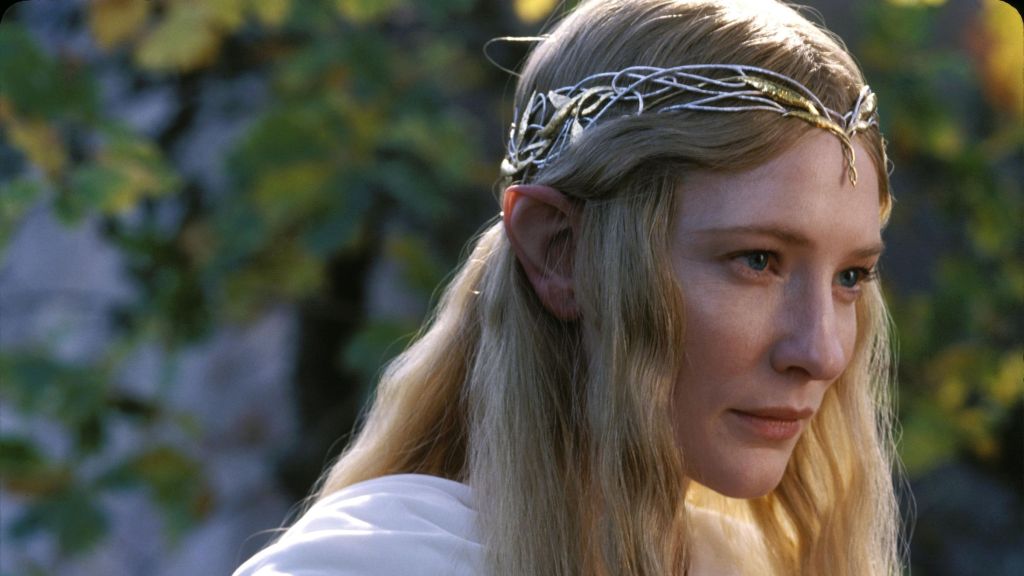
Galadriel (Cate Blanchett) is the most powerful Elf remaining in Middle-earth throughout the events of The Lord of the Rings, a status that reflects both the depth of her personal power and the accumulated history she carries from the First Age forward. She is descended from all three of the great Noldorin houses, was trained in arts of the mind by Melian the Maia herself, and bears Nenya, the Ring of Water. The scene in The Fellowship of the Ring where Frodo offers her the One Ring is among the most revealing in the entire trilogy, as Galadriel acknowledges that she would receive it, transform into something beautiful and terrible beyond all reckoning, and surpass Sauron himself. That statement is not hyperbole. In the books, she telepathically interrogates each member of the Fellowship individually and engages in a direct mental contest with Sauron across the distance between Lothlórien and Dol Guldur. Her decision to refuse the Ring and diminish into the West is the most significant act of renunciation in the story, and it requires more power to make than any conquest would.
Which elf from The Lord of the Rings is your favorite? Leave a comment below and join the conversation now in the ComicBook Forum!
