Sci-fi is still one of the biggest genres in cinema when it comes to storytelling and purpose, but within it, the classics still hit harder than many modern films. And why is that? It’s basically a matter of spectacle, since nowadays, even though visual quality is far superior, there are quite a few new films that seem to rely more on that than on substance. Older productions had limited resources, but their ideas are strong, and their messages still hold up today, making the audience reflect and feel like they’ve just watched a true film masterclass. That’s why, decades later, they’re not just historical pieces, but still totally relevant.
Videos by ComicBook.com
Basically, we’re talking about movies that aged well because they don’t depend on the time they were made to make sense. And looking at them today, it’s clear that many of them also helped define what sci-fi is still trying to replicate. Here are 7 genre films that are perfect examples of that.
7) The War of the Worlds

When people think about alien invasion movies, they usually think of Independence Day, Signs, Edge of Tomorrow, and so on. However, a lot of them owe something to The War of the Worlds from 1953. Even though it later got its modern version from Steven Spielberg, the original still holds up today as it understands exactly where its biggest strength lies: making the audience feel like humanity doesn’t stand a chance. The story follows scientist Clayton Forrester (Gene Barry) as an extraterrestrial force begins destroying cities with technology far beyond human comprehension.
And yes, the visual effects are dated, but if you set that aside and focus on the story, the tension is one of the movie’s strongest elements because it never tries to turn its protagonists into heroes who can save the day — quite the opposite. They spend most of the movie just trying to survive and figure out what’s going on. There’s a constant sense of helplessness that many modern entries in the genre tend to overlook in favor of bigger action set pieces. It’s all about atmosphere, despair, and the fragility of civilization, which still feels very reflective today.
6) The Incredible Shrinking Man

Sci-fi is a genre that can explore multiple layers to examine humanity, and The Incredible Shrinking Man does exactly that. At first, it feels like a simple high-concept story about a man, but it’s actually a very smart movie in what it’s trying to communicate to the audience. The plot follows Scott Carey (Grant Williams), who begins to continuously shrink after being exposed to a strange combination of radiation and chemical substances. From there, his daily life becomes increasingly dangerous as ordinary objects start turning into threats.
Does the film have creative scenes? Absolutely, but that’s not really the point. The idea is to use the protagonist’s transformation to explore his loss of independence, self-esteem, and purpose, which naturally pulls the audience in because it’s easy to relate to. It’s a deeply human story, to the point where the final monologue still stands as one of the most philosophical endings in the genre. This is an older sci-fi movie that knows how to go beyond technology and monsters, and it’s absolutely worth watching at least once.
5) The Day the Earth Stood Still

Continuing on sci-fi as a genre that’s built for reflection, The Day the Earth Stood Still completely breaks away from the idea that every alien has to be a threat. A lot of films have since tried to reframe what an extraterrestrial encounter looks like, but this one is especially interesting in how it builds that concept. In the story, Klaatu (Michael Rennie) arrives on Earth alongside the robot Gort (Lock Martin) to deliver a warning to humanity about the destructive path it’s on, but he’s immediately met with governments and military forces reacting out of fear instead of actually listening to what he’s saying.
And if you think about modern contexts like Disclosure Day, this kind of conflict still feels pretty much relevant. The movie is never really about aliens themselves, but about how people respond when something challenges their sense of certainty. It focuses on dialogue, moral dilemmas, and human reactions rather than chasing spectacle and action. It still holds up today since its strength is in its ideas, not its technical limitations. Plus, Klaatu remains one of the most memorable alien figures in cinema.
4) The Andromeda Strain

The Andromeda Strain is one of the most classic and widely respected sci-fi productions in the genre. It follows a group of scientists trying to identify and contain an extraterrestrial microscopic organism that arrives on Earth after a satellite crash. The entire focus is on the investigation itself, but the film never tries to make things more exciting than they need to be, putting its emphasis completely on procedural accuracy, expert debates, and the pressure that even a small mistake could lead to total catastrophe — and that’s why it still works today.
It takes a near-documentary approach to scientific detail, which gives the story a very grounded, almost clinical tone, while still building real tension out of the situation itself. Modern audiences are also much more familiar with pandemic and biological crisis narratives (and have experienced one relatively recently), which makes the movie feel surprisingly timeless in its themes. If you’re expecting a fast-paced sci-fi, this isn’t it, but it still holds attention as a more restrained, thriller-driven take on the genre.
3) Forbidden Planet

Imagine a sci-fi movie inspired by a William Shakespeare play — that’s exactly the case with Forbidden Planet. The story follows a mission sent to investigate a missing colony on a distant planet, where the crew finds only a scientist, his daughter, and an alien technology tied to a mysterious and dangerous force. And even though the setup sounds straightforward, the film carries a surprising amount of thematic weight, which is part of why it influenced so much of what came after it, such as Star Trek and Star Wars, especially in how it treats advanced technology alongside philosophical questions about intelligence, evolution, and the human mind.
What makes it stand out is how it frames human nature itself as the real threat. The main idea is that our own impulses can be more dangerous than an external alien force. On top of that, the production design is absurdly ambitious for a ’50s production, and it still holds up visually in a way a lot of older sci-fi doesn’t. When you combine that with a story that feels more timeless than its era, you get something that genuinely earns its classic status. Also, the soundtrack is in a league of its own.
2) Invasion of the Body Snatchers
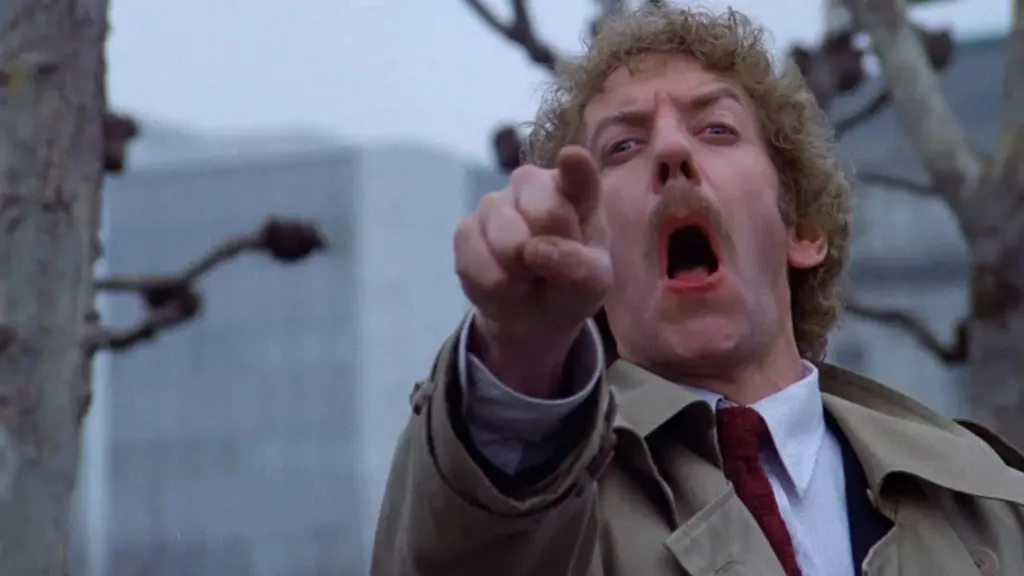
It’s pretty hard to find old-school sci-fi horror that’s as effective as Invasion of the Body Snatchers. It’s pure paranoia, following a doctor who starts realizing that people in a small town are being replaced by emotionless alien copies, while he struggles to convince anyone that something is seriously wrong. It’s scary in concept, and it still feels relevant if you stop to think that the fear comes from the idea that someone can stop being who they were overnight. It’s about dehumanization in that sense, and that never really gets outdated.
That premise has been echoed in a lot of different ways over the years, in movies like The Faculty, The Hidden, The Thing, and even Annihilation. But very few of them manage to match the simplicity and efficiency of the original. You don’t need an overly complex plot or heavy visual effects when the central idea is this strong, and it’s enough to build something that keeps connecting with different generations. Besides, the suspense still works incredibly well today — watching it now is still very uncomfortable in the best possible way.
1) Alien
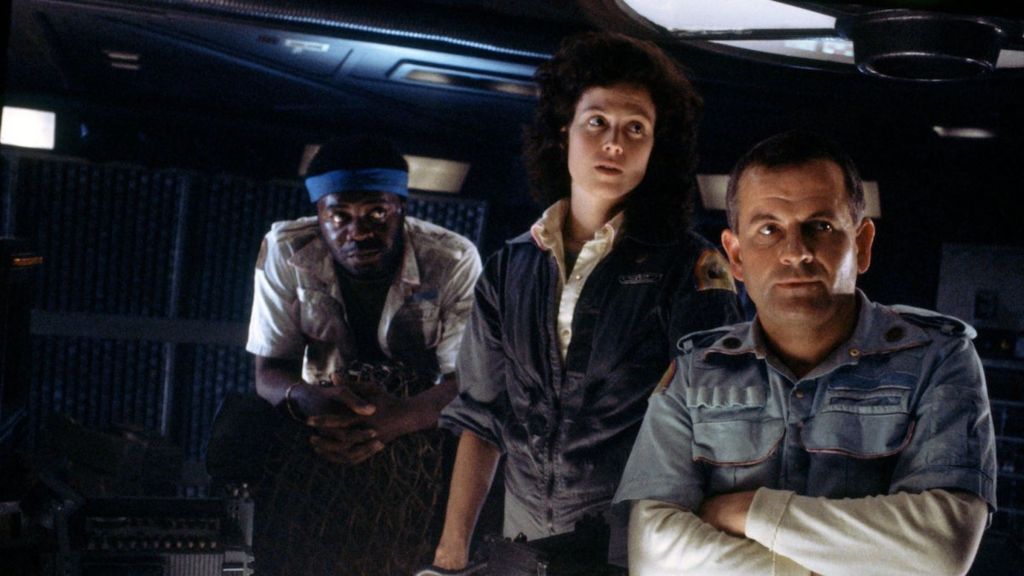
It’s impossible to talk about classics without mentioning Alien; no wonder it turned into a franchise that’s still expanding today. But even with many sequels and spin-offs, none of them really manage to match the original, which still stands as one of the best examples of what timeless sci-fi horror looks like. The story follows the crew of the Nostromo after they respond to a signal from an unknown planet and end up bringing a deadly extraterrestrial organism aboard their ship. And what makes it work is that the film never feels the need to fully show or explain the creature in a way that kills the mystery.
A big reason Alien is on this list is Ridley Scott’s direction, without a doubt, because sci-fi and horror rarely blend this effectively. The framing, the visual tension, the way the camera always reinforces claustrophobia, the silence, the color palette — everything is carefully designed to keep the audience uneasy. Also, you have Ripley (Sigourney Weaver), one of the most iconic protagonists in pop culture. The result is still a reference point for how to build a cinematic experience that doesn’t rely on cheap tricks and still manages to feel huge despite having pretty limited resources by today’s standards.
What do you think? Leave a comment below and join the conversation now in the ComicBook Forum!
More Movies
-

How did a Godzilla variant save a Spider hero?