Our modern technological society owes a lot to Star Trek. Since its debut in 1966, the show has been predicting the future of science and computing. The Federation’s flip-open communicators were a clear influence on cell phones in the mid-’90s. The Next Generation‘s PADDs introduced the concept of tablet computing to a generation of fans two decades before the iPad would hit shelves. Even the Enterprise’s Warp Drive has become a reality, at least in theoretical physics. We may not have a working warp core yet, but the math checks out. There’s one piece of Star Trek tech that’s still in real-world development that wasn’t in the initial plan for the show at all. As a matter of fact, one of the show’s most memorable set pieces was developed specifically to save Lucille Ball quite a bit of money.
Videos by ComicBook.com
Star Trek‘s signature transporters have been a mainstay of the series since the first broadcast episode in 1966’s “The Man Trap.” Star Trek was not a cheap show to make. Desilu Productions made the first season at a loss of over a million dollars, not including the cost of making two pilots. When Gene Roddenberry envisioned the show, he had planned for the Enterprise to occasionally land on the alien worlds the cast was exploring. When the producers were calculating the regular expense of creating the visuals of the spaceship landing, they realized that the costs were astronomical. The idea of adding a shuttle made the situation worse by adding the expense of a second interior set. Luckily, Gene Roddenberry thought of a solution and rewrote the show around it. The device could easily get an away team from the ship to a planet’s surface with a quick trick of the camera. He also had a special effects team that could make it happen.
Building The Look of Star Trek
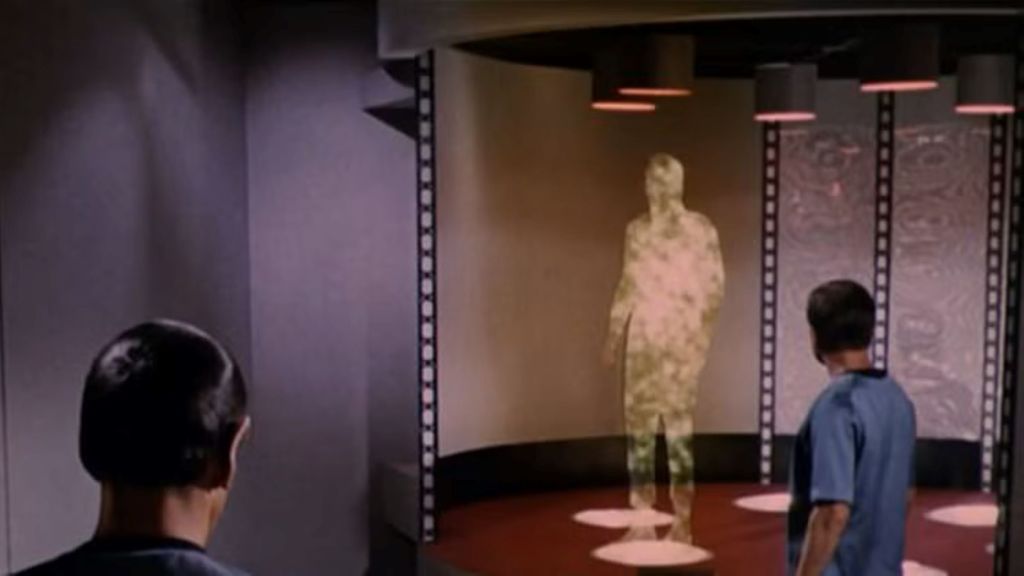
Walter “Matt” Jefferies designed the Enterprise and helped establish the visual language of Starfleet. Hence, the Jefferies tubes aboard the Enterprise-D on Star Trek: The Next Generation. He built the look of the transporter room and its controls. The Howard Anderson Effects Company created the visual effect used when beaming someone with backlit aluminum powder falling past an upside-down camera. The effect was cheaper than creating landing sequences and also looked like more advanced technology. The cast and crew also treated being beamed up matter-of-factly, making the exotic seem commonplace.
In the Star Trek canon, the transporter works by scanning someone, converting their bio-patterns into a matter stream, transmits it, and reconstructs the person at the destination. A human body contains roughly ten octillion atoms. Recording every relevant detail and rebuilding the body perfectly would require an incomprehensible amount of information and energy. The process also begs the question: Did the beamed-up crew travel or did the machine destroy them and rebuild an identical version at their destination? It’s a thought experiment that has inspired countless debates.
Better When It Malfunctions

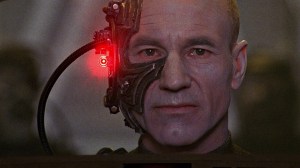
Once the transporter was established to help ease some of the budget problems, it quickly got utilized as a plot device in other ways. Just a month into the show’s run, the episode “The Enemy Within” featured Captain Kirk being split into good and evil versions, caused by the first on-screen transporter malfunction. The teleportation device would be used in a number of memorable episodes across Trek series. In Star Trek: The Next Generation, an Original Series star was able to make a guest appearance. In Season 6’s “Relics,” James Doohan returned as the beloved character Scotty. He survived the in-timeline 75-year gap by going into stasis in the transporter’s pattern buffer. Transporters also featured heavily in the third season of Picard, when the Borg use the Federation’s own tools against them to quietly infect all of Starfleet.
The transporter malfunctions didn’t stay limited to the final frontier. Parodies like Spaceballs and loving tributes like Galaxy Quest had their own riffs on beaming up. The transporter accident trope was so recognizable, audiences didn’t need much explanation. Audiences understood the joke when President Skroob teleported with his head on backwards and Tim Allen yelled, “Digitize me!”
Star Trek Finally Landed the Ship
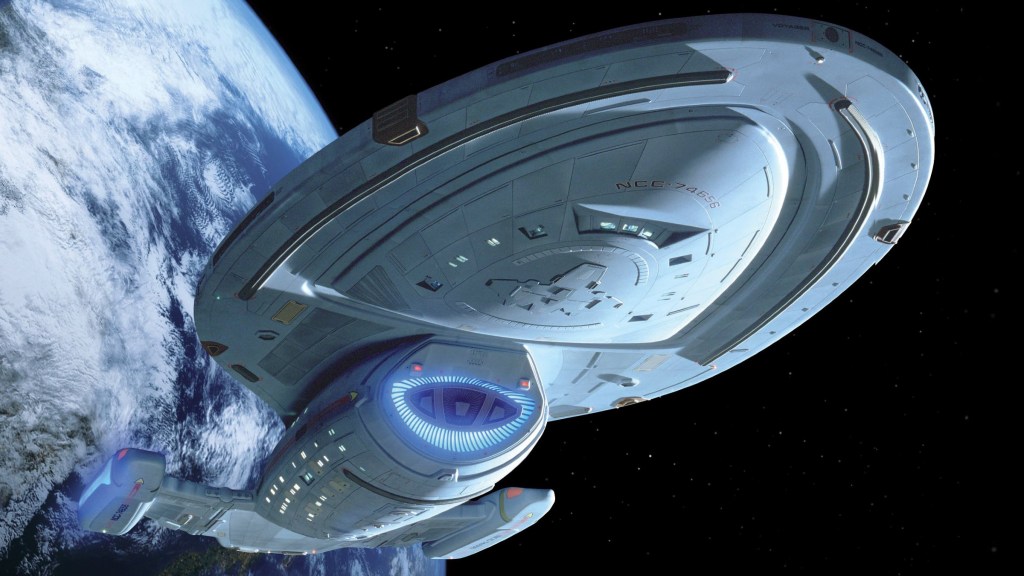
Better and cheaper effects eventually let the franchise return to Roddenberry’s vision of starships landing on faraway planets. The USS Voyager was an Intrepid-class starship. It was smaller and more maneuverable than the Galaxy-class Enterprise-D. The ship’s design lent itself to being able to enter an atmosphere and land on a planet’s surface. Kate Mulgrew’s Captain Janeway famously brought the ship to ground to meet famed aviator Amelia Earhart in “The 37’s.” It was the first episode to have Voyager land on a planet, where the crew discovered humans that were abducted from Earth in 1937.
Regardless of a ship’s landing capabilities, the transporters on Star Trek revolutionized science fiction. They are just as much a part of the show’s legacy in the real world as they are in pop culture canon as scientists pursue quantum teleportation. The fact that the transporter was introduced to try to save some money on a show that was already being made at a loss is perhaps the biggest lesson of all. Budget constraints lead to creative solutions. And transporter accidents lead to a lot of Star Trek lore.
More Star Trek
-

Image Courtesy of Paramount -
Image Courtesy of Paramount -

IMAGE COURTESY OF PARAMOUNT