Star Trek invented this. In October 1967, “Mirror, Mirror” sent Kirk and three crewmates into a reality where the Federation is the brutal Terran Empire, officers murder their way up the ranks, and Spock has a goatee. It is a great hour of television, still ranked among the best the original series produced. The problem is what came after. Over 58 years the franchise went back to that same universe in Deep Space Nine, Enterprise and Discovery, and eventually the people making it noticed. DS9 writer Robert Hewitt Wolfe once described the returns as “just a fun excuse to go to a really different place and show our actors being different people.”
Videos by ComicBook.com
There is also a distinction worth drawing before the list starts, because it is the whole argument. Star Trek‘s Mirror Universe is a fixed evil-twin reality, one place you visit and come home from. Most of the shows below are doing something different: a parallel reality where the other side is not evil, just different. Nobody has a goatee. Sometimes the other side is right. That shift, from evil twin to a road not taken, is what these five understood and what Star Trek‘s version has never quite tried.
5. Doctor Who

The TARDIS falls through a crack in reality into a parallel Earth where zeppelins hang over London, technology has gone somewhere strange, and Rose Tyler’s father, dead in her own world since she was a baby, is alive, wealthy, and has no daughter. That is “Rise of the Cybermen” and “The Age of Steel,” a 2006 two-parter that uses its alternate world for the villain plot while doing something far crueler to its lead. Thirteen episodes later, “Doomsday” cashes it in.
The breach between worlds has to be sealed permanently, and Rose ends up on the wrong side of it, saying goodbye on a Norwegian beach as a hologram. Star Trek‘s crossings are always reversible. Doctor Who used a parallel universe as a one-way door and left its lead actress on the far side of it. In a 2014 SFX poll, that goodbye was voted the greatest science fiction moment ever put on screen, and it only works because the show was willing to make the crossing permanent.
4. Buffy the Vampire Slayer

Cordelia Chase, humiliated in front of the entire school, idly wishes to a stranger that Buffy Summers had never come to Sunnydale in the first place. The stranger is a vengeance demon, and “The Wish” simply becomes that world for the rest of the hour. Sunnydale is a vampire-run company town with an industrial blood-harvesting operation, Willow and Xander are vampires, and the heroes die on screen, including Buffy, who arrives as a scarred killer and is snapped in half.
Eight episodes later “Doppelgangland” pulls vampire Willow out of that dead timeline and into the real world. The difference from Star Trek is nerve, and also cause. Kirk crosses over because of an ion storm, which is weather. Cordelia crosses over because she was petty, which makes the alternate world a moral consequence rather than an accident. And Kirk’s away team was always going home, so a mirror episode could never actually cost anything. Buffy killed its entire main cast in an alternate reality and did not blink.
3. Counterpart
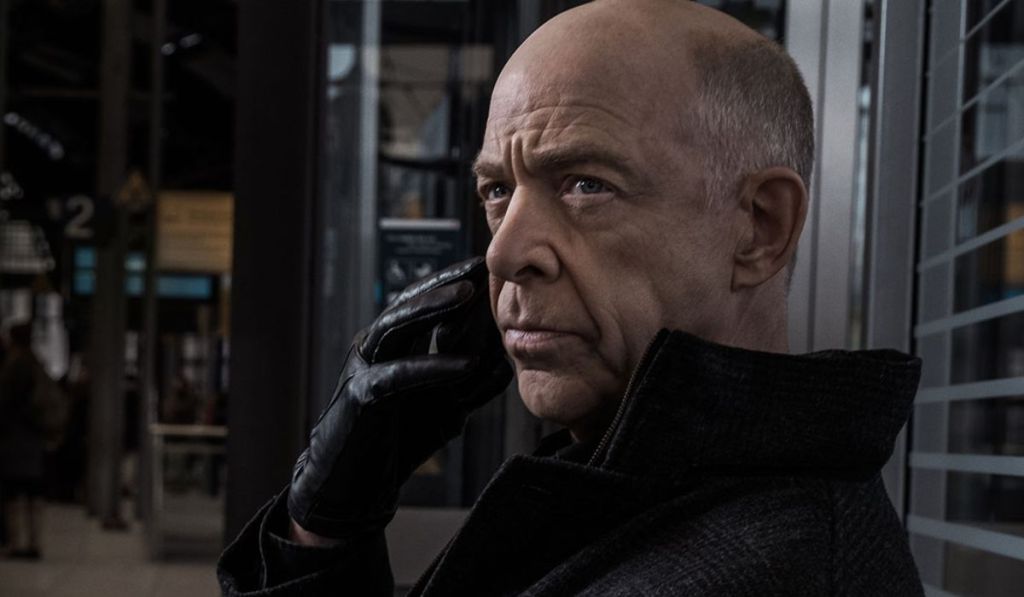
Almost nobody watched this one, and it holds 100% on Rotten Tomatoes for both of its seasons. A botched East German physics experiment in 1987 opened a permanent doorway between two identical Earths, and the crossing is now a guarded checkpoint in Berlin with a bureaucracy on either side. The worlds diverged in 1996 when a pandemic devastated one of them, and they have run a Cold War against each other since. J.K. Simmons plays both versions of Howard Silk, a mild filing clerk who has spent decades pushing paper on one side, and a lethal intelligence operative on the other. Same man, same face, thirty years of different weather, and the show never tells you which one the audience is supposed to root for.
Counterpart takes the exact Mirror Universe premise and refuses the evil twin. Neither world is the good one, and neither Howard is the evil one. What the series wants is a much harder question: if a single divergence in 1996 produced these two men out of the same person, which of them is the real one, and does that question even have an answer.
2. Fringe
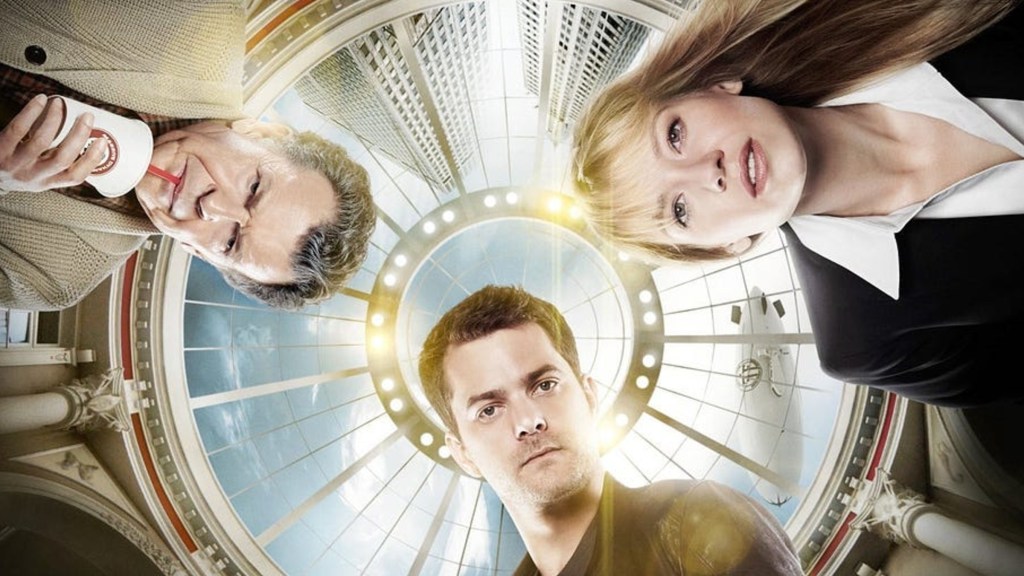
In 1985, Walter Bishop’s son died. Walter crossed into a parallel universe to steal the cure from his own counterpart, found that boy dying too, brought him home to treat him, and then could not give him back. Every strange event in the series is damage from that theft, and the other side has been at war with this one ever since, with a legitimate grievance.
Season three did something no Star Trek series has tried: it alternated universes episode by episode for a whole season, with red title cards for the other side and Anna Torv playing both Olivias. The other world is signalled by a copper Statue of Liberty and a standing World Trade Center rather than by facial hair. And the reveal is perfect: Olivia arrives in an office inside that surviving South Tower and is greeted by a man played by Leonard Nimoy. Mirror Spock introduces one of the best parallel universes on television.
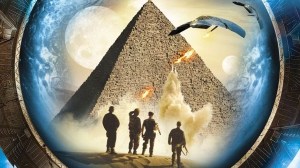
1. Stargate SG-1
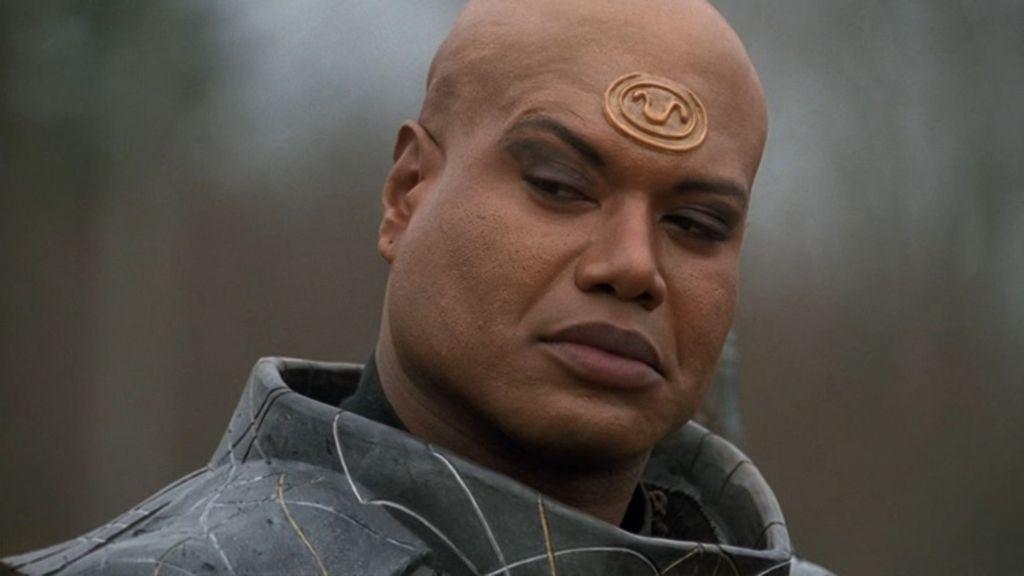
Daniel Jackson, the archaeologist of the team, touches an alien artifact and wakes in a version of Earth where he never joined the Stargate program. He is not impersonating anyone. He is a stranger with no clearance in a base that has no record of him, trying to convince people who do not know him that he is not insane. Because he was never there, the franchise’s alien threat, the Goa’uld already know about Earth and the invasion has begun. Then the episode does the thing Star Trek never does: it lets the alternate world lose. Everyone Daniel knows dies in front of him, and none of them are his. He escapes carrying an invasion warning and a set of coordinates, and season one’s finale is built on them. Kirk came home and nothing had changed. Daniel came home with intelligence, and the show’s climax ran on it.
Personally, the Stargate one gets me because of where it sits. This is season one of SG-1, which is the show at its roughest, on a Showtime budget, in 1998, and the concession is that Star Trek was doing this thirty years earlier with far less money and far more constraint. But the follow-up, “Point of View,” was written from scratch in about 48 hours after another script fell through, and it is still better regarded than most of the mirror episodes Star Trek planned for months. Sometimes the emergency rewrite is the one that lands.
None of this makes “Mirror, Mirror” a bad hour of television, and the goatee is iconic for a reason. It makes it a starting point. Star Trek got there first and then kept going back to the same room, while these five took the same idea somewhere it could actually cost the characters something, and in a couple of cases refused to bring everybody home.
More TV Shows
-

Prime Video & United Artists -
lineup of heroes from batman the brave and the bold