Star Trek remains an expansive pillar of the science fiction genre, currently bolstered by a diverse slate of projects on Paramount+ and the big screen. The recent conclusion of the first season of Star Trek: Starfleet Academy has left fans analyzing the future of the 32nd-century timeline following the show’s abrupt cancellation in late March. Meanwhile, Star Trek: Strange New Worlds continues to be the primary anchor for traditional storytelling, with its fourth season nearing release and a shortened fifth season already in production as a final event. Beyond television, the theatrical side of the universe is showing signs of life after a decade-long hiatus, as even though Star Trek 4 has been cancelled, Paramount is gearing up for a new movie reboot.
Videos by ComicBook.com
While the expansion of Star Trek into multiple sequels and spinoffs is mostly a modern phenomenon, the impulse to broaden the reach of the Enterprise began over half a century ago. The first genuine attempt at a franchise expansion occurred in 1968 during the second season finale of Star Trek: The Original Series. Titled “Assignment: Earth,” the episode was meticulously developed by Gene Roddenberry as a standalone series pilot before being reworked as a backdoor pilot to fit within the existing lore of Captain James T. Kirk (William Shatner) and Spock (Leonard Nimoy). By utilizing the crew of the Enterprise as a framing device, Roddenberry hoped to leverage the popularity of his space drama to launch an entirely new property focused on 20th-century espionage and extraterrestrial intervention
The Curious History of Star Trek‘s “Assignment: Earth”
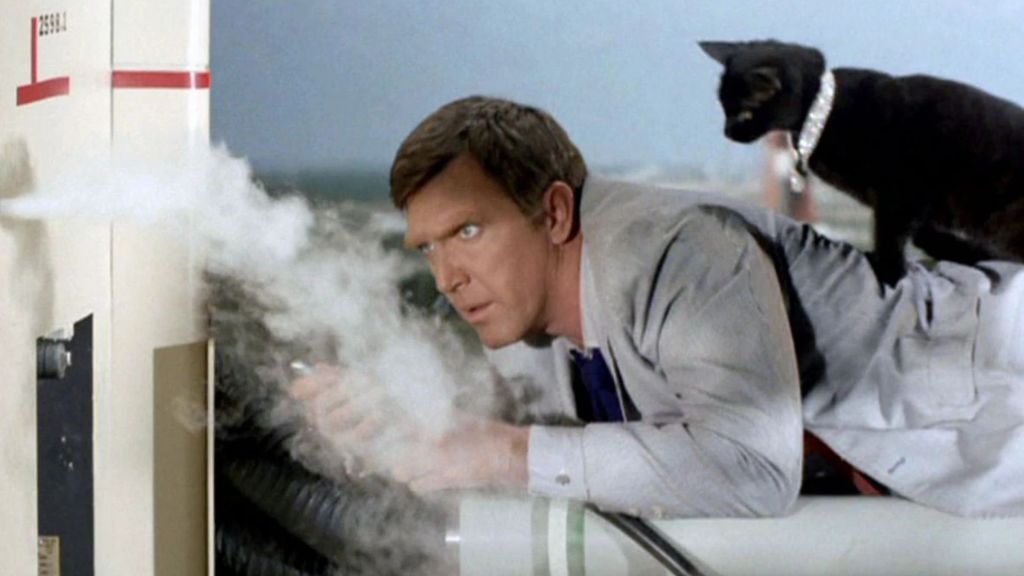
Originally, Roddenberry and co-creator Art Wallace envisioned Assignment: Earth as a show that was entirely independent of the Star Trek mythos. The premise centered on Gary Seven (Robert Lansing), a human whose ancestors were abducted by advanced aliens and trained for generations to act as clandestine supervisors of Earth’s progress. Accompanied by his shape-shifting cat, Isis (Barbara Babcock), Seven was intended to be a futuristic take on the James Bond archetype, using advanced technology like the “servo” device to prevent humanity from self-destructing during the Cold War. However, when networks showed little interest in the standalone pilot, Roddenberry chose to insert the character into Star Trek. This resulted in a narrative where the Enterprise travels back to 1968 for historical research, only to intercept Seven as he beams down to Earth to sabotage an orbital nuclear weapons platform.

By positioning the episode as a backdoor pilot, the production team was able to showcase the chemistry between Gary Seven and his unintended assistant, Roberta Lincoln (Teri Garr), a ditzy but resourceful secretary who discovers his secret headquarters. The dynamic between the stoic Seven and the eccentric Roberta was clearly designed to carry a full season of television, providing an Earth-bound contrast to the galactic travels of the Enterprise. The episode even utilized higher production values and unique sets, such as Seven’s high-tech Manhattan office, which were meant to be reused if the show received a green light.
Despite the narrative strength of “Assignment: Earth” and the compelling performance by Lansing, the network ultimately passed on the spinoff. This decision was likely influenced by the fact that Star Trek itself was facing constant threats of cancellation, making the studio hesitant to invest in a secondary science fiction project from the same creative team. Consequently, the rich lore of the “Supervisors” remained unexplored on screen for decades, though the characters eventually found a second life in various novels and comic books.
“Assignment: Earth” Influenced Multiple Star Trek Spinoffs
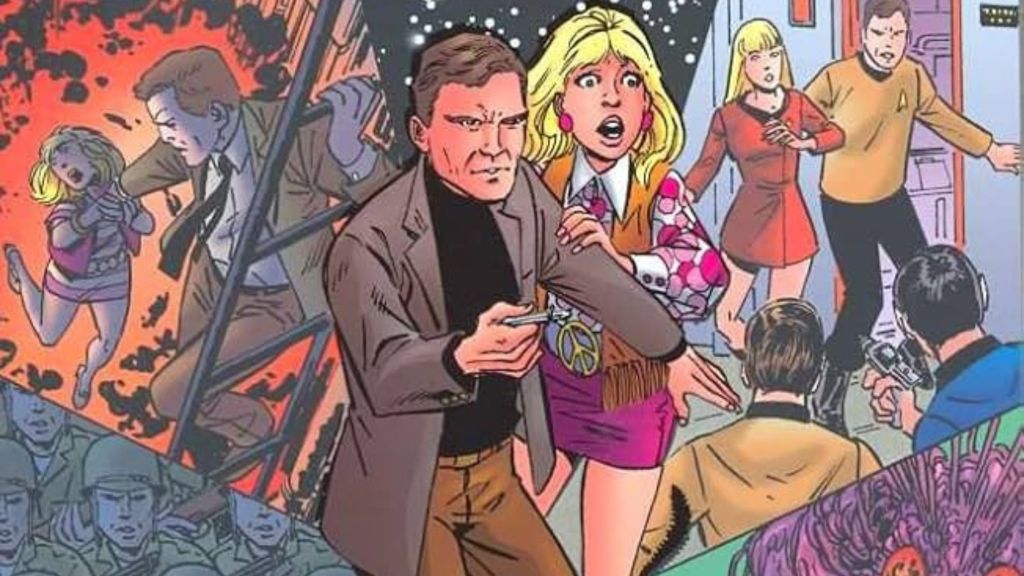
Although Gary Seven never headlined his own weekly television series in the 1960s, the concept of the Supervisors became a foundational element of the Star Trek Expanded Universe. Most notably, author Greg Cox utilized Gary Seven as a central figure in his The Eugenics Wars trilogy. These novels brilliantly integrated Seven into the secret history of the 20th century, depicting his efforts to contain the rise of the genetically engineered tyrant Khan Noonien Singh. By linking the failed pilot to one of the most iconic villains in the franchise, Cox proved that Roddenberry’s ideas were far more durable than the initial network rejection suggested. Furthermore, IDW Publishing later released a dedicated Assignment: Earth comic book series written and illustrated by John Byrne, which finally provided fans with the episodic adventures of Seven and Roberta Lincoln that NBC had denied them decades earlier.
The most significant validation of the “Assignment: Earth” legacy arrived recently during the second season of Star Trek: Picard, which reveals that the Supervisors were still active in the 21st century. The character of Tallinn (Orla Brady) was explicitly identified as a Supervisor tasked with protecting the ancestor of Jean-Luc Picard (Patrick Stewart), confirming that the organization Gary Seven belonged to is high-level canon. Even without a standalone show, the shadow of Gary Seven continues to loom over the timeline, proving that Roddenberry’s creative instincts regarding a hidden history of Earth were ahead of their time.
Star Trek: The Original Series and its various spinoffs are currently available to stream on Paramount+.
Do you think the Gary Seven concept should be revisited in a future Star Trek project? Leave a comment below and join the conversation now in the ComicBook Forum!
More TV Shows
-

Courtesy of Amazon MGM Studios -

IMAGE COURTESY OF NETFLIX -

Image Courtesy of Lucasfilm -
IMAGE COURTESY OF MARVEL TV -
Image Courtesy of Netflix