The MCU‘s Multiverse Saga hasn’t really been the success Marvel hoped for. The initial focus lay on variants; alternate versions of Marvel heroes and villains, where their stories turned out differently (an idea introduced in 2019’s Avengers: Endgame, where two Captains America fought). As time has passed, though, the multiverse has really become a back-door way of bringing back established characters from Marvel movies and shows that weren’t part of the MCU. Avengers: Doomsday is the logical climax of this approach, with Fox’s original X-Men as well as the MCU Avengers.
Videos by ComicBook.com
It’s easy to see why Marvel made the pivot. The original ideas were overly dependent on Jonathan Majors’ Kang the Conqueror, and they weren’t really landing well; in contrast, nostalgia is a powerful force, and we’ve already seen tremendous box office hits with Spider-Man: No Way Home and Deadpool & Wolverine. This year’s Avengers: Doomsday is a safe bet as one of the biggest hits of the year. And yet, for all that’s the case, the pivot means one iconic sci-fi TV show beat the MCU to a better version of the multiverse by 48 years.

Doctor Who Embraced the Multiverse 56 Years Ago
Oddly, Doctor Who embraced the multiverse more by accident than intent. Back in 1970, writer Don Houghton pitched a four-episode story called “Inferno” inspired by the real-world Project Mohole. An attempt to drill through the earth’s crust, this was abandoned for mysterious reasons, with claims of unidentified “security concerns.” Naturally, such a mystery is fertile soil for science-fiction, and Houghton’s story imagined a world-ending experiment with radioactive energies that mutated humans into primordial monsters. There was just one problem; Doctor Who needed a seven-episode story, not a four-parter.
The creative team hit upon a smart approach, one that added a lot more meat to the story. Third Doctor Jon Pertwee was exiled to Earth after a forced regeneration, which meant the show now had a supporting cast (notably including Caroline John’s Liz Shaw and Nicholas Courtney’s Brigadier Lethbridge-Stewart). So they wrote in a TARDIS experiment that went badly wrong, projecting the Doctor into an alternate universe where everything was slightly – and dangerously – different. This was a fascist society, deliberately reminiscent of the Nazis, and it built up to a world-ending climax because the Inferno project broke through the crust.
Looking back, “Inferno” is unusually creative. Conceptually, the alternate timeline is akin to Star Trek‘s Mirror Universe; it’s a typical dystopian reality, a world where everything is just wrong enough to be truly sinister. But “Inferno” is fairly unique in that the other universe serves as a cautionary tale, revealing the stakes to the Doctor so he can prevent the end of the world in his own timeline. The Doctor isn’t just an interdimensional tourist, but instead emerges from the multiverse changed and empowered.
The Inferno Universe Became Even Better
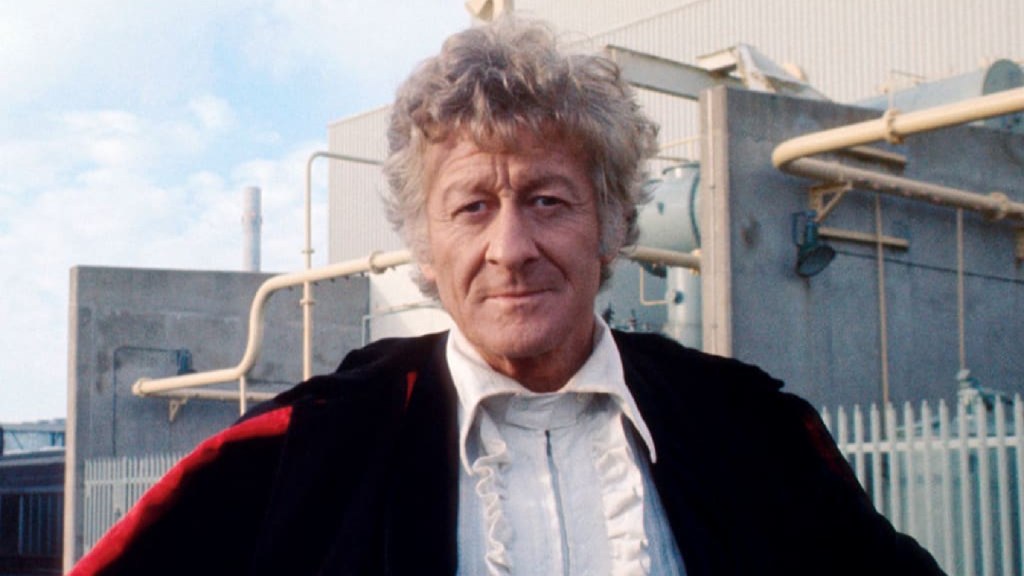
One character didn’t have a doppelganger in the Inferno universe, though: the Doctor himself. For decades, viewers assumed this whole timeline was a glimpse of what Earth would look like without the Doctor. Fast-forward to 1991, though, and Paul Cornell’s novel Timewyrm: Revelation took a different approach. Doctor Who had been cancelled in 1989, but the story continued in Virgin’s New Adventures range. In Cornell’s tale, the Seventh Doctor’s battle with an entity known as the Timewyrm ultimately led him into his own mind. There, he met psychic representations of his past incarnations, and learned dark secrets about himself.
For the Third Doctor, the revelation was the truth about Inferno. The Doctor had realized he was present in this timeline after all; while there, he’d seen a photo of fascist Britain’s true leader, and it had been one of the forms the Time Lords tried to force him into choosing before exiling him to Earth. The Inferno timeline was not due to the Doctor’s absence at all; it was because of the Doctor’s exile, with that version of the Renegade Time Lord evolving in a very Master-like way. The realization broke the Doctor, who was appalled at his own potential for evil.
Timewyrm: Revelation used the multiverse for nostalgia; it was, after all, harking back to a plot from 1970. But it still gave the multiverse so much weight, because this alternate timeline became a mirror for the Doctor’s own character. The idea may not have been the main focus, but it was handled so much more effectively than the MCU, which would only really begin exploring the multiverse in 2019. Doctor Who, once again, was the little British show that could; the trailblazer Marvel should have really looked to and learned from, because of a multiversal story predating Endgame by 48 years.
What do you think? Leave a comment below and join the conversation now in the ComicBook Forum!


![Lanterns Season Finale Is a Muted Conclusion, But With Satisfying Storytelling [REVIEW]](https://comicbook.com/wp-content/uploads/sites/4/2026/10/Lanterns-finale-review.jpg?w=300)