Science fiction literature possesses the ability to construct entirely new universes, transporting readers to distant galaxies or projecting human civilization far into the future. These speculative settings require meticulous world-building to establish distinct social hierarchies, functional economic systems, and plausible political structures. To achieve a high level of immersion, authors often eschew standard standalone narratives in favor of expansive sagas, as an extended format provides the necessary space to delve deeply into complex concepts, ranging from theoretical technologies to the intricate biological anomalies of extraterrestrial species. Of course, constructing a cohesive reality across thousands of pages demands a rigorous attention to detail, something that not every sci-fi book series manages with the same level of success.
Videos by ComicBook.com
While trilogies and quartets are standard within the publishing industry, it is exceedingly rare for a science fiction series to surpass the ten-installment threshold, as maintaining narrative momentum over such a prolonged period tests the endurance of both the author and the audience. Furthermore, the difficulty of avoiding franchise fatigue makes it even more uncommon to find a sprawling saga where every single entry maintains a high standard of quality. However, a select group of visionary writers has successfully navigated these obstacles.
5) Honor Harrington

David Weber expanded the Honor Harrington series into a sprawling military science fiction juggernaut that features a total of 14 main sequence books alongside multiple spin-off anthologies. The narrative directly translates historical naval elements into a futuristic setting, charting the career of the titular protagonist as she rises through the ranks of the Royal Manticoran Navy. Weber dedicates a massive portion of the text to explaining the tactical minutiae of space combat, detailing the specific limitations of missile telemetry, gravity impellers, and faster-than-light travel. This obsessive focus on speculative technology creates a rigid ruleset for the universe, ensuring that every victory is earned through intellect rather than narrative convenience. Furthermore, the immense scope of the franchise allows Weber to map the shifting alliances and economic collapses of multiple star nations over several decades.

4) Foreigner
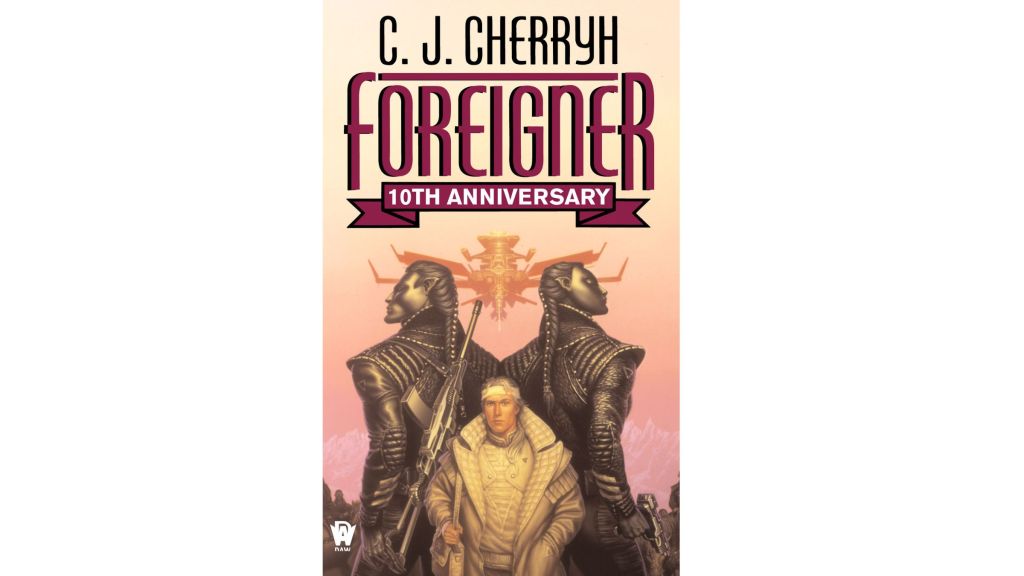
C.J. Cherryh initiated the Foreigner series in 1994, building a monumental linguistic and cultural epic that features a total of 22 books divided into distinct narrative sequences. The overarching plot centers on Bren Cameron, the sole human translator and diplomat assigned to the atevi, a formidable alien species that currently shares a planet with a colony of stranded humans. The brilliance of the franchise stems from Cherryh’s meticulous focus on alien psychology, as the atevi possess cognitive processes devoid of concepts like friendship or love, relying instead on hardwired instincts of loyalty and association. Translating across this vast neurological divide serves as the primary engine for tension, turning diplomatic meetings into high-stakes psychological warfare. The extended length of the series facilitates a deliberate exploration of cultural assimilation and mutual reliance, as Bren’s decades-long immersion into atevi society transforms him, demonstrating how prolonged exposure to alien norms reshapes human identity.
3) The Vorkosigan Saga

Lois McMaster Bujold constructed The Vorkosigan Saga as an intricate examination of biological determinism and political reform, featuring a total of 17 main novels alongside numerous novellas and short story collections. The narrative primarily follows Miles Vorkosigan, a brilliant but physically disabled aristocrat navigating the militaristic and patriarchal society of the planet Barrayar. The sheer volume of installments allows the narrative to evolve naturally from military science fiction into geopolitical espionage and social comedy. Miles ages, suffers profound neurological trauma, and undergoes significant career shifts, providing a level of character development that requires a massive canvas to execute properly. Finally, the series consistently challenges the conventional tropes of the genre by emphasizing diplomacy, intelligence, and medical advancement over sheer firepower, resulting in an exceptionally intelligent and rewarding reading experience.
2) The Culture

Iain M. Banks uses The Culture series to explore the philosophical implications of a post-scarcity society overseen by hyper-intelligent artificial intelligences known as Minds. Comprising a total of 10 distinct books, this collection eschews a strict chronological narrative in favor of standalone stories set within the same sprawling utopian civilization. This structural freedom allows Banks to examine the ethical friction that occurs when an advanced society interacts with less developed, aggressive interstellar empires. For instance, books like Use of Weapons and The Player of Games investigate the moral compromises required to maintain a perfect society, frequently focusing on the covert operatives of the Special Circumstances division. On top of that, by presenting artificial intelligence as a protective yet alien force, the series interrogates the limits of human agency in a universe governed by superior intellects. The diverse perspectives across the ten installments combine to form a comprehensive study of utopia, solidifying the franchise as a pillar of modern speculative fiction.
1) The Expanse
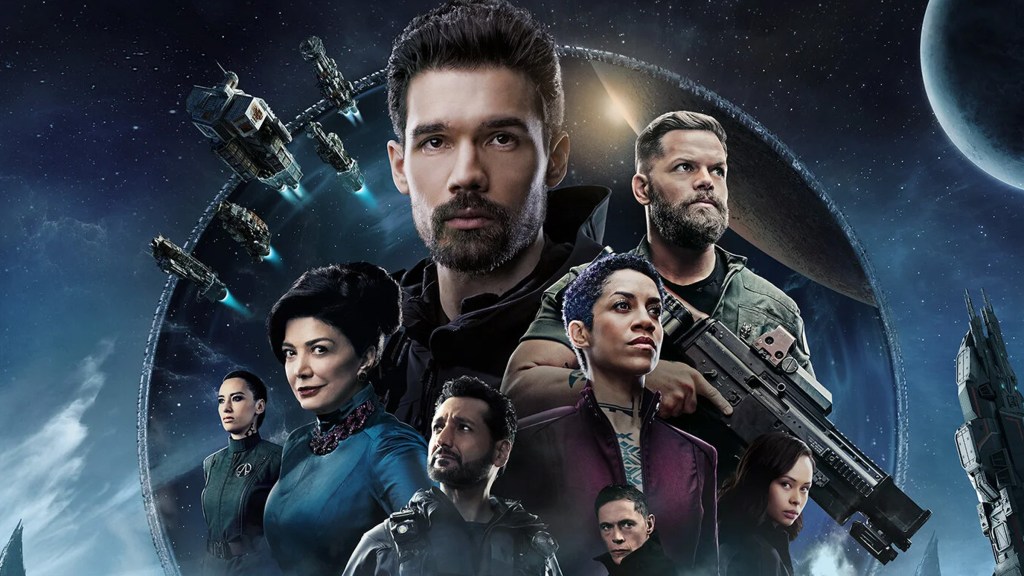
Written by James S.A. Corey before becoming a TV show, The Expanse redefined modern space opera through its rigorous commitment to orbital mechanics and political realism. The central narrative spans nine main novels, supplemented by a robust collection of novellas and short stories compiled in Memory’s Legion, bringing the total to exactly ten books. The story begins as a localized solar system conflict involving Earth, Mars, and the marginalized Belters, before evolving into an interstellar crisis triggered by the discovery of ancient alien technology. The continuous evolution of James Holden and the crew of the Rocinante anchors the vast geopolitical shifts in deeply personal stakes, as Corey uses the length of the series to methodically track the socioeconomic consequences of human expansion through these newly discovered ring gates. This grounded approach to speculative physics and human factionalism ensures that the final entry delivers a cohesive resolution to themes introduced thousands of pages earlier.
Which sprawling science fiction book universe is your favorite? Leave a comment below and join the conversation now in the ComicBook Forum!
More TV Shows
-

ALF sits in front of a couch.