Created by Robert Zemeckis and Bob Gale, the Back to the Future franchise revolves around a specific model of time travel, one where every change to the past produces immediate and often catastrophic consequences in the present. That means Marty McFly’s (Michael J. Fox) mistakes accidentally destabilize the regular flow of history, even threatening the protagonist’s own existence and forcing him to restore the events that led to his birth before he disappears entirely. That commitment to consequence-driven storytelling, combined with the chemistry between Fox and Christopher Lloyd as Doc Brown, has propelled the Back to the Future trilogy to a cornerstone of pop culture.
Videos by ComicBook.com
The good news for Back to the Future fans is that television, with its extended runtime and serialized structure, has proven well equipped than film to explore the emotional fallout of time travel in depth. Plus, while time travel is a recurring trope in science fiction and even fantasy, some shows focus on the possibility that changing history is possible, just like in Back to the Future.
5) Timeless

Created by Eric Kripke and Shawn Ryan, Timeless follows a trio of mismatched time travelers — history professor Lucy Preston (Abigail Spencer), soldier Wyatt Logan (Matt Lanter), and engineer Rufus Carlin (Malcolm Barrett) — as they chase a criminal mastermind through pivotal moments in American history aboard a prototype time machine called the Lifeboat. The series takes its settings seriously enough to address the consequences of navigating eras with radically different social realities for its racially diverse cast. Furthermore, the butterfly effect functions as the main plot device, with small alterations to famous historical moments producing immediate shifts in the present that the team must contain before the timeline splinters beyond repair. The cancellation of Timeless remains a sore point among its devoted fanbase, but the series did get a two-hour movie to wrap the main storyline in a way that makes the complete run one of the most satisfying time travel series available.

4) Doctor Who (2005)
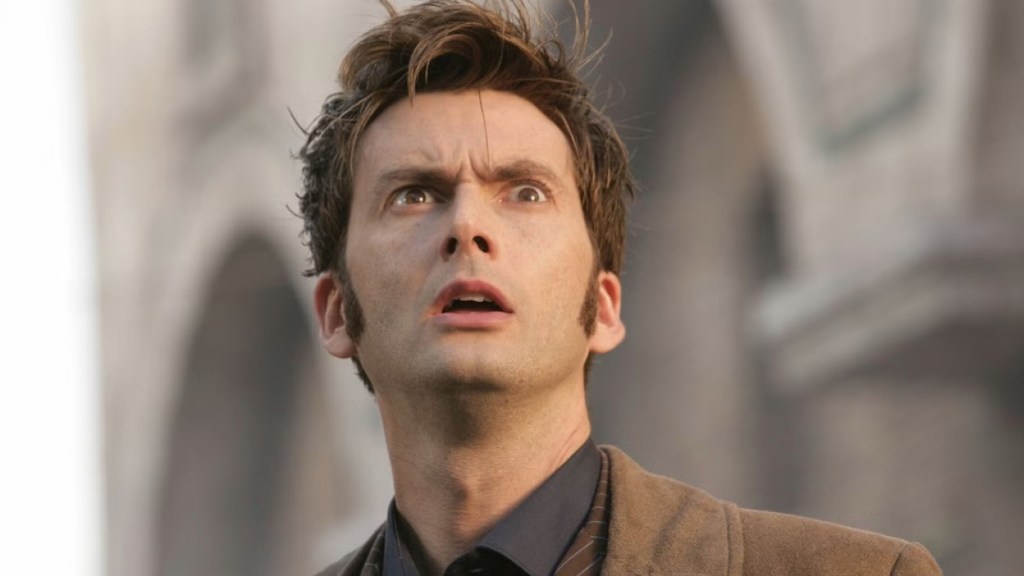
Showrunner Russell T Davies revived Doctor Who in 2005, relaunching a franchise that had been off the air since 1989. The first four series of the revival, featuring Christopher Eccleston as the Ninth Doctor and then David Tennant as the Tenth, remain arguably the best of the show’s modern run. The series follows the titular Doctor, an alien Time Lord who travels through time and space in the TARDIS, a machine disguised as a 1950s British police box. Along the way, the Doctor picks up human companions who help to solve catastrophes across every era of history and the far future. While Doctor Who is constantly dealing with complex sci-fi concepts, the relationship between the Time Lord and their companions remains the emotional engine of every adventure, which mirrors the way Marty McFly’s journey across three films is fundamentally about preserving his family rather than mastering the mechanics of the time machine.
3) 12 Monkeys

Syfy’s 12 Monkeys adapts Terry Gilliam’s 1995 film into a serialized drama that grew substantially more ambitious with each passing season. Created by Terry Matalas and Travis Fickett, the series follows James Cole (Aaron Stanford), a time traveler from a post-apocalyptic 2043, and virologist Dr. Cassandra Railly (Amanda Schull), as they work across multiple eras to dismantle an organization called the Army of the 12 Monkeys that is systematically unraveling time itself. The show’s approach to time travel is extremely rigorous, building a closed-loop mythology where every action in the past has already created the future the characters are trying to escape, producing the same dizzying sense of inescapable causality that made Back to the Future so effective. The first season takes some time to establish its mythology, but viewers who commit through Season 2 will find a show that grows into one of the best time travel narratives in the medium.
2) Dark
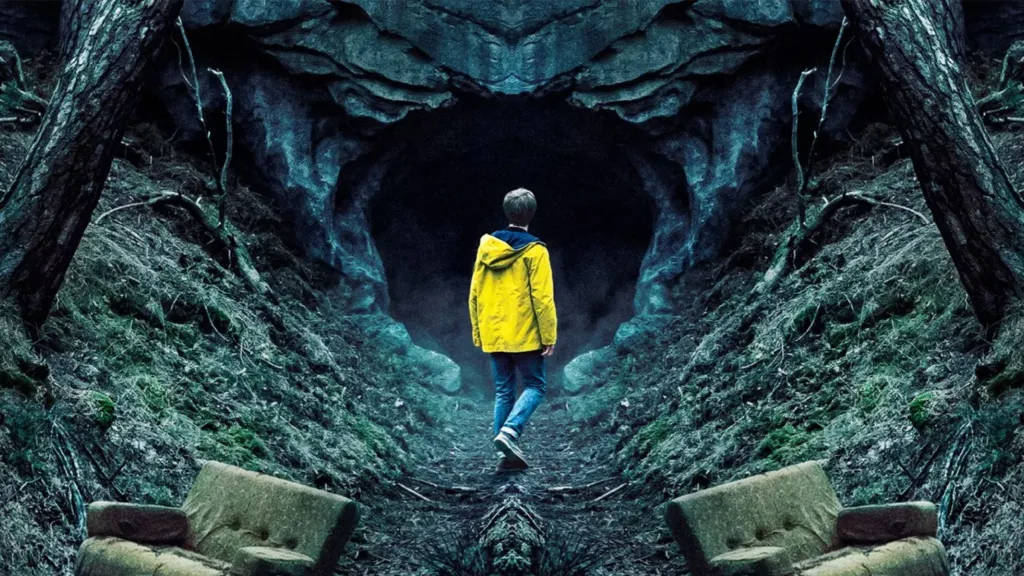
Dark premiered on Netflix as the platform’s first German-language original series, and ran for three critically acclaimed seasons that praised its dedication to depicting time-traveling with realism. Created by Baran bo Odar and Jantje Friese, the series is set in the fictional German town of Winden and follows four interconnected families across multiple generations as the disappearance of local children exposes a web of time travel, predestination paradoxes, and biological loops spanning 33-year cycles. Using the bootstrap paradox, Dark questions whether the future creates the past or the past creates the future, and whether anyone in that loop ever possesses genuine free will. The series is considerably more demanding, requiring close attention to a large ensemble across multiple decades, but viewers who put their phones down to really watch Dark will find the most emotionally devastating exploration of time travel consequences in serialized television.
1) Quantum Leap (1989–1993)
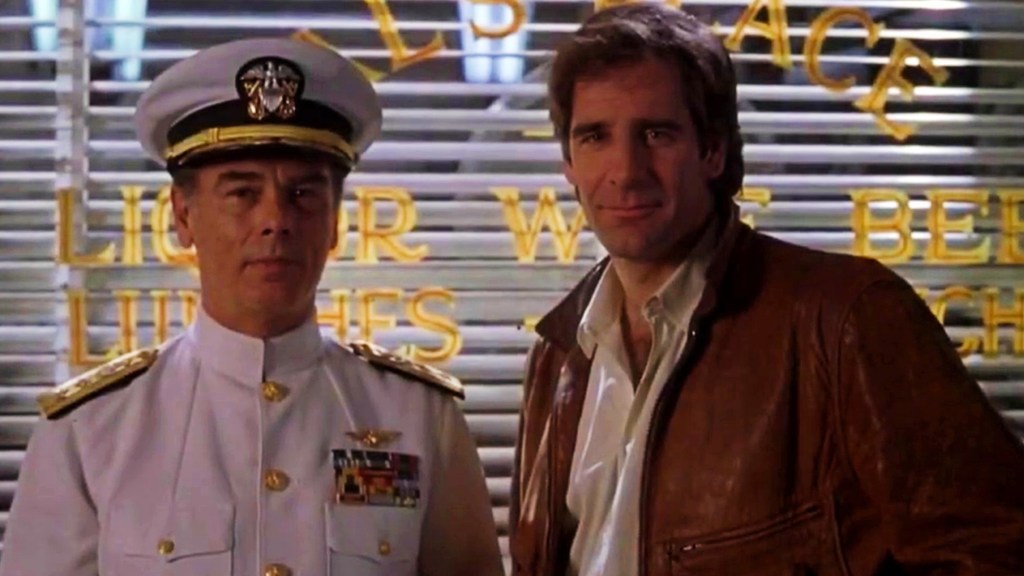
Created by Donald P. Bellisario, the original Quantum Leap follows Dr. Sam Beckett (Bakula), a physicist whose time travel experiment scatters his consciousness through history, dropping him into the bodies of strangers across different eras and tasking him with fixing what went wrong in their lives before leaping forward to the next assignment. That premise maps echoes Back to the Future, with time travel being used as a tool for restoring personal histories rather than rewriting grand historical events, and with failure affecting the lives of ordinary people. For any Back to the Future fan who has not yet discovered it, the 97-episode run of Quantum Leap is the closest television has come to matching the franchise’s themes, tone, and storytelling devices across a long-form narrative.
Which time travel TV show do you think comes closest to capturing what made Back to the Future so special? Leave a comment below and join the conversation now in the ComicBook Forum!
More TV Shows
-
Image Courtesy of DC Comics -
Image Courtesy of Marvel -

Image Courtesy of Prime Video -
Image Courtesy of The CW -
Courtesy of 20th Television Animation / Hulu