Calvin and Hobbes, a series centered around the titular mischievous boy and his wise stuffed tiger, is one of the most beloved comic strips of all time. Created by legendary cartoonist Bill Watterson in 1985, the Calvin and Hobbes strips have remained relevant thanks to his incredible writing and artistry. However, all good things must come to an end. On December 31st, 1995, just ten years after Watterson first began his monumental comic strip, Calvin and Hobbes had its perfect finale. Even though the strip ended three decades ago and without any official merchandise or adaptations, this daily newspaper comic strip continues to reach the hearts of millions of people worldwide, with countless fans still buying the collection books to this day.
Videos by ComicBook.com
The impact and popularity of Calvin and Hobbes can’t be understated. In just one year since the first strip debuted, it went from being published in 35 U.S. newspapers to 250. At its peak, the stories of the imaginative six-year-old troublemaker and his pet talking tiger, who only Calvin could see, were appearing in over 2,400 newspapers in at least 50 countries. Still, even with all this success, Watterson always emphasized that the art, not the money, was why he created Calvin and Hobbes. While many fans were sad to see the comic end, its finale offered a poignant message and is the culmination of everything Watterson stands for as an artist and writer.
Calvin and Hobbes is a Timeless Masterpiece
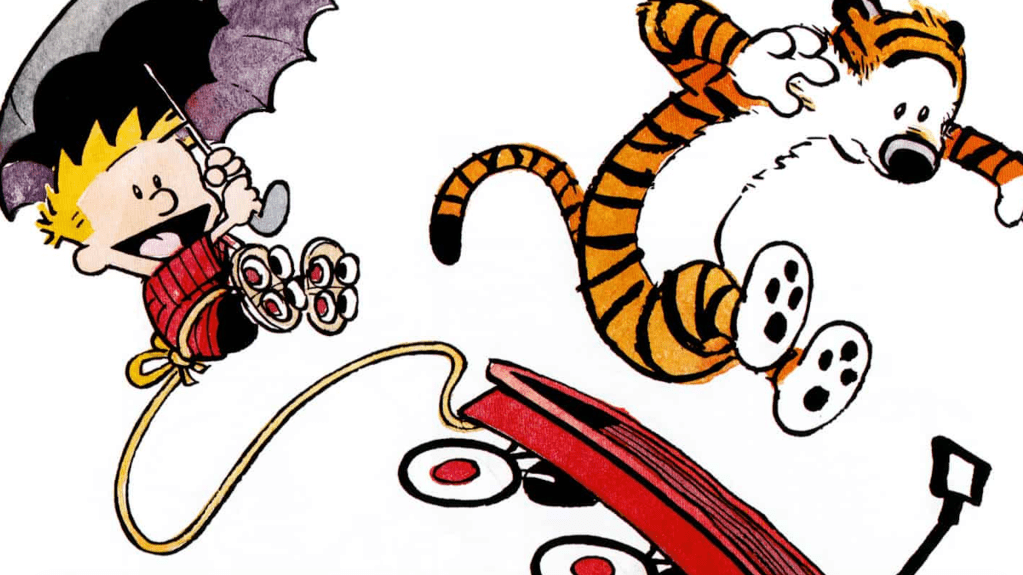
Everything about Calvin and Hobbes, from its hysterical comedy, stunning artwork, and three-dimensional characters, has ensured its spot among the comic strip greats like Peanuts and Garfield. Part of what makes this comic so timeless is how it sparks that sense of relatability and/or nostalgia everyone has about being a kid and how it tackles deep questions from the perspective of a child.
Calvin is a mischievous kid who’s always getting into trouble and has vivid daydreams where he plays larger-than-life characters like Spaceman Spiff and Stupendous Man. Although he’s not the brightest bulb and is undoubtedly a loose cannon whose antics drive everyone crazy, he’s still a loveable kid whose imagination lets him have fun adventures like fighting deranged mutant killer monster snow goons while also causing untold chaos like flooding his house. In contrast, Hobbes tends to act as the straight man to Calvin’s crazy ideas, yet he still has a childlike mindset. While Hobbes can sometimes offer wisdom, he still gleefully pounces on Calvin every time the kid gets back from school. The hilarious yet heartfelt bond they share is the foundation for the comics’ nuance.
Watterson’s fantastic and unique art style sets Calvin and Hobbes apart from other comic strips and emphasizes Calvin’s incredible imagination. Watterson uses simplistic designs for the characters and most of the real world. However, once Calvin starts daydreaming, the art shifts dramatically to a far more realistic style than anything the comic’s real world offers. Everything from dinosaurs and aliens to landscapes and people become incredibly detailed and dynamic as Calvin creates entirely new worlds and stories in his mind. Watterson creates this stark contrast to depict reality from a child’s perspective. The only other thing treated with such detail is the natural world because a child would view the woods as a perfect and magical place to explore.
On top of hysterical characters and excellent art, what makes Calvin and Hobbes so appealing is its deep emotional core and timeless writing. Calvin’s antics and imagination strike a chord with people’s memories of being a kid themselves. Furthermore, the comic speaks to both kids and adults in ways few others have. On top of witty jokes, Calvin and Hobbes tackle complex topics like religion, war, society, philosophy, and death in ways that are emotionally mature, thought-provoking, and not constrained to any specific time or place. Calvin feels like a real kid who, like everyone, is trying to understand the world around him. Instead of settling for a simple, jokey cartoon, Watterson set out to create a comic that says something meaningful about the nature of childhood and the world.
The Ending of Calvin and Hobbes is as Relevant Today as it was 30 Years Ago.
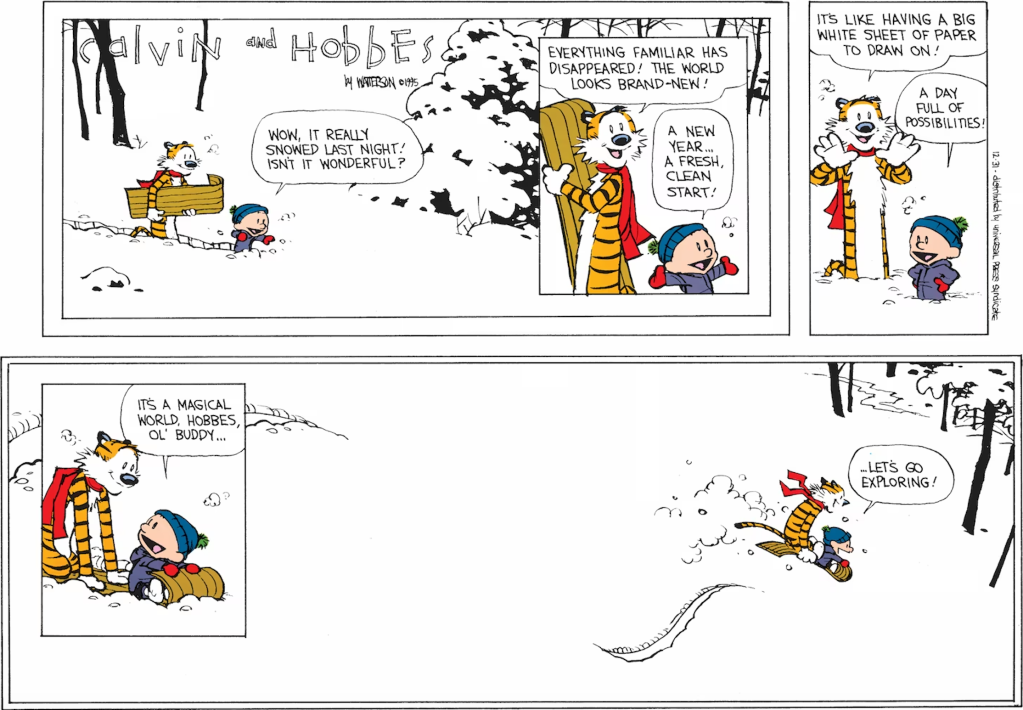
At the height of its popularity, Calvin and Hobbes ended on New Year’s Eve of 1995, and fans were shocked and saddened by the comics’ sudden end. Yet, Watterson’s reasoning behind his sudden departure is an important reminder about the nature of art that has only become more relevant over time. The final strip also offers a heartfelt summation of the comics’ identity. It leaves an important message for its loyal readers.
People questioned why Watterson cancelled Calvin and Hobbes given its success. The answer is that Watterson felt he had achieved everything he wanted with the characters and desired to work on other projects. Watterson has always been anti-consumerism. This is demonstrated by how he refused to license his work and instead kept complete creative control over his characters. He didn’t want to push himself to keep making Calvin and Hobbes just for the sake of money or fans. Watterson always saw his comics as art and not a product. In a world where countless artists are worked practically to death and companies try to milk popular franchises for every buck they’re worth, Watterson’s desire to focus on quality over quantity and to not commercialize his work makes complete sense.
In terms of the final strip itself, Watterson created a piece that perfectly speaks to the very heart of his work. Calvin and Hobbes are trudging through the snow and they remark on the beauty of the scene. Hobbes says how the snow completely covers everything that once was, making it like a white sheet of paper. Calvin agrees, and together they get on the sled and set out to explore this magical new world. Through this strip, Watterson is saying that there are no ends, only new beginnings. The blank, white snow symbolizes how this chapter of Watterson’s life is over and that the future is now blank, open to countless new creative avenues for him and the audience to explore.
Watterson’s not only referring to his own experience. He is also directly talking to the audience. Yes, Calvin and Hobbes has reached its conclusion, but that means readers are given the chance to go out and explore the world and find their passions. Every step forward is into a magical new world. This is a timeless message about new beginnings and creative freedom that every kid and adult should embrace for their lives. Because, like Calvin, an imaginative young boy with his whole life ahead of him, the future is full of endless possibilities limited only by your imagination, and that’s what makes it so beautiful.
What do you think? Leave a Comment below and join the conversation in the ComicBook Forum!
Most Viewed
-

Official art by Bastien Lecouffe-Deharme -
Image courtesy of Tor Books/Macmillan -

A photo of the Retrovolt Arcade taken in 2017, showing several classic arcade cabinets and stools. -

Courtesy of TOHO Animation