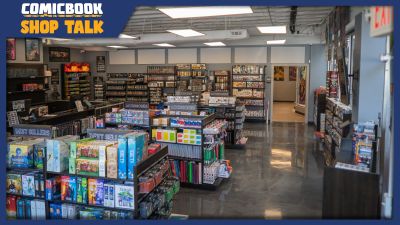
ComicBook Shop Talk is our ongoing series of conversations with the people who own and operate the local stores that keep the hobby thriving. This round, ComicBook’s Chris Killian sat down with Henry Flood, the founder of Epikos. Since opening in 2011, Henry has navigated the shift from weekly singles and video games to a landscape where Magic, Pokémon, and Disney Lorcana are booming. His broad perspective of pop culture and collectibles made him the perfect person to discuss the threat of generative AI to the comic book industry.
Videos by ComicBook.com
Before we get to the full discussion, here are some of the standout items we picked up at Epikos.
Got a local shop you think deserves the spotlight? Whether it’s a comic store, a game store, or a hybrid like Epikos, we want to hear what makes it essential to your experience as a collector. Drop us a line at [email protected] and tell us how they help fuel your love of the hobby. We might feature them in an upcoming edition of ComicBook Shop Talk or add them to our shopping spree route.
| Website: epikosccg.com | Email: [email protected] |
| Address: 5864 Brainerd Rd, Chattanooga, TN 37411 | Instagram: @epikosccg |
| Phone number: 423-531-4184 |
How Comic Books, Cards, and Games Complement Each Other
Chris: How you got started in the comic book business, and why you felt like comics and games were a happy marriage.
Henry: Epikos opened up in May of 2011. So we’ll be celebrating 15 years this next Free Comic Book Day. I’m really excited about being part of it. I was working for Walmart for seven years and wanted to get out of it, so I went and got an entrepreneurship degree. I’d always read comics. I always had a collector’s heart in me to begin with. The stars all aligned the right way, and I was able to start the store. The threshold for starting a store is not too bad; it’s easier to get into it. My first store had a tenth of this kind of merchandise in it. Actually, when I first started up, it was a comic book and video game store. I thought video games were going to be the thing. But back in 2011, it was still GameStop, GameStop, GameStop. I couldn’t get people past that. Now you can, because everyone hates GameStop now.
Chris: Yeah, and everybody’s downloading games.
Henry: They’re all downloading it now instead. So, I was trying to do comic books and video games. A friend of mine that I had worked at Walmart with happened to see me opening up, or I saw him at the restaurant in the same strip one day, and he went, ‘What are you doing?’ ‘I’m opening up a comic book and video games.’ ‘Hey, you’re going to do Magic: The Gathering?’ I went, ‘Magic: The Gathering? Is it still around? I don’t know.’ He goes, ‘Yes, it is.’ So he reached out to a bunch of people, and they started playing over at the store. Within about three or four months, I would have on average 40 people every Friday night in a little 1,200 square foot store playing Magic.
Chris: Is Magic still the biggest game that you have here?
Henry: No, card games as a whole. So Magic, Pokémon, Yu-Gi-Oh!, Disney Lorcana. They’re all jamming pretty hard right now. They’re all doing well. And then all the Bandai, the anime stuff, if I can get it in stock, does well. One Piece, Gundam, it’s just hard to get them in stock.
Chris: Is there a lot of cross-pollination between the two, as far as people that show up for their weekly games and get comic books at the same time?
Henry: Not as much.
Chris: You find they’re two different audiences?
Henry: There’s maybe only 10% that are on both sides of it. The majority of them, it’s either one side or the other. Comic book people, for the most part, are a mid-30s to 40s-year-old male typically that has a job, has disposable income to work with, all the way up into their 70s. Like the gentleman that was in here earlier, I think he’s in his late 70s now. So you have a wide, older generation. We do have younger folks that come in; it’s just harder to get them in on things. They want graphic novels instead, or manga, which is a graphic novel.
Chris: We were just talking about that earlier too, about how you feel like for the younger generation… I know I talked about my son and how I have probably 10 long boxes of stuff all from my childhood, right? And he’s just got like three bookshelves full of graphic novels. That’s all he buys.
Henry: Yeah, because you get the whole story at one time.
Chris: Yeah.
Henry: So I don’t have to wait. The younger generation didn’t grow up on that waiting game. They didn’t grow up having to be home at seven o’clock on a Friday night to watch whatever it was they wanted to watch. Not even just, ‘Hey, I need to wait until it’s available to stream.’ You had to watch it or record it at the time.
Chris: So it’s very interesting. It really is like, how do you like your TV? Because there are some things that I want to binge. There are some things that I’m like, ‘I’ll easily run through five hours of this.’ And then there’s other stuff, though, that I really enjoy the week-to-week wait. Now, maybe month-to-month is a little harder.
Henry: Yeah. But then could you imagine if comics were trying to put them out every week?
Chris: Oh, yeah. Well, you have to backlog them, right? You would have to have them already ready because otherwise, it’s just not going to happen.
Henry: And those that do aren’t even on a regular monthly schedule with it. Like right now, everyone’s dogging on Jim Lee because the Batman book got pushed back again.
Chris: Do you think there would be a benefit to that in the sense of if somebody pre-planned it out enough where they said, ‘We’re going to release this book once a week, because it’s done, right?’ And then they did that and came out with the graphic novel at the end.
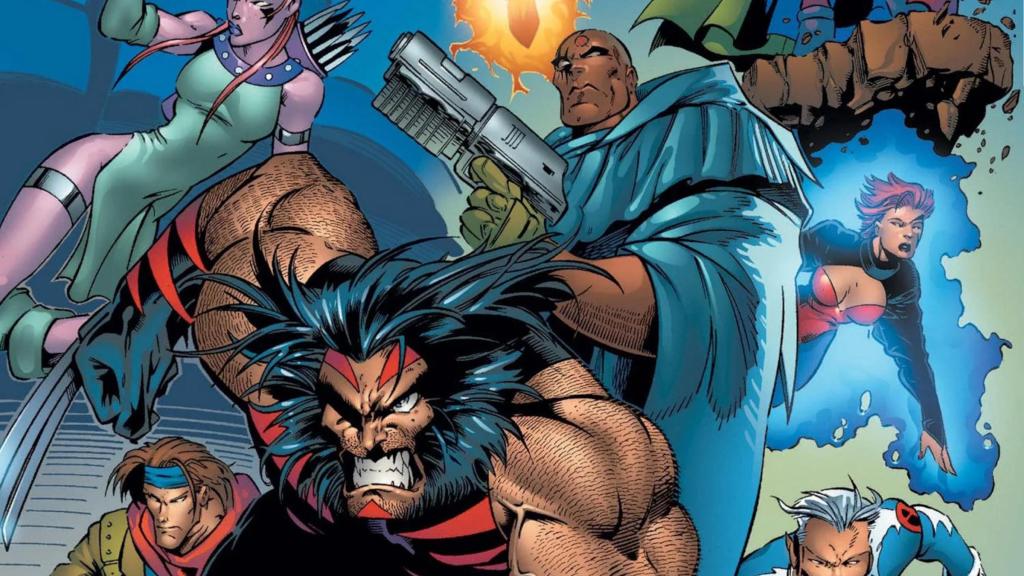
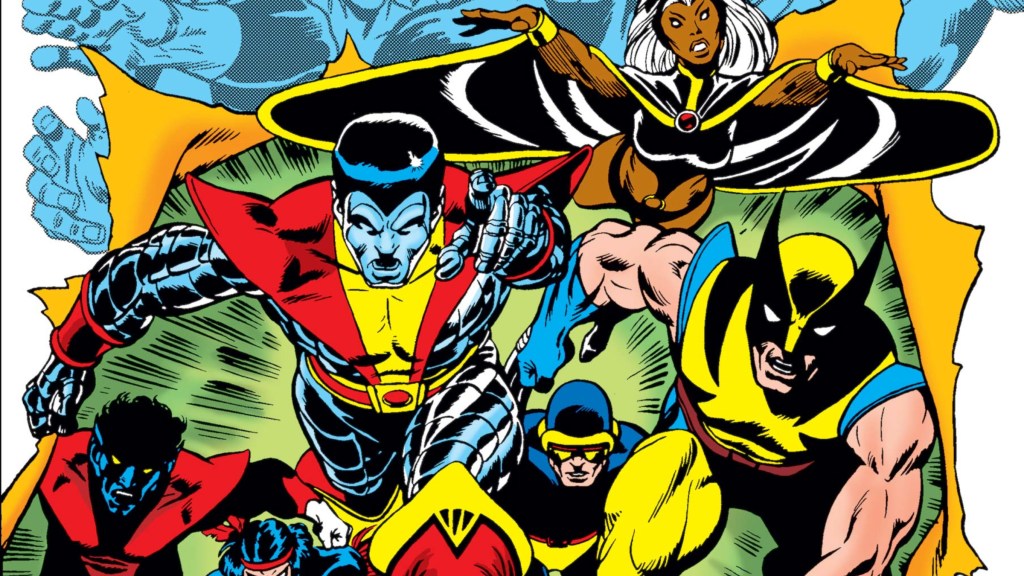
Henry: The downside is that it becomes expensive. Most of my customers have a set threshold: ‘Hey, I’m going to spend $100 a month.’ So I get $25 a week to work with. Most books are running around $5, so I’m going to get five books. At that point, if you start dropping them weekly, that means I’ve got to decide between three of the books that I’m already getting. Do I get it? Or do I spend a little extra? Maybe I don’t go out to eat this week, and I get that extra book, but maybe not. Growing up, I was an X-Men kid in the 90s. With X-Men at the time, there were eight to ten of them out every month. I could afford ten books. I didn’t buy Spider-Man or Punisher or Batman because I didn’t have the extra money. I was trying to get all the X-Men instead.
Chris: Yeah. Are those still your most prized books now, the X-Men, just as far as childhood stuff?
Henry: Yes and no. When I opened the store, I brought my entire collection down here, except for the Age of Apocalypse story from the early 90s. That was my favorite story ever because it was a good one, but you also didn’t have to know all the back history. I could just pick it up and read it. I loved that aspect of it, so I kept that. I kept my very first book, which was a Richie Rich comic. And I kept one book that a good friend of mine was the artist on. When we were in high school, he said, ‘I’m going to be a comic book artist.’ Between the time that we got out of high school and I came back into the area, he had done one book, realized that’s not what he wanted to do, and went and did something else instead. That’s all I kept. I brought all my X-Men books over; I brought everything over. Because if you’re going to make a business work, you’ve got to be willing to invest in it. I’ve heard horror stories of stores where a good book comes in and the owner goes, ‘Oh man, here’s a Fantastic Four #1 I’ve always wanted for my collection.’ They buy it out of the register, use the register money to buy it, and take it home. Then they just lost all of that cash flow, the capital, and all of that. I tell people right now, my personal collection is all of those books on the wall. Because I own the store, those are all mine. Now I’m at the point where every now and then, if something comes through… like I’m working on a G.I. Joe run right now. A collection we just picked up had three number ones in it. One of them stayed home with me. It’s about a $100 book right now on our shelf. But I didn’t mind at that point. It wasn’t going to affect the store that much for me to keep one or two books out as I go through.
Chris: Do you have any current titles that are your favorite?
Henry: I don’t read as many current right now as I used to. Because I found that I would pick up a number one, I’d be excited on number one, and then for whatever reason—I have ADHD—I don’t keep up with it as well as I should. It can be overwhelming. I see 75 books come out every week and say, ‘I want to read all of these books.’ I just don’t have the time to try and do it. And that’s where I end up reading graphic novels.
Chris: You’re going to have to learn how to speed read.
Henry: Ah, yeah, that’s not happening. As I found out, my daughter has dyslexia, and they started reading off the symptoms. Growing up for us, it was just reversing of letters, but there’s so much more to dyslexia. They were reading off all the symptoms my daughter has, and I went, ‘That’s me, me, me, me, me.’ I look at my wife, ‘I have dyslexia?’ She went, ‘Yeah, honey, you have dyslexia, too.’ And they found out my mom had the same symptoms. She’s like, ‘Oh, yeah, I’ve always had that problem.’ So speed reading is never going to be my thing.
Will AI Become Part of Comic Books?
Chris: And as far as physical media goes, like you were saying, comic books currently are something that middle-aged guys 30, 40, 50… that’s the audience for that. Do you see comic books ever coming back around and becoming popular again with a younger audience?
Henry: The individual issues? I don’t know. Graphic novels? Yes. My personal opinion on where the industry should go, or might be going at some point, would be less individual comics that come out every week, and more original graphic novels that come out every week. Let’s say instead of 75 books up on the wall, there’s only 25 books up there, but there’s also 20 original graphic novels with a whole story ready to go. I think I can sell that just as well, if not better. They really say now, if I can convince someone to spend money, I can convince them to spend up to $20 with no questions asked. $20 is nothing anymore for someone to spend. So I have to sit down and convince you to pick up and read this book at $6, but I could have just as easily convinced you to spend $15 on the whole story. It’s just the pitch with it, right? The advantage of having individual issues is recurring customers coming in. Like the guys we talked to about the second issue coming out Christmas Eve, ‘Be back here for it.’ I’ll have a number of them that will be back on Christmas Eve just to pick it up because they read number one and went, ‘That was exciting. I need to see what happens with Santa next.’ So I don’t know about individual issues… I’ve thought that for a long time too, and it hasn’t happened yet. It may be another 20 years before that actually happens. Let’s hope, right?
Chris: I mean, this is really getting into the weeds now, like with AI and how that’s going to maybe affect the comic book business.
Henry: That’s a really interesting thing. Because AI is such a nasty word in the comic book industry right now, but in all my other non-comic book businesses, people are using AI for everything. They’re like, ‘Well, that’s where the future’s at.’ And I’m like, ‘Yeah, but if I say the word AI inside a comic book store, I’m likely to be lynched.’ I don’t know where it’s going to go. I hope AI is not where we’re at in the future with comics. Because AI doesn’t have a heart, and our comic artists and our comic writers have heart. And that’s where I think it should stay.
Chris: Yeah, I think like anything else, if you’re able to… because I know a lot of artists use 3D models for their backgrounds and things like that. So I think if artists are able to incorporate AI in some way to help them move quicker, then I think there’s maybe a benefit there. But it still has to be done.
Henry: There are still questions involved with it. If you’re an artist, and I know I’m going to have this same general pose of this character 12 times through the book, do I draw it one time and then copy it? And does that count as art? Like, I drew it the one time, but I’m copying it. So where’s that line? I don’t know; there are a lot of real touchy situations when it gets around to it. Again, I think the heart is going to be the biggest issue still for it. I don’t think it takes over the comic book industry as far as the actual print and media. Do I see comic book shops using AI in the future? Maybe for certain things, especially for advertising and marketing. I had a marketing person come to me and go, ‘Hey, I’m working on a commercial. I used AI to generate this commercial for you.’ And I went, ‘That’s cool. If I use that right now, that’s still a lynchable offense for me. I just can’t use that.’ He went, ‘Oh man, I didn’t even think about that.’ Because he’s in marketing, and they’re using it all the time.
Chris: Right. Now I have a friend who likes to make these little AI social videos, and he wanted to make one for my book. And I was like, ‘Bro, I can’t use that. I appreciate it, that’s very nice, and I’m happy that you spent 10 seconds prompting that, but I can’t use it.’
Henry: I mean, that’s the fastest way to get thrown out of the industry. Embracing it.
Chris: Yeah. So Henry, thank you so much for your time, man. Appreciate it.
–
If you own a comic book or card shop and would like us to do a shopping spree at your store (or if you’re a customer who would like to nominate your favorite retailer), reach out to us at [email protected]. We’re assembling a nationwide list of interested stores to visit – as well as some international locations!
More Comics
-

Image Courtesy of Marvel Comics -

Image Courtesy of DC Comics -
Image Courtesy of DC Comics -
Image Courtesy of Marvel Comics -
Image Courtesy of Marvel -
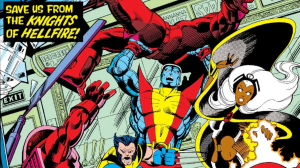
Image Courtesy of Marvel Comics -
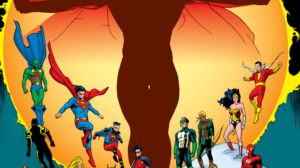
Image Courtesy of DC Comics