With ComicBook Shop Talk, we sit down with the staff members of local stores all over the country, and sometimes even abroad, to understand the business we all love so much. This time, ComicBook’s Chris Killian had the opportunity to chat with Doug Mabry, a manager at the Great Escape Madison. In addition to selling new comics, The Great Escape also specialized in buying comics from collectors and offering rare issues, which gives them a broad overview of the hobby and how to keep the business healthy.
Videos by ComicBook.com
If you have a favorite local comic book shop you would like to see featured in upcoming editions of ComicBook Shop Talk, or if you want to add your store to our current shopping spree, send your pitch to [email protected]. Tell us about your personal connection with the store and how they help keep comic books alive.
The Great Escape
| Website: thegreatescapeonline.com | Email: [email protected] |
| Address: 2162 Gallatin Pike N. Madison, TN 37115 | Instagram: @thegreatescapemadison |
| Phone number: 615-865-8052 |
The Comics That Grab Our Attention

Chris: I’m going to go ahead and start recording there. So, first off, Doug, just to go all the way back to the beginning, so what’s the comic that made you fall in love with comics?
Doug: Amazing Spider-Man #136.
Chris: What was it specifically about #136 that you loved?
Doug: It was the first one I bought. Yeah, I was just amazed when I got that comic as a kid. It was Spider-Man fighting Green Goblin, and I just couldn’t believe how cool this comic was. I was just fascinated by it.
Chris: Yeah, no, that’s a good one, man. Currently, I want to know what is selling that surprises you, and what you think should be selling that isn’t?
Doug: Well, I was initially surprised by the success of the Absolute Batman line, the Absolute line in general. I didn’t expect that to have the impact that it did, but it’s just like a runaway freight train. Ones that I think should sell better. I’m surprised that Fantastic Four hasn’t sold a little bit better. I’m also surprised that the Hellboy books haven’t had a further reach than they have.
Chris: Yeah, I feel like Hellboy is one of those things that people who create comics… It’s like a comics creator sort of book, you know what I mean? As far as people who love comics really love Hellboy, but it just doesn’t seem to break through in the same way that other ones do.
Doug: Yeah, exactly.
Chris: I’ve always heard, too, that in the comic industry, it always feels like there’s one comic that’s keeping everything afloat every year, like some runaway hit that’ll happen?
Doug: Yeah, it does. It does. And it doesn’t necessarily sustain… It’s not the same one year after year, but it seems like there’s always something that keeps it rolling.
Chris: Well, as far as single issues versus trades or graphic novels, what’s your preference? Do you feel like either one of those is winning right now when it comes to keeping an audience?
Doug: Well, for us, I think the single issues are still the king. I think that there are a lot of folks who collect trades, but a lot of the people who collect trades are also the same people who are happy to read it online. They don’t care so much about having the original comic. And if you don’t care about the original, you might as well read it online instead of the trade paperback. The ones that care about having the originals are still buying the monthly issues. So I think that the online digital download stuff has maybe affected trade paperbacks more than it’s affected individual issues.

Chris: I also wonder sometimes if that’s sort of like a generational thing, right? It’s like my son, for example, is like a total trade guy. It’s like this binge mentality where he wants to wait until all the issues are out. He just picked up the Batman Dark Patterns. He was excited about it, but he just waited patiently for the trade to come out. While I’m like a single-issue guy, I like having the original book. I don’t know. Do you notice that at all, that it’s kind of broken apart by different generations?
Doug: Yeah, I do see that. My son is a little bit similar to that. He’s not a giant comic book reader, but when he does read it, he wants to read a whole storyline all at once. He likes Daredevil, he’ll want to read the entire Born Again trade or something like that, as opposed to reading individual issues. But now I do notice that some of the older generation like the exclusive hardcover special edition with all the bells and whistles, that kind of thing. But yeah, I think the younger generation is much happier to get the trade paperback and read it all at once.
Chris: Now, when a customer walks in who’s never bought a comic in their life, do you have a specific character or a book that you like to point them to first?
Doug: Not necessarily. No, I just try to find out what they’re interested in, what maybe led them to try to seek out comics in the first place. Are they more interested in anime? Are they more interested in the superhero stuff? Did they watch Spidey and his Amazing Friends cartoon as kids? Or did they get turned on to it by the Batman movies, or what have you? And then I go from there.
How Hollywood Helps Comic Book Shops
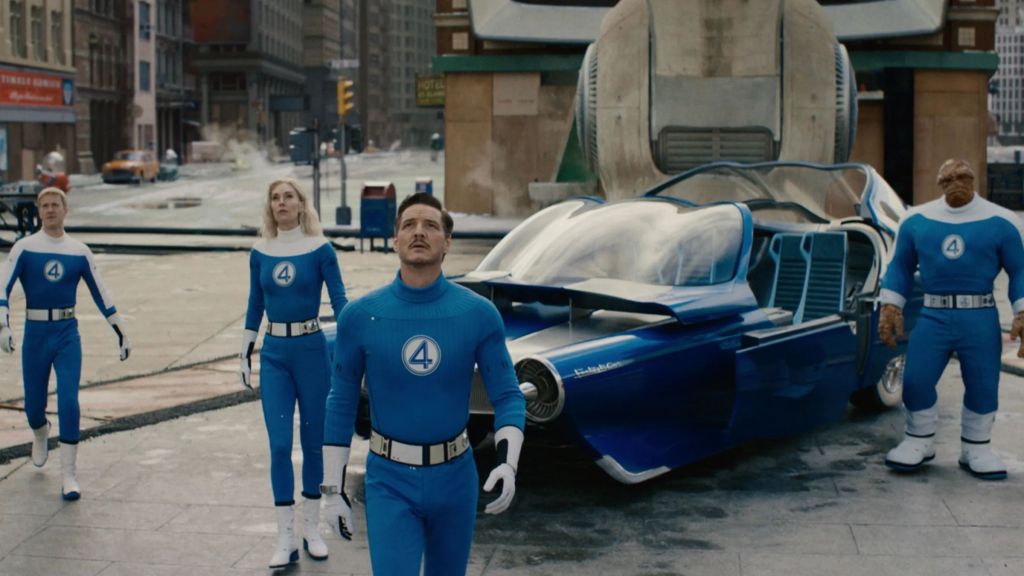
Chris: So that kind of leads to my next question, which is like IP is everywhere right now. It feels like every major comic character has a show or a movie or a cartoon or something. And do you feel like that brings people through your door more often than not?
Doug: I think it helps. I don’t think it is a long-term thing. For instance, when a movie about a certain character might come out, or Fantastic Four, for instance, I might see a bump for a couple of months. And then either those people get hooked, or they don’t. But I don’t see like two or three years after the movie comes out, I wouldn’t see people coming back in looking for a Fantastic Four book, for instance, because they saw it online or they saw it on streaming. It’s generally just when the movie hits or whatever.
Chris: Well, do you see any similarities between the books that really hit and retain an audience versus the ones where they sort of drop off, and they don’t hook them? Could you point to anything that you personally feel like you see in those comparisons?
Doug: Well, I do think that the consistency of the creative team, I tend to see people stick with 30, 40 issues or whatever if the creative team stays relatively stable. I see people continue to follow that. But I will say this, that the reboots, some of the series that they’ll restart, I tend to see a spike for the first couple of issues, and then it tends to drop lower than it was prior to that. So I think to a certain extent that Marvel and DC restarting series so frequently, it leads to a short-term bump but a long-term decline. So people find it as a good jumping off place instead of a good jumping on place necessarily.
Chris: I heard Robert Kirkman talking about this the other day, about how he feels like a lot of these legacy characters are just sort of played out, and that comics really need fresh blood when it comes to new characters and new stories. How true do you feel that is in terms of what consumers are looking for?
Doug: That’s a good question. I think they’re always looking for new characters. I don’t know if there’s ever been a time when that hasn’t been true. As a kid growing up in the 70s, Ghost Rider and Luke Cage were new characters I wanted to jump on. You know, even though those books were only going for, you know, like Fantastic Four and Spider-Man and stuff, it had maybe only been going on for 10 years by the time I started getting into comics. The idea of, oh, this is something new that I can grab onto, that I can be there from the beginning, always had an appeal to me. And I think that’s always going to be the case. But I don’t know that that necessarily means that the old characters won’t continue to have the appeal. I think an iconic character like Amazing Spider-Man, Captain America, Batman, those things are always going to have an appeal. There’s something universal about them that touches people, and that’s why they stuck around. So, you know, I don’t think it’s an either-or thing.
Chris: I wanted to ask about AI because obviously that’s a hot topic right now. How do you feel like AI is not only just affecting the comic book business, but as far as comic book shops, do you find it to be like a tool, a threat, or something that people just aren’t prepared to deal with yet? What’s your personal take on all that?
Doug: Personally, as a business, it hasn’t really affected us as a business. In terms of the creator impact, I could see that eventually, that could be a negative impact. But we don’t use it in any of our business aspects. I haven’t really seen a lot of AI-generated comics coming out or anything like that that I’ve had to deal with. But I can see that it could impact the creators down the line. It’s just a little early to tell.
Chris: Yeah, I’ve already come across some people who I feel like consider themselves real artists when they use AI, and it’s so frustrating, personally, for me. I’m like, ‘Oh God, okay, come on.’ I’m kind of okay with people using it as a hobby, but as soon as they start making themselves sound like real artists, it flips me out. I want to say, so what’s the biggest thing about running a comic shop that nobody who doesn’t run one would ever understand?
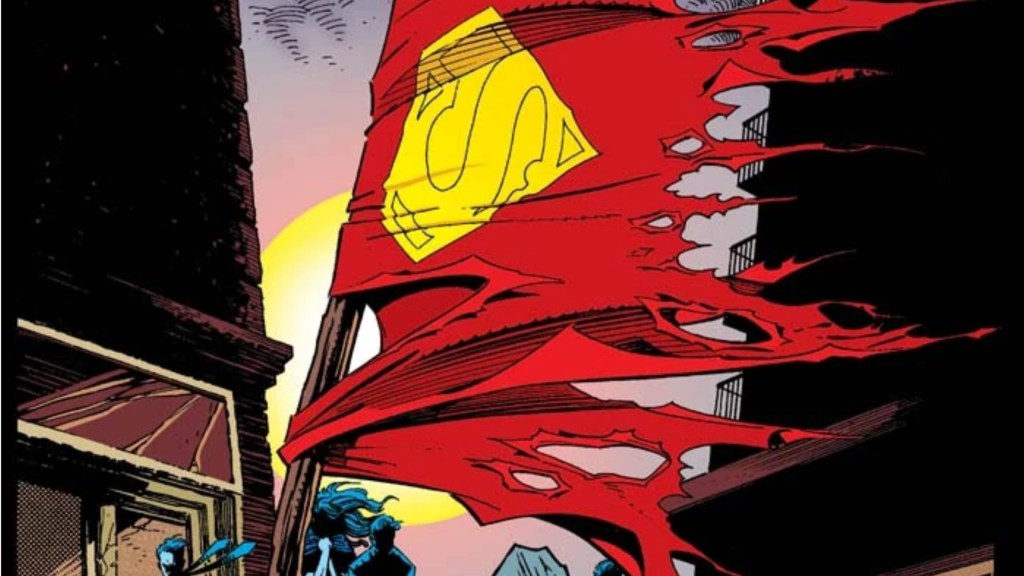
Doug: I think that the thing that we deal with most is that customers who want to sell their comics don’t understand the economics of the whole system. Just because a given price guide says that a comic book is worth $5 doesn’t mean that I can sell it tomorrow for $5. I may have dozens and dozens of them sitting in my back room, and it may take years to sell them. So when we make offers on collections, we’re looking at how I can make at least break even within a relatively short period of time, and then the rest of the back issues will sell slowly over time. So we have a lot of people who think, ‘Oh, you’re trying to rip me off,’ but that’s not the case. It’s just that I probably have a good 10 copies of the Death of Superman comic in my backup right now, and I put them out for half of the price guide price, and I still probably don’t sell one every year.
Chris: Yeah, I feel like those are the kind of people who need to watch some Pawn Stars.
Doug: Yeah, exactly. That’s really the kind of thing that’s affected a lot. When I hear people say things like, ‘I think there’s still some meat on the bone for you here,’ I know they’ve been watching Pawn Stars or American Pickers.
Chris: What’s the most expensive comic book that you personally have ever sold?
Doug: That’s a really good question. Honestly, I can’t remember what the most expensive one I’ve sold would be. I know we’ve sold in the last year or two; we’ve sold several in the $5,000 range, but I don’t know what the most expensive one would be.
Chris: That’s fair. I’m sure after a while, like all things, it starts to blend together, right? You lose track of them.
Doug: Yeah, and what would be a big deal price 20 years ago isn’t such a big deal price now.
Chris: Right, right. Yeah, I remember about 10 years ago, I had a 9.2 copy of Giant Size X-Men #1 that I sold for $1,000 because I needed to pay for my kid’s braces. God, man, when you talk about kicking myself for that.
Doug: Yeah, yeah.
Chris: I literally thought like, oh, I’ll just buy this book back in a couple of years, no big deal. When I got to a place where I thought, oh, I could maybe go buy it back, I was like, ‘Oh, crap.’
Doug: Yep, I’ve been there.
Chris: Okay, awesome. Doug, thank you so much for your time, man.
–
If you own a comic book or card shop and would like us to do a shopping spree at your store (or if you’re a customer who would like to nominate your favorite retailer), reach out to us at [email protected]. We’re assembling a nationwide list of interested stores to visit – as well as some international locations!
More Comics
-
Image Courtesy of Marvel Comics -
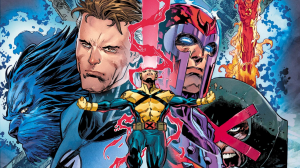
Image Courtesy of Marvel Comics -
Image Courtesy of Marvel Comics -
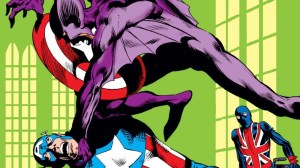
Image Courtesy of Marvel Comics -
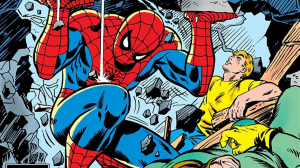
Image Courtesy of Marvel Comics -
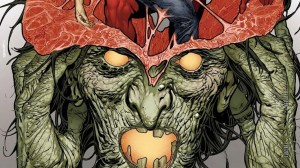
Image Courtesy of DC Comics -
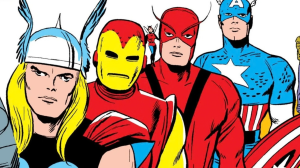
Image Courtesy of Marvel Comics