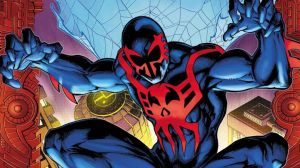
Spider-Man comics are a strange and wonderful emotional workout. They hand you teenage banter, rent trouble, brilliant one-liners, and heartbreak sandwiches in equal measure. Every issue feels like watching someone barely hold it together while fighting a mechanical octopus or an existential crisis — often both at once. And that’s the charm. You can count on him to make the worst possible decision at the right moment and somehow claw his way into redemption by the final panel.
Videos by ComicBook.com
Longtime readers know there’s a rhythm to Spidey stories: pain, perseverance, and an awkward quip to break the tension. It’s that formula of ordinary chaos and moral stubbornness that keeps him timeless.
10. Spider-Man: Blue (2002)
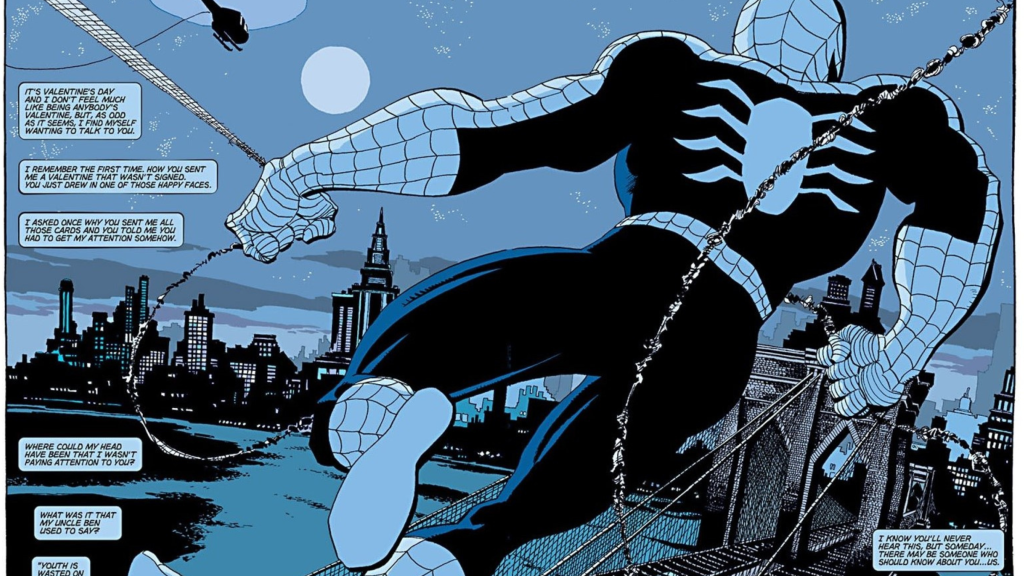
Jeph Loeb and Tim Sale captured something deeply personal in Spider-Man: Blue. Told through Peter’s audio diary, it reflects on his early years with Gwen Stacy — love, laughter, and loss woven into one bittersweet recollection. The artwork paints nostalgia in soft tones, making every page feel like a memory fading in real time.
It doesn’t rely on big villains or epic battles; the heart of the story lies in its intimacy. Peter’s reflection on his youth, layered with regret and gratitude, reminds readers how fragile happiness can be when you live behind a mask.
9. Kraven’s Last Hunt (1987)
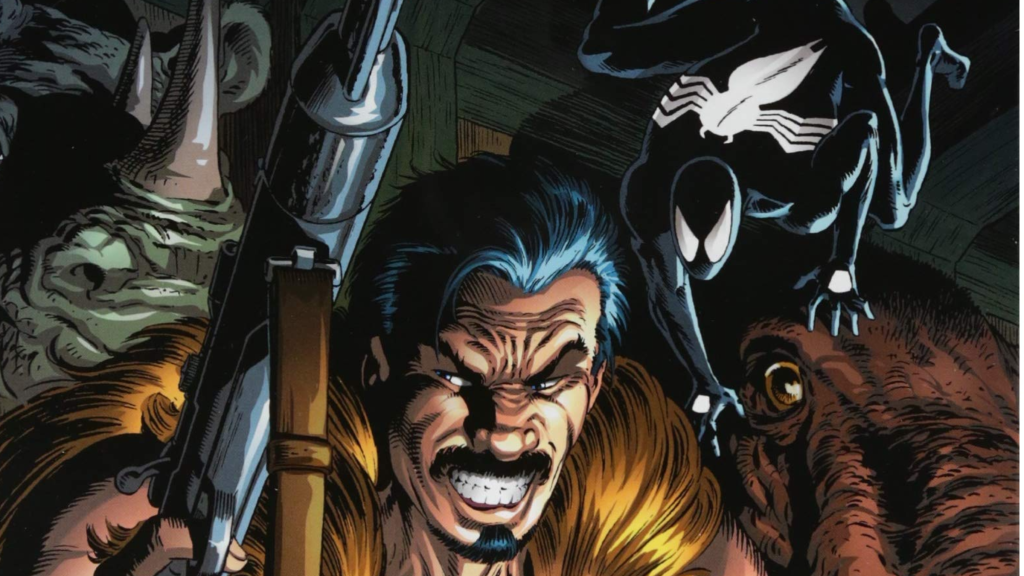
Few Spider-Man stories go this dark. In Kraven’s Last Hunt, the obsessed hunter finally “defeats” Spider-Man, buries him alive, and takes up his costume to prove a twisted point about superiority. Its psychological weight makes it more horror than superhero tale.
By the time Spider-Man claws his way out of the grave, you’ve already felt every ounce of his desperation and drive. It’s an exploration of identity — what being Spider-Man really means when you strip away everything else.
8. Ultimate Spider-Man (2000–2011)
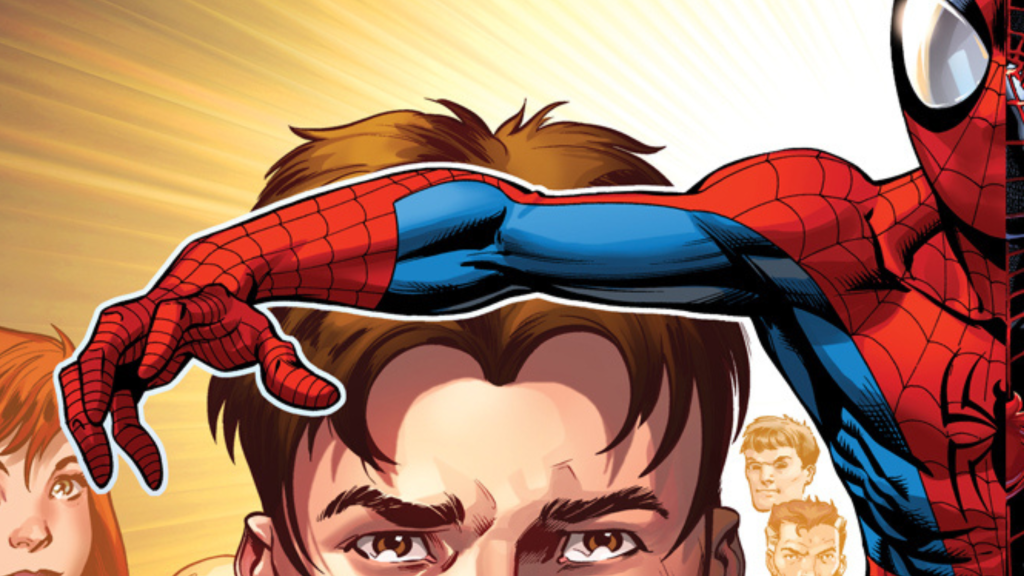
Brian Michael Bendis and Mark Bagley’s Ultimate Spider-Man redefined the mythology for a new generation. Across over 130 issues, they built one of the most consistent and emotionally rich superhero runs ever. The storytelling felt modern but faithful, focusing on Peter’s growth from awkward teen to genuine hero. Its strength came from breathing room — character relationships stretched naturally, and each major event hit harder because readers lived through every part of Peter’s life. It became the new standard for Spider-Man in the 21st century.
7. The Night Gwen Stacy Died (1973)
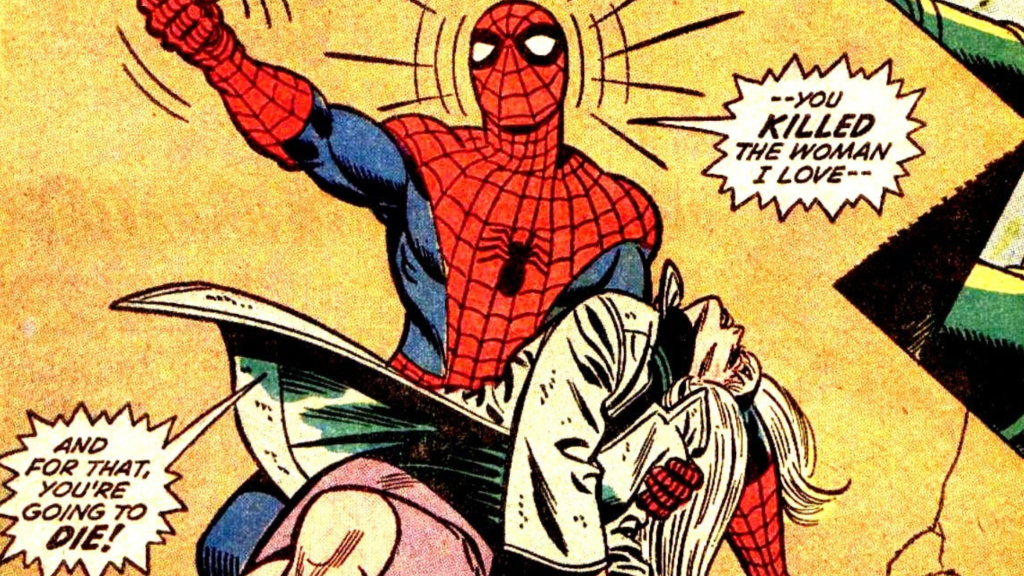
This arc from The Amazing Spider-Man #121–122 changed comic storytelling forever. When the Green Goblin kills Gwen Stacy, the golden age of lighthearted superhero tales ends brutally. Peter’s guilt — knowing his own web may have caused her death — haunts him permanently. The story pushed the medium forward, proving consequences could reshape characters forever. Every modern Spider-Man narrative owes something to this moment; it made loss part of his DNA.
6. The Death of Jean DeWolff (1985)

In The Spectacular Spider-Man #107–110, Peter faces the murder of Captain Jean DeWolff, a police ally he respected deeply. The hunt for the killer, Sin-Eater, draws him into moral territory he’s rarely walked—rage, revenge, and doubt about the system he trusts.
Peter David’s script grounds Spider-Man in street-level tension that feels brutally real. There’s no cosmic threat, just the weight of human violence. It remains one of the most unsettling and mature Spider-Man arcs ever printed.
5. The Kid Who Collects Spider-Man (1984)
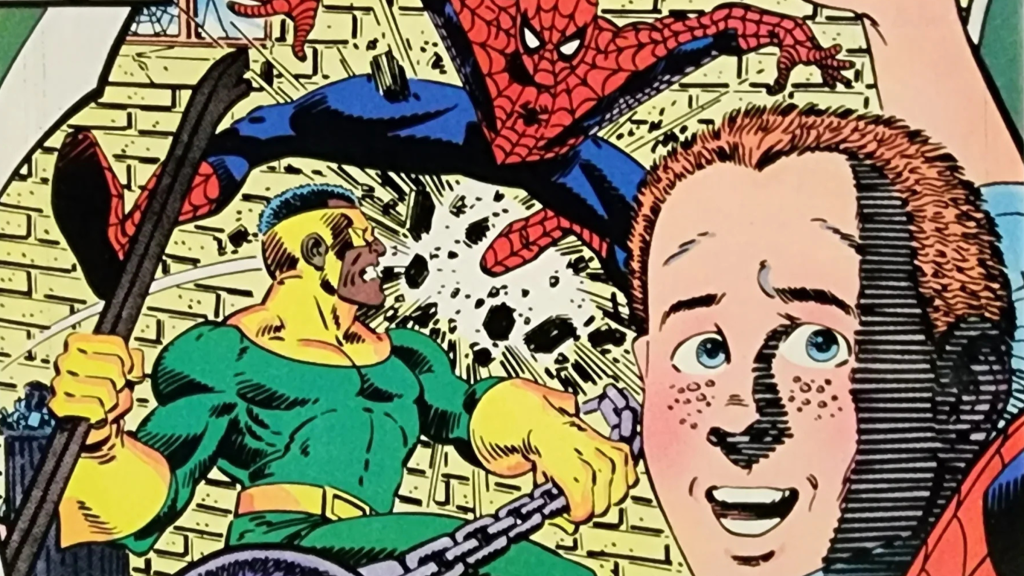
Just a single issue — Amazing Spider-Man #248 — but unforgettable. Peter visits a young fan who admires him deeply. They exchange stories, jokes, and heartfelt moments until the gut-punch ending reveals the boy is terminally ill. This tale distills everything essential about Spider-Man: compassion, relatability, heartbreak. No villain, no epic battle, just truth and humanity. It’s the moment that proves why Peter Parker matters more as a person than as a hero.
4. Spider-Verse
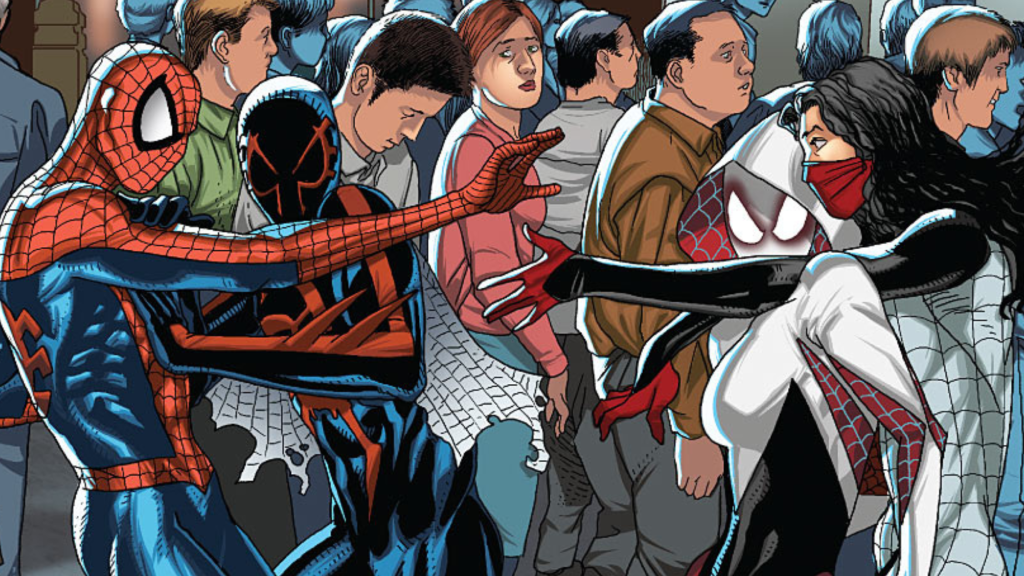
Dan Slott turned what could’ve been a chaotic crossover into a love letter to the Spider-Man mythos. Multiple universes, countless Spider-People, all connected by shared ideals. Beneath the action lies a reflection on what makes this character timeless—his stubborn heroism, whether he’s a teen, a pig, or a noir detective.
The scale is massive but surprisingly personal. It celebrates Spider-Man’s ability to inspire infinite variations without losing his moral foundation. For longtime readers, it feels like a victory lap for decades of storytelling.
3. The Master Planner Saga (1965)
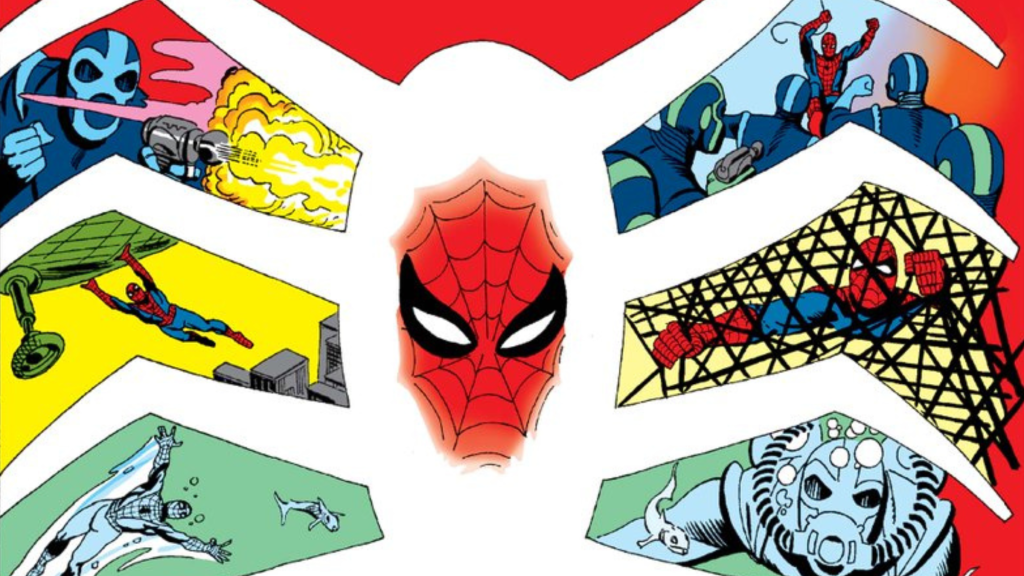
Found in Amazing Spider-Man, this Stan Lee and Steve Ditko classic established everything Spider-Man stands for. When Aunt May’s life depends on him retrieving a cure, Peter battles exhaustion, failure, and despair until he digs deep to free himself from tons of crushing machinery.
That single scene — Spidey straining beneath the wreckage — is pure heroism crystallized on the page. It defined perseverance in comics, inspiring countless creators. Every writer since has tried to capture that same heartbeat of grit and hope.
2. The Superior Spider-Man
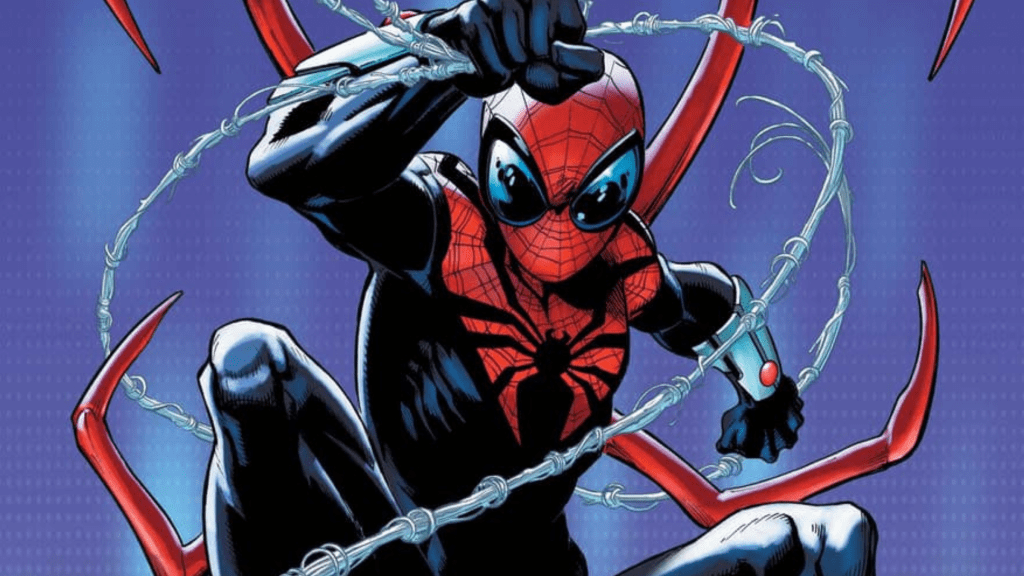
When Doctor Octopus trades minds with Peter Parker, readers expected a quick gimmick. Instead, The Superior Spider-Man turned into a bold, character-driven masterpiece. Otto Octavius tries to prove he can be a “better” Spider-Man — more efficient, more ruthless, more successful — and fails spectacularly in ways that expose what truly makes Peter special.
Dan Slott’s writing walks a tightrope between uncomfortable and brilliant. Otto’s methods work at first, but his lack of empathy eventually unravels him. It’s a story about the danger of intellect without heart, and it delivered one of the most surprisingly emotional resolutions in recent Marvel history.
1. The Death of Spider-Man (Ultimate Spider-Man)

The culmination of a decade of storytelling, this finale hit like thunder. Peter Parker dies protecting Aunt May and his neighborhood from the Green Goblin, fulfilling his vow with unflinching courage. It was the most earned ending in modern superhero comics.
Bendis and Bagley made readers grow up with this version of Peter, so his death landed with generational weight. It wasn’t about tragedy for shock’s sake; it was about completion. When he says, “I did it,” you believe him. That final page cemented Peter’s place not just as a hero, but as the heart of Marvel Comics itself.
What do you think? Leave a comment below and join the conversation now in the ComicBook Forum!
Most Viewed
-

Courtesy of Sony Pictures Animation / McDonald's -

Image Courtesy of TMS Entertainment -

Courtesy of TOHO Animation