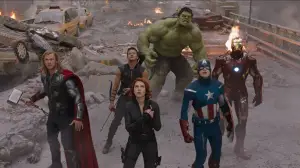
Spider-Man is Marvel’s golden goose for a lot of very apparent, very good reasons. His theme of responsibility connects with people’s hearts, and his powers are simple but tons of fun to use creatively. What really draws people to Peter, however, is his vast array of amazing, spectacular stories that stand head and shoulders above what most other characters can dream of having. Spider-Man has had some of the greatest comic teams in history unite to bring him to life, and we will always be thankful to these creatives for giving us the hero that means so much to so many. Of course, even though these runs are the best of the best not just with Spider-Man, but comics in general, not even they are perfect.
Videos by ComicBook.com
Spider-Man’s greatest runs set the stage not just for his comic to flourish, but for the best comics that Marvel will ever know to unfold before our eyes. These runs capture Spider-Man and Peter Parker in equal measure, putting him in iconic and amazing situations while exploring how to march his status quo forward. However, even these runs have flaws. Well, to put it more accurately, these runs have decisions that are so weird, wacky, or out-there that they completely take you out of the story and leave you wondering if you’re missing something. Today, we’re looking at five runs that exactly fit that criteria.
5) Ultimate Spider-Man (2000) – Non-Alien Venom
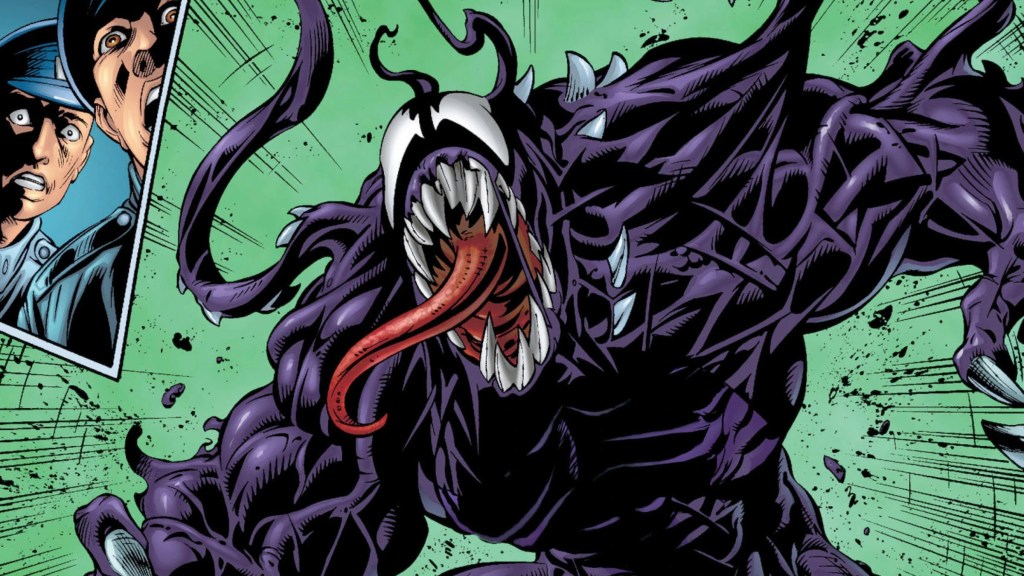
Marvel’s original Ultimate Universe sought to modernize and reimagine the company’s biggest names, grounding them in “realism” in a way that the main comics didn’t. The biggest success of this methodology was definitely Spider-Man, with Bendis’s ten-year run with Peter Parker still considered to be one of the best he’s ever had. Major changes were made to Peter’s rogues gallery, from Norman having created the radioactive spider to Kraven being a reality TV star à la Steve Irwin. However, the biggest change of all was with Venom, who, instead of being an alien, was a science project made by Peter and Eddie Brock’s dads.
This new Venom is really strange. It’s a synthetic, almost-living suit that wants to consume and bond with Peter, whose DNA is essential to its completion. Venom not being an alien is one thing, but Ultimate Venom places so much focus on Peter’s parents and assigns a kind of destiny story that has never meshed with Spider-Man. I prefer Peter’s parents to not be important, as I think that better fits with the idea that he’s just a kid who had to learn how to be a hero. Tying Venom to Peter’s family muddies the whole scenario in a strange way. This isn’t necessarily bad, but it does completely change how we look at Venom.
4) Dan Slott – Black Cat the Kingpin
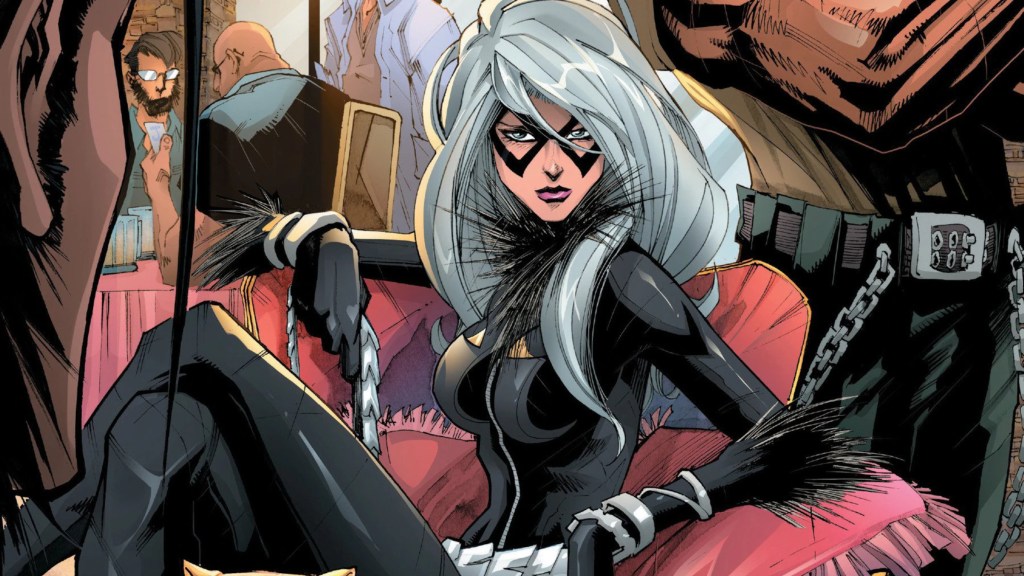
After the disastrous “One More Day” event, Dan Slott took over as Spider-Man’s main writer for the next decade. His run definitely had its ups and downs, but one thing that made it stand out from the rest of what Marvel was putting out was how it always charged forward. Peter’s life and relationships were always evolving, and Spider-Man was constantly battling new villains in new ways. Slott’s run burst with creativity, but it definitely made some strange choices along the way. The premier one was the direction it took Black Cat. After the Doc Ock-possessed Spider-Man spurned her, she went from a lovable thief to a monstrous gang leader of New York’s worst.
Fans love Felicia because she rides the line between hero and villain so well. She’s a thief, but she’s also one of Peter’s most trusted allies, always being willing to drop what she’s doing to help him out, even when that also involves scratching her own back along the way. Black Cat works because she can be so genuinely good and selfish in the same story, but this turn robbed her of all of her affection and connections, leaving her as nothing more than a generic evil gang leader. Frankly, this was character assassination that made her more boring than ever, and it’s a darn shame. Black Cat as a normal villain robs her of all the things that actually make her interesting.
3) Spider-Man: Life Story – The Never-Ending Civil War
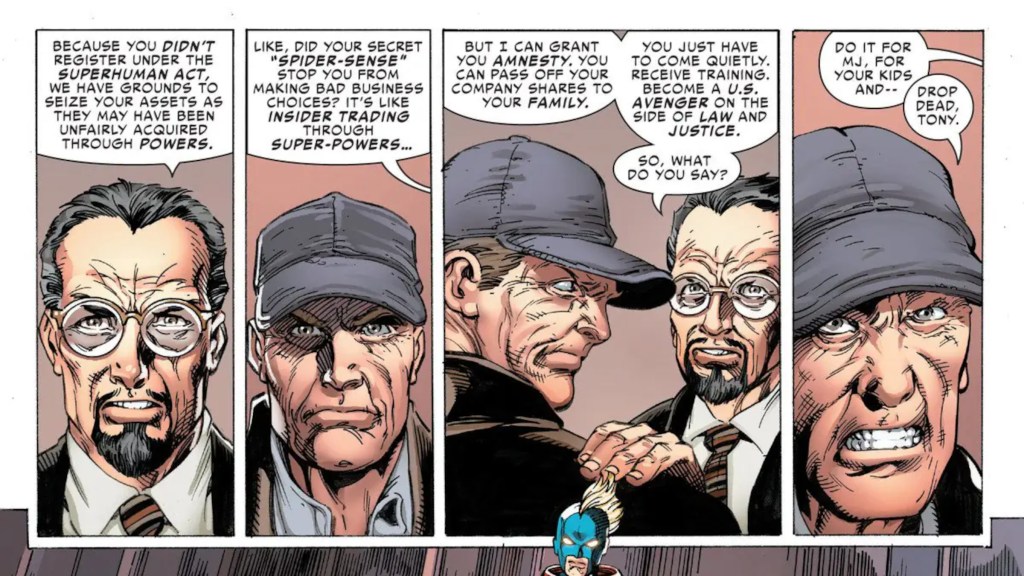
This six-issue miniseries was built around the idea of letting Spider-Man age as the world progressed, starting with his introduction in the ’60s, and letting each issue cover the next decade. It followed Peter’s entire life as he dealt with clones, losing loved ones, and battling his villains. It introduced great new takes on everyone, such as the Venom symbiote puppeting Kraven’s corpse after he took his own life and Doctor Octopus switching bodies with Miles instead of Peter. It’s a love letter to everything Spider-Man is and stands for, but it has one giant thing that I can never look past. The superhero civil war is so much darker than the original, and it never truly resolves.
That decision provides a lot of tension and the backdrop for the world’s conflict in the final issue, but it comes on the back of what I can only call baffling characterization for Iron Man. Yes, Iron Man is the one who started the war and definitely didn’t act like a stellar hero in that time period, but he’s just an irrepetant jerk in this series. It’s like all of his worst traits have been turned up to eleven and his best have been filed off. Besides that, while Spider-Man being the world’s greatest hero and the symbol of hope is great, everyone else on both sides being so lost in the war that they lose the will to be heroes or just disappear just feels like writing off everyone for no good reason. It shoves everyone down to prop up Spider-Man, which is never the best course of action.
2) J. Michael Straczynski – Mystical Spider Powers
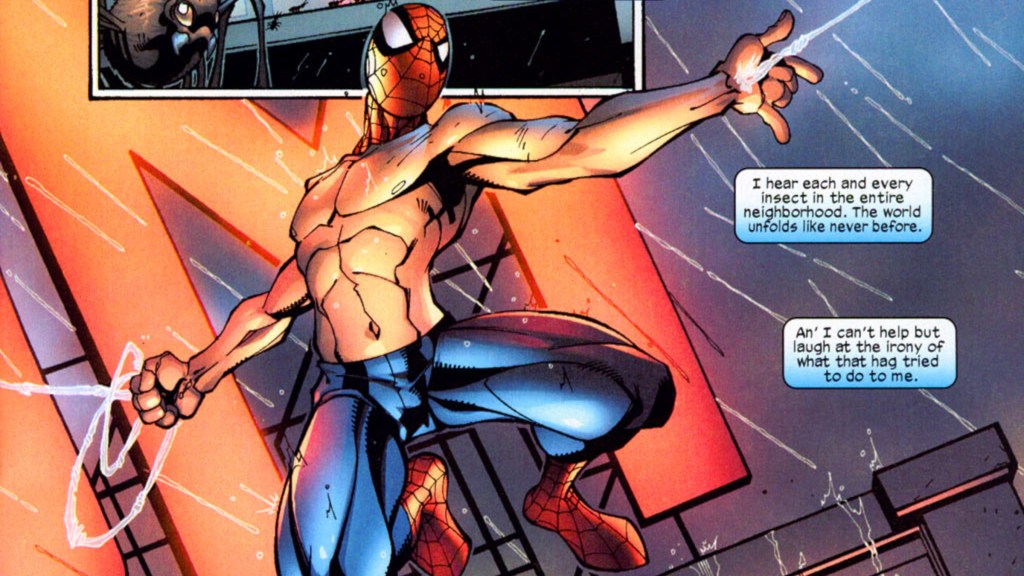
Straczynski’s run on Spider-Man is considered one of the greatest the Web-Slinger will ever have. It tackled Peter’s relationships in a very mature but positive way, even letting Aunt May discover his identity and developing their connection even more. The star, of course, was Peter and MJ’s romance. Yet, there were definitely some decisions from on high, read as editorial, that make you tilt your head when you go to reread this era. Namely, the idea that Spider-Man is a mystical Spider-Totem, destined to be chosen and fight the multiversal vampire known as Morlun.
Now, the really strange part isn’t just that this lore exists, but how it was implemented. In Morlun’s first appearance and the genesis of this idea, Spider-Man rejects the idea of destiny. He says that the spider may have been meant for something, but the radiation changed everything and set Peter on a new path that he has chosen. It was a rejection of this connection, saying it didn’t matter even if it was real. Then, later on, Peter fully dives into this and develops more powers by accepting his spider side. The organic webbing was clearly done to coincide with the Tobey Maguire movies, but still, flip-flopping from rejection to acceptance like that, along with the lore itself, just makes it kind of strange for a character so based in science.
1) Steve Ditko – Making Peter an Objectivist
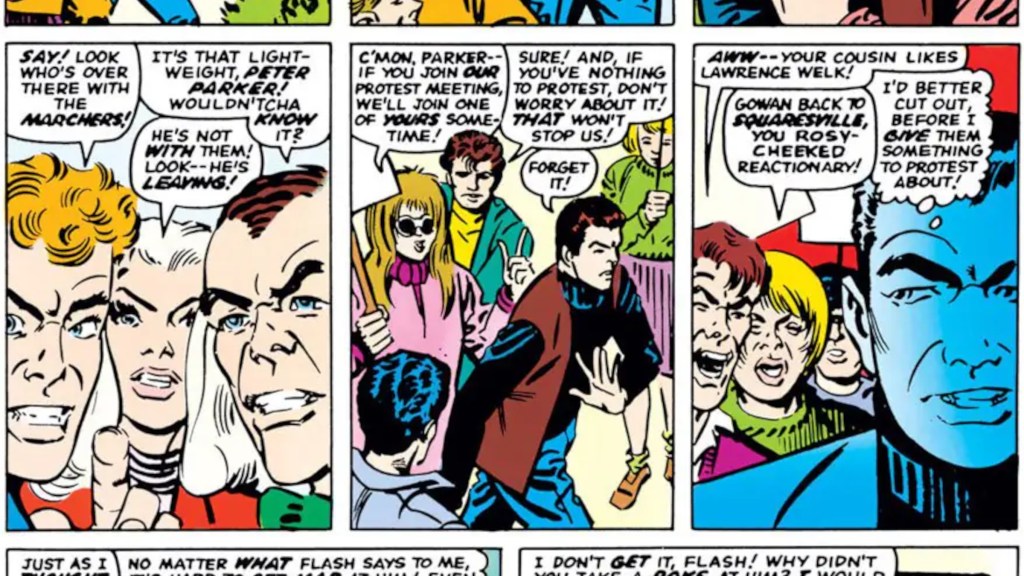
Steve Ditko was a legendary creator. He was the first artist to work on Spider-Man, designing the character alongside Stan Lee. He was just as invested in the story, continuously pushing Peter’s life forward, defining his iron will and endless dedication to shouldering every responsibility he carried as a man and hero. His art helped forge Peter into the iconic character that we know him as today, creating his costume and giving him the hard-edged look that defined his early years. Ditko was just as essential to crafting Peter’s character as Stan Lee was, which makes it even weirder that he imagined him as an Objectivist.
To put it simply, a core tenet of the Objectivist mindset is that man’s ultimate responsibility is to do what makes him happy and healthy. Selflessness and altruism are directly discouraged, which is an insane philosophy that no superhero can genuinely believe. Yet, amid having Peter perform truly selfless acts of wonder, he would also have him yell at protestors that they were wasting their lives. It’s such a massive disconnect that it took me out of the story every time it happened. It never influenced the actual stories, though, which is what makes this strange instead of absolutely insane. Still, it’s beyond weird.
Which near-perfect Spider-Man story do you love, and what do you think is the strangest problem with it? Let us know in the comments below!
More Comics
-
Image Courtesy of DC Comics -
Image Courtesy of Marvel Comics -

Image Courtesy of DC Comics -
Image Courtesy of DC Comics -
Image Courtesy of Marvel Comics -
Image Courtesy of Marvel -
Image Courtesy of Marvel Comics