Spider-Man is inarguably Marvel’s biggest character. He’s one of the most popular superheroes in the world and has defined how Marvel tackles their characters for generations. He’s the biggest success of the soap-opera, emotionally connected superhero style, bridging adventures and relatable life problems together in equal measure. Spider-Man is the hero that everyone can see themselves in. He got that title because his stories, especially in his early years, connected with people on a deep, heartfelt level. Watching Peter grow up, graduate high school, and deal with everything from girl trouble to never having enough money spoke to audiences. This is because his stories never stopped charging forward.
Videos by ComicBook.com
Comics, especially Spider-Man comics, are infamous for their unrelenting status quo, but back in the day, Spider-Man’s stories never stopped changing things up. They were unafraid to take things in entirely new directions, introducing new characters and villains at the drop of a hat. Nowhere is that more true than in Amazing Spider-Man (1963) #31, which first hit store shelves sixty-one years ago today. This is, without a doubt, one of Spider-Man’s most pivotal issues. It introduced characters who are still relevant today, introduced a massive status quo change, and is part of one of Spider-Man’s most iconic stories of all time. Today, we’re celebrating everything about the first chapter of the “If This Be My Destiny…!” arc.
An Old Spider in an All-New Status Quo
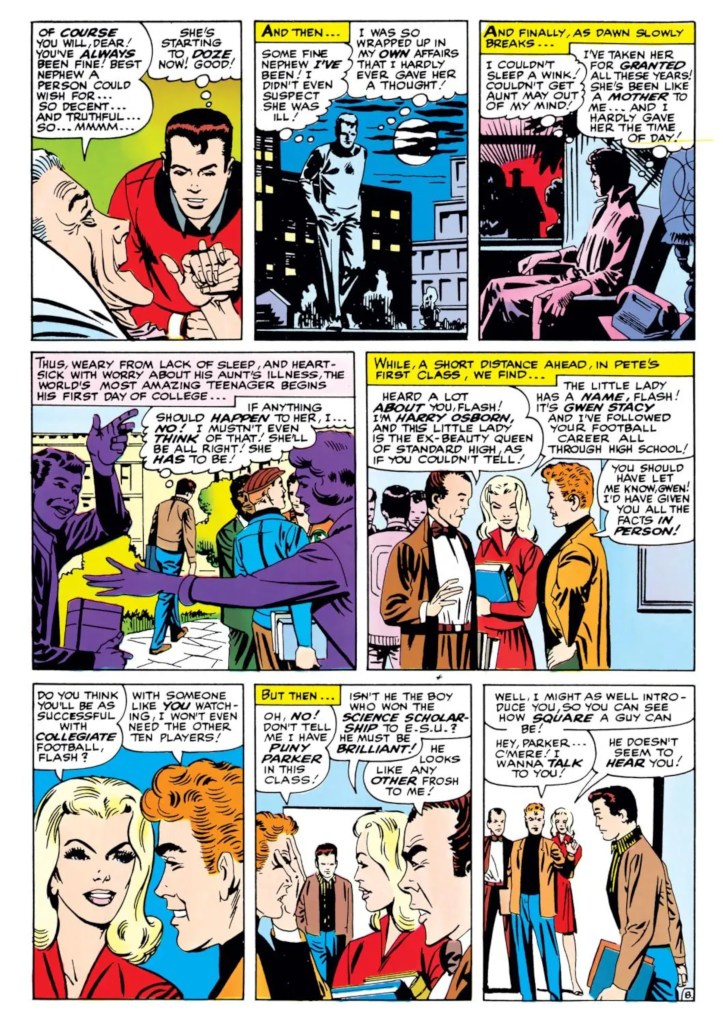
This issue introduced massive changes for the Wall-Crawler. For starters, this is the issue where he officially started attending Empire State University, bringing Peter into the college life, which is obviously a massive shift for his character. Along the way, he ran into two characters who would become two of the most important people in his life. Those, of course, were Gwen Stacy and Harry Osborn. Gwen is one of Peter’s closest love interests, only beaten out by Mary Jane. Even then, his relationship to Gwen defined Peter’s Silver Age adventures, with her death still impacting his stories to this day. It’s impossible to go too far without a Gwen Stacy reference in any Spidey story.
Harry, of course, was Peter’s best friend who eventually became one of his greatest rivals. Peter’s connection to Harry would also connect him to his father, Norman Osborn, who was the original Green Goblin. The Parkers and the Osborns would be at each other’s throats and hugging each other close for decades, often defining each other’s eras as they leapt between battling for survival and loving each other. This dynamic is one of the most nuanced, greatest things in Spidey’s comics, and it all started here.
Of course, that’s not all it introduced. This was the first showing of Professor Miles Warren, who would eventually become the villainous Jackal. His impact on Spider-Man with his unending clones and the drama they bring is enough on its own for his debut to qualify as massively important. All of these new characters obviously didn’t have their roles defined at the start; some wouldn’t for years, but their debuts opened the door for all these incredible stories. None of the stories we know these characters for would have been possible if Marvel hadn’t taken the plunge, shaking up Peter’s world in such a huge way.
A Legacy Few Comics Could Hope to Match
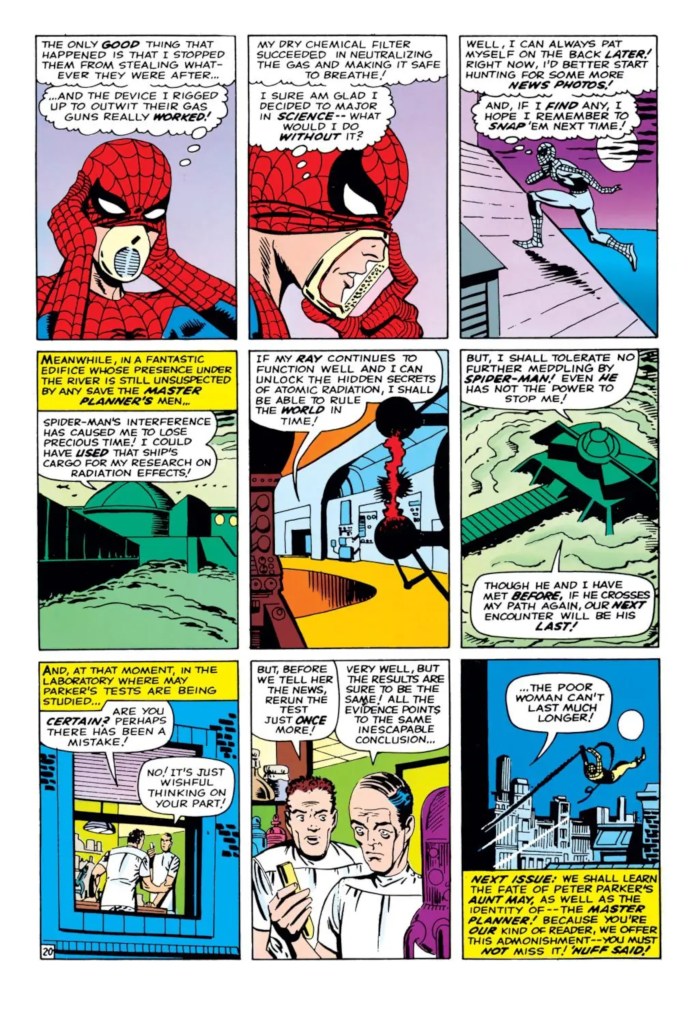
Even beyond all of the incredible characters this comic introduced, it also was the first of three acts in one of Spider-Man’s most iconic, important storylines of all. The “If This Be My Destiny…!” arc was, at the time, the biggest arc in Spider-Man’s history, and today remains impactful. This arc saw Spidey battle against the Master Planner, who in reality was Doctor Octopus, planning his revenge against the Wall-Crawler. At the same time, Aunt May fell ill because of radioactive material in her blood, which she received from Peter during a blood transfusion. All of this culminated in a final battle where Doc Ock literally dropped the roof on Spider-Man, trapping him under a monumental pile of rubble.
Here, in one of the most iconic comic pages of all time, Spider-Man overcame the doubt and pain, pushing past everything to embrace his life as a superhero and save the day. It’s still one of Spider-Man’s most inspiring moments, and just about every adaptation harkens back to it in some way. In many ways, Peter emerged from that rubble a changed man. He had fully accepted that he would be Spider-Man forever, no matter how difficult it made his life. This gave him a new confidence, empowering him to let go of his love for Betty Brant and stand up to J. Jonah Jameson for the first time. This was the ultimate proving ground for Spider-Man, his ultimate test of maturity and barrier to adulthood, and it all started with one spectacular issue.
I cannot talk enough about the amazing impact this one issue had. It’s one of the best Spider-Man reads around, and definitely deserving of everyone celebrating the sixty-one years we’ve had to celebrate it. Here’s to another sixty-one years of awesome Spider-Man stories!
More Comics
-

Courtesy of The Walt Disney Company -
Image Courtesy of DC Comics -
Image Courtesy of Marvel Comics -
Image Courtesy of DC Comics -
Image Courtesy of DC Comics -
Image Courtesy of Marvel Comics -
Image Courtesy of Marvel Comics