Last year, ASUS began releasing its new line of ROG Xbox Ally handhelds. At the time, I reviewed the Xbox Ally X model of the platform here at ComicBook, and despite some caveats, I came away impressed and enthused about the hardware. So much so, in fact, that I have continued to use it quite frequently in the time since.
Videos by ComicBook.com
Fast forward to now, and ASUS is preparing to release its first upgraded version of the handheld that it’s calling the ROG Xbox Ally X20. And while it naturally comes in at a steeper price than its predecessors, I have been so won over by the refinements made with the Ally X20 that I’m convinced this is the version of the platform that you have to get if you’re in the market for one.
Rating: 4 out of 5
| Pros | Cons |
|---|---|
| New OLED screen makes games look considerably better than before | Even heavier than before, which can make long gaming sessions tiresome |
| Translucent body and gold accents make it one of the best-looking PC handhelds around | Very little has been changed internally |
| Rubberized grips are a fantastic quality-of-life addition | |
| Buttons feel less sticky than past models |
The Xbox Ally X20’s New Screen Is a Major Boon for the Device
Far and away the biggest addition with the ROG Xbox Ally X20 is its new OLED screen. While the original LED screen that was seen with the Ally X was more than capable of displaying games with great fidelity, the improvements that I have experienced on the Ally X20 are nearly night and day. The color palette on display in a game like Forza Horizon 6 or The Witcher 3: Wild Hunt – Remastered has looked so much more impressive on the X20 when compared to before.
Not only does the OLED screen of the ROG Xbox Ally X20 offer a better visual experience, but the display happens to be just a bit larger. The screen size for the Ally X20 has only increased by nearly half an inch, which might not seem like a lot, but it’s actually a bigger deal than you might think. By making the screen expand by just a little, I’ve found myself being further absorbed in the games I’ve played on it. This greater size also helps you appreciate the improvements offered by OLED even more.
Essentially, the ROG Xbox Ally X20 offers one of the best visual experiences to date on a handheld. With its high-powered specs from the original Xbox Ally X remaining largely unchanged, the performance of most games has continued to be consistent across a variety of titles of differing genres, while the games themselves look even brighter and more vibrant. If you’re a snob for visuals in games, this is the PC handheld you’ll likely want to target.
Design Improvements to the X20 Are Excellent
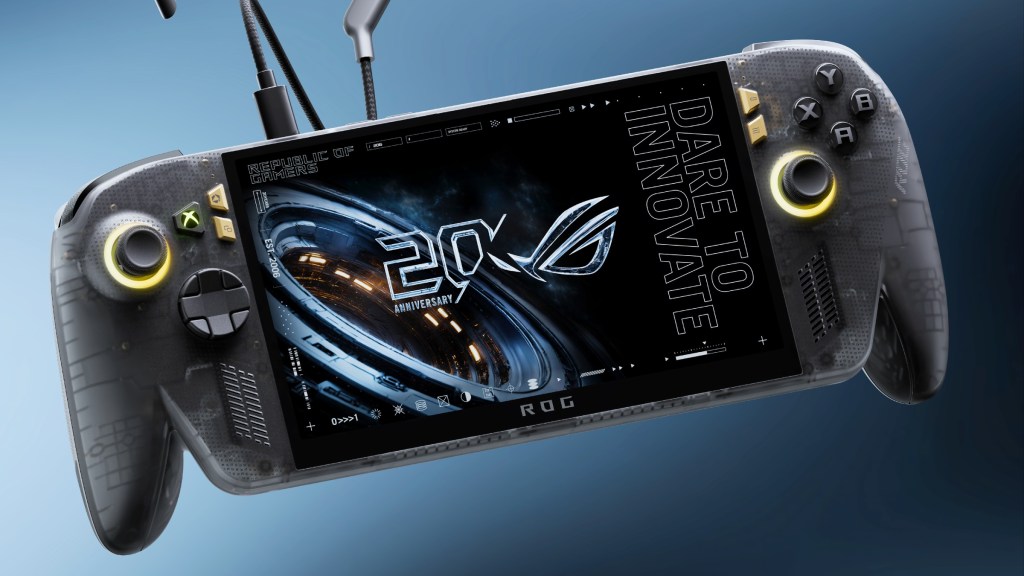
Outside of the screen, ASUS has also made a handful of other alterations with Ally X20 that I’ve been a big fan of. The rubberized grips, in particular, are something that I’ve always loved in my controllers, so I was thrilled to have them featured here. In addition, ASUS has made the buttons and bumpers of the Ally X20 feel less sticky than before, as the previous buttons seen on the Ally X didn’t feel responsive or satisfying to press.
The D-pad on the X20 has also received two major changes, both of which I really like. For starters, the D-pad’s overall design has been completely retooled and now features a concave design. More importantly, though, the D-pad itself can also be rotated in place to swap between 4-way and 8-way operation modes. This feature is one that is specifically geared toward making the X20 a better place to play fighting games, and while it might have a niche use, it’s still an awesome new feature that I’ve greatly enjoyed.
It also cannot be overstated just how cool the translucent design of the X20’s case looks when in your hands. Not only does this design resemble the appearance of other handhelds and consoles from the late 90s and early 2000s, but the gold accents and glowing Xbox button really bring the handheld to life. Purely based on its look, this is now my favorite-looking handheld that I’ve used within the past decade by a substantial margin.
Price Remains a Hurdle, But Now Is the Time to Jump In
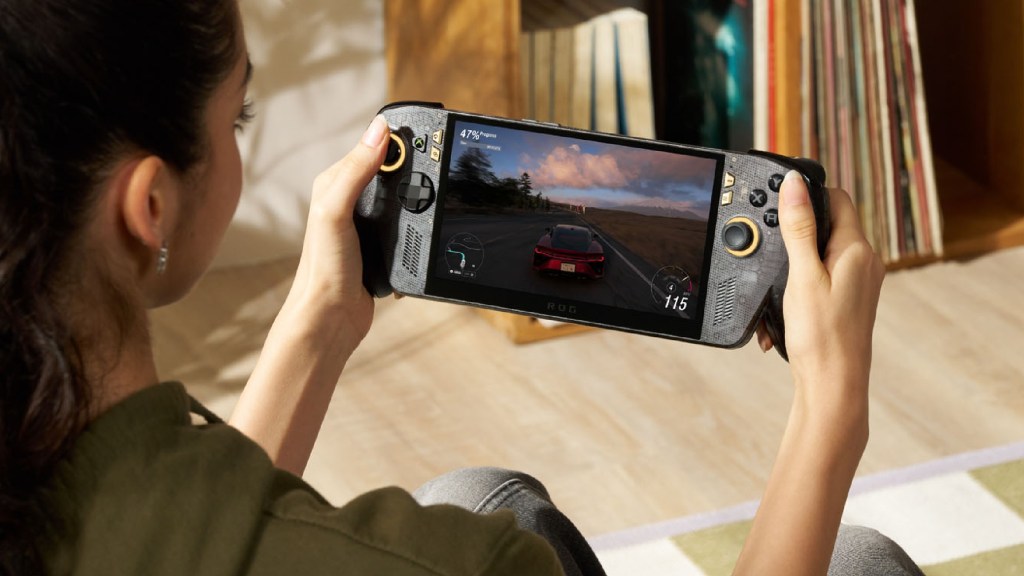
Per usual with new tech releases nowadays, the price of the Ally X20 is the thing that will likely be difficult for many to justify. The X20 comes in $300 steeper than its predecessor and is going for $1,299, making it the priciest model of the ROG Xbox Ally devices yet. Still, I’m of the mind that this $300 price difference is more or less worth it. Between the improved screen, buttons, refined D-pad, and unique appearance, ASUS has done a great job of justifying this added cost.
I’m also generally impressed at how ASUS has been able to keep prices down for the ROG Xbox Ally series of handhelds so far. In a time when many other gaming manufacturers have been increasing prices for their devices left and right, ASUS has done the opposite, outside of a few changes for certain regions. The fact that the Ally X20 is launching at only $300 more than before is genuinely impressive, as I would not have been shocked prior to its arrival for it to have been over $1,500 at a minimum.
I also think it’s worth noting that there have been a lot of stability and driver upgrades pushed out for the ROG Xbox Ally handhelds over the past year that have made them a lot better. One of my biggest issues out of the gate with the Ally X is that it was sluggish when navigating its various menus and settings. That has now changed substantially, as my experience with the Ally X20 has been considerably improved when compared to my initial time with the Ally X.
As a result, if you have been on the fence when it comes to picking up the ROG Xbox Ally over the past year, the arrival of the Ally X20 should finally be enough to sway you to pull the trigger. Not only is the Ally X20 better in virtually every way, but it has become one of the new best options on the market in the ever-expanding PC handheld space.
The ROG Xbox Ally X20 launches today on October 15th. A sample unit of the device was provided by ASUS ahead of time for the purpose of this review.
More Gaming
-

Image Courtesy of Rockstar Games -

Courtesy of S-Game Studio -

Image Courtesy of Rockstar Games -

Image Courtesy of 2K -

Image Courtesy of Devolver Digital