
When Disney acquired Lucasfilm and announced the development of new Star Wars movies, the studio’s plans went well beyond making a sequel trilogy for the Skywalker Saga. Hoping to turn Star Wars into another Marvel Cinematic Universe, Disney envisioned annual cinematic releases, alternating between mainline Skywalker Saga installments and standalone spinoffs. After 2015’s Star Wars: The Force Awakens triumphantly brought the franchise back, all attention turned to the first of these spinoffs, Rogue One: A Star Wars Story. People were curious to see how that film would take shape and if it could prove Star Wars could be viable outside of its classic saga.
Videos by ComicBook.com
Ten years ago, on April 7, 2016, audiences got their first look at Rogue One when Lucasfilm released the first teaser trailer. Serving as the introduction to new protagonist Jyn Erso, the preview sold fans on an intense war drama that was tonally distinct from the Star Wars movies that had come before. Of course, shortly after the trailer premiered, the studio almost backtracked on what it was promising. The teaser partially consists of footage that never made it to the final film, and it obviously doesn’t include anything from the extensive reshoots that took place in the months leading up to the movie’s release.
Rogue One‘s Missing Footage Explained

As frustrating as it can be, there are plenty of examples of trailers that include lines and/or footage that aren’t part of the actual movie. Particularly in cases involving major studio tentpoles, preserving spoilers and surprises is a key part of marketing campaigns, meaning shots can be digitally altered and footage can be edited in a way to keep things under wraps. Trailers are also tasked with selling audiences on the premise in roughly 2+ minutes, meaning sometimes it’s better to provide a general overview of the movie’s themes and plot as opposed to being a 100% accurate representation of how the footage plays in the film. So, Rogue One isn’t anything new on that front, but it’s definitely one of the more infamous cases.
There are very distinct, memorable moments in the Rogue One teaser that were left on the cutting room floor. The money shot of Jyn Erso, Cassian Andor, and other rebels running along the beach, dodging fire from an AT-AT, is nowhere to be seen. The same can be said for the striking image of Jyn standing in a tunnel while donning her Imperial disguise and the shot of Krennic walking on the Scarif surface as bodies of dead stormtroopers lay in the water. There’s also a captivating speech from Saw Gerrera, where he audibly wonders what will become of someone (most likely Jyn) if they continue to fight back against the Empire.
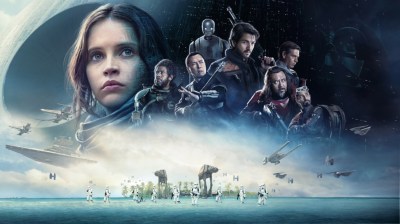
Anyone familiar with the development of Rogue One knows there’s a good reason why this footage never made it to the big screen. A couple of months after the first teaser was released, the film underwent a period of reshoots. Future Andor showrunner Tony Gilroy was brought in to help get the film back on track, doing enough to warrant a screenwriting credit and a cool $5 million salary. The full extent of Gilroy’s contributions to the final cut has never been fully revealed, though Gilroy noted that “the characters needed straightening out.” Much work was done to change the beginning, which had a domino effect on the rest of the film. The Battle of Scarif was also heavily reworked; initially, the Imperial data vault holding the Death Star plans and the transmission tower were two separate locations. Things were streamlined for the final cut so everything could be done from the same building.
The Rogue One reshoots didn’t begin until June 2016, so that footage obviously could not have been included in the first trailer. At the time the Rogue One teaser debuted, it’s possible Lucasfilm wasn’t planning on massively overhauling sections of the film. The term “reshoots” has a negative connotation, but additional photography is a standard part of the Hollywood blockbuster experience. Filmmakers will schedule time specifically for reshoots during post-production, giving them an opportunity to get anything extra they need as the movie comes together (such as dialogue to help clear up a confusing plot point). When Disney’s marketing department put the Rogue One teaser together, they probably thought most of the production was done and the footage they were using was going to be part of the final film.
Rogue One Overcame Its Production Issues and Became One of the Best Star Wars Movies

Pickups and additional photography may be par for the course on modern studio tentpoles, but whenever reshoots are as extensive as they were on Rogue One, it typically isn’t the best sign. It indicates that the studio is not fully confident in the film’s prospects, feeling it necessary to rework entire sections in a last-ditch effort to improve things. Those involved with Rogue One attempted to downplay the severity of the reshoots, taking a “business as usual” approach in interview responses, but there were still concerns that the first Star Wars spinoff movie was doomed before it even opened.
Initial Rogue One marketing materials placed a heavy emphasis on the “Wars” part of Star Wars, making the film look like the franchise’s riff on some of the best war dramas of all time. This was exciting because it showcased the breadth of storytelling possibilities in this vast sandbox, illustrating varying filmmaking tones and styles could be applicable to Star Wars (which had always been more of a space opera to that point). Since Rogue One chronicles the Rebel Alliance’s mission to steal the Death Star plans, there was an expectation that the film would deliver a hard-hitting narrative that didn’t shy away from themes such as sacrifice and honor; most assumed the main cast of characters wouldn’t have a happy ending.
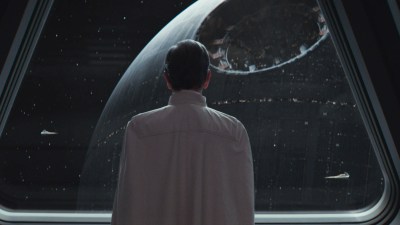
As word of the Rogue One reshoots continued to circulate, fans would be forgiven if they feared some of those war elements were being toned down to make the final product more family friendly. For as much as people like to dream of Star Wars fully embracing different genres and tones, youngsters have always been a key target demographic — especially where the movies (which have hundreds of millions, if not billions, of box office dollars at stake) are concerned. Fortunately, Rogue One became an example of reshoots actually improving the end result. The film earned positive reviews when it debuted in December 2016, and it became one of the biggest box office hits of the year, grossing $1.058 billion globally.
It took a complicated, roundabout way of getting there, but Rogue One ultimately did deliver on the promise of what that initial teaser presented. Even though some of the footage was different, the movie was still a captivating war drama that put a focus on the unsung heroes of the Rebellion, shifting Star Wars’ attention away from classic bloodlines and back to the ordinary people living in the galaxy. Through its story, it touched on a variety of deep themes and wasn’t afraid to go for the tragic finale because that’s what best fit the narrative. Rogue One now has the legacy of being arguably the best Disney Star Wars movie, a reputation only enhanced by the critically acclaimed Andor. After all the production troubles, it’s a miracle Rogue One turned out as well as it did, and while some fans would still like to see the deleted footage, the final cut is a great addition to the Star Wars canon.
What do you think? Leave a comment below and join the conversation now in the ComicBook Forum!
