These days, every summer movie season has at least one Marvel or DC Comics big-budget blockbuster in its roster of content vying for the eyes of the masses. But it actually took decades for us to get this point. The boom really began in the aughts, kicking off with X-Men in 2000 and Spider-Man in 2002. After those two movies took off, both Marvel and DC started having all of their biggest properties (and some of the smaller one) getting adapted for the big screen. And, as time has worn on since then, even lesser-known characters or groups have made their way to blockbuster cinema, sometimes to great success, as Guardians of the Galaxy showed.
Videos by ComicBook.com
But first there had to be a foundation, and while Tim Burton’s Batman in 1989 was a big part of that foundation, and even bigger part was Richard Donner’s Superman in 1978. Before that, as far as filmed DC adaptations went, there was just the backdoor pilot Superman and the Mole Men and the comedic big screen adaptation of the Batman TV series.
How Has Superman Aged So Well & How Did It Influence the Future of the Subgenre?
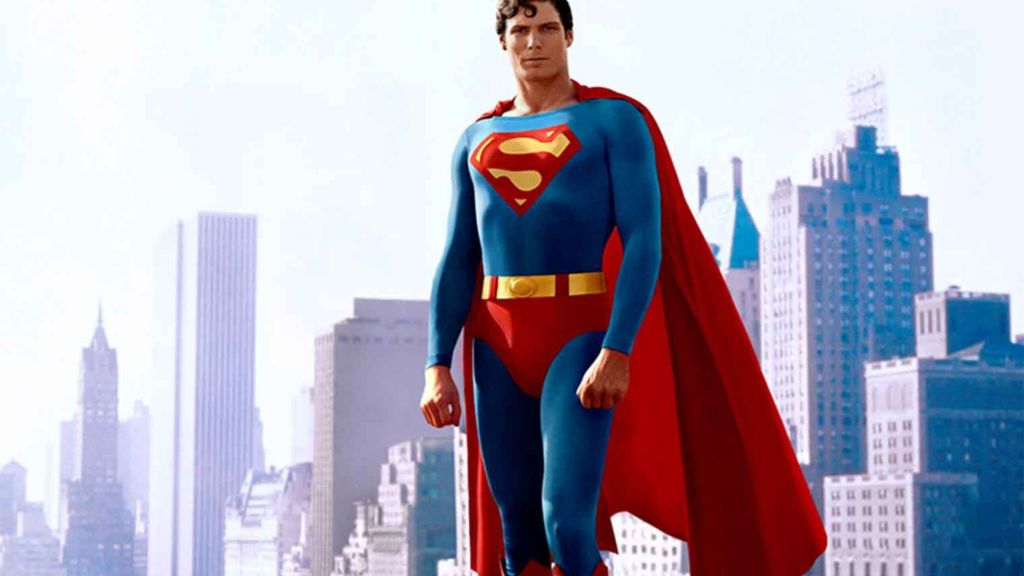
Superman was the first superhero project to have some real, serious money behind it. Donner’s film was brought to life with a $55 million budget, which translates to about $274 million today. But it was a major investment well worth the risk, because it raked in a gargantuan $300 million worldwide. That may sound pretty typical of the subgenre these days, but if you adjust those 1978 dollars to 2025 dollars you get about $1.5 billion dollars. Even if you include Batman v Superman: Dawn of Justice, it remains the most attended Man of Steel movie by a country mile.
As the first major studio superhero movie, there was quite a bit of warranted skepticism surrounding Superman. Plenty of people had no idea that something that was relegated to pages with panels could work as a product that could appeal to every quadrant. It seemed niche.
But the film’s performance put all of those worries to rest in a major way. All of the sudden the door was opened for studios to put money behind one of these movies. If done right, the product could be a moneymaker, it could get love from critics, and it could be something that has a narrative which is taken seriously.
Furthermore, while the special effects are dated today, they were revolutionary then. So that was another lesson: if you want to make a superhero movie, you’re going to have to include some big, expensive set-pieces. Again, while the bigger sequences in Superman now seem rather quaint (which is part of their charm today), they were enthralling then. No one had ever seen a superhuman save someone from a helicopter falling off the side of a building before. It was akin to seeing a massive great white shark rear its scary, ugly head for the first time.
The reason these sequences still work today, outside of the nostalgia factor, is that they are secondary to the film’s focus on character. We care about Lois Lane because the movie has made Lois Lane feel like a real person, not a prop. We also believe that Superman is as desperate to save her (and those in trouble in general) as he is capable of saving her. This is because we’ve been shown his upbringing, which taught him altruism, and we’ve gotten some glimpses of the great power he possesses. In other words, Superman showed how best to craft an origin story that gradually builds in ways that feel organic and exciting.
Even still, it’s not as if studios were on the hunt for filmmakers to start producing superhero movies en masse. All we got throughout most of the ’80s were the three Superman movies and two Swamp Thing movies (questionable why that particular character became such an early presence). It wasn’t until eleven years after Superman, once the quadrilogy had wrapped up, that we got the darker, even more grounded Batman. And Marvel didn’t really get into the game until 20 years after Superman‘s debut via Blade).
But even if Superman didn’t immediately open the floodgates for superhero movies, it established those gates could be opened and behind them could be something audiences would rush out for. It also says a lot that, nearly 50 years later, the 1978 classic was clearly an influence on James Gunn’s reboot, from the tone to the soundtrack.
What superhero movie do you think was the most important for the entire subgenre’s trajectory? Let us know in the comments.
Most Viewed
-
Image courtesy of Virgin Films -
Image courtesy of Netflix. -

Image Courtesy of Netflix