
Christopher Nolan is widely regarded as one of the greatest directors of his generation – with good reason. Nolan burst onto the scene with films that bent the structure of cinematic storytelling, turning cliched genere films into a fine mix of blockbuster spectacle and intellectual complexity. Every Nolan film offers a certain amount of challenge, requiring viewers to put on their thinking caps and pay attention. Even so, most Nolan films require a second viewing for viewers to fully process what’s happening, but even then, there are a couple of Nolan films that remain baffling.
Videos by ComicBook.com
Before the release of The Odyssey, we’ve gone back through Chris Nolan’s impressive filmography to find the most confusing sequence that he’s ever filmed. And, we’re confident that the answer we came up with is not only the most mind-boggling 10 minutes of film Nolan has ever made, but one that fans are still struggling to understand, more than half a decade later.
Tenet’s Climax Is Confusing End to Baffling Journey
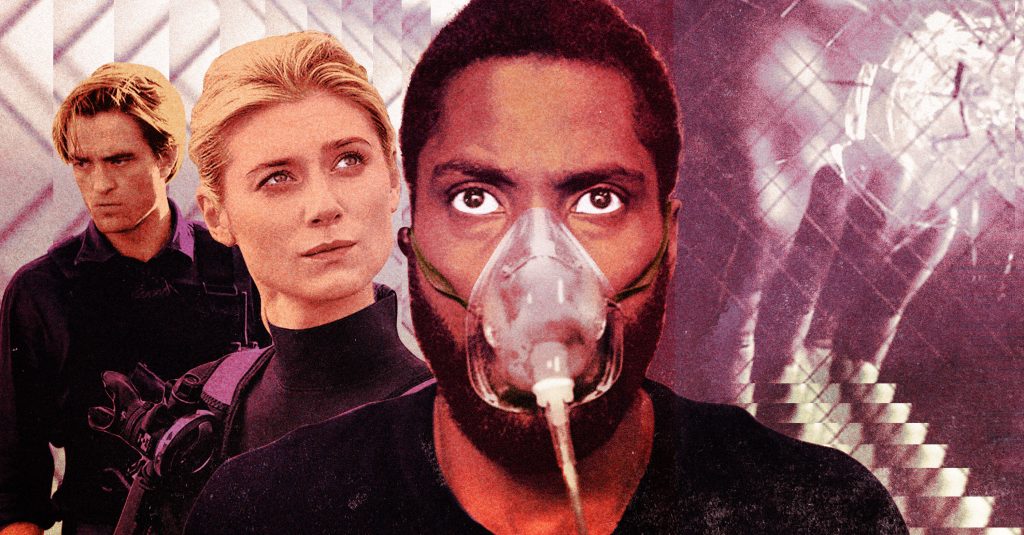
Christopher Nolan’s Tenet is a James Bond movie with a sci-fi twist: operatives using time inversion to move backwards through time while everything else is moving forward (like selective rewind). Using that tech, operatives (or terrorists and criminals) can take future knowledge into the past, affect outcomes, etc., suddenly making intelligence gathering and espionage into a 4D chess game. That game is expertly played by Russian oligarch Andrei Sator (Kenneth Branagh), who took messages from the future and inversion technology to hunt down and build a device that could invert the entire world and wipe it out.
The climax of Tenet sees CIA operative “The Protagonist” (John David Washington), his ally Neil (Robert Pattinson), and the Tenet organization’s military commander, Ives (Aaron Taylor-Johnson), stage a major raid on Sator’s irradiated hometown, Stalsk-12, where he is planning on detonating the inversion bomb and ending the world. To stop Sator, the team is split into two factions: the Protagonist and Ives lead the Red Team, moving forward through time, while Neil leads the Blue Team, which is deployed an hour earlier to the attack and moves backward through time, in a strategy called a “Temporal Pincher.”

As an added challenge, the military strike is synchronized with a second operation using temporal espionage. Sator inverts and travels back in time to hide out on his yacht. It was a day when a younger Sator took his wife Kat (Elizabeth Debicki) and their son out for a day trip; an Older Sator returns to the empty yacht to kill himself and activate the inversion device; meanwhile, Older Kat, working with Tenet, poses as her younger self, sneaking onto the yacht to seduce her husband, while actually delaying his death until Tenet’s military strike succeeds.
The mechanics of Tenet’s time inversion are hard to grasp, no matter how many times you watch the film. That’s because this particular sci-fi trope requires too much extra thought and invites too many additional questions. Trying to follow Red Team and Blue Team’s assault on Stalsk-12 is incredibly difficult to do for 10 minutes of combat action, especially when the battle gets heated. Sights like soldiers dying from exploded debris suddenly reforming into their original structure are wild, visually. But jumping back and forth between the military strike and Kat’s mission, while trying to understand how the inverted and regular timelines are intersecting, requires more infographics than most films. And that’s not even Tenet‘s biggest twist.
Neil’s Fate Is The Most Baffling Thing In Nolan Movies (But We’ll Explain)
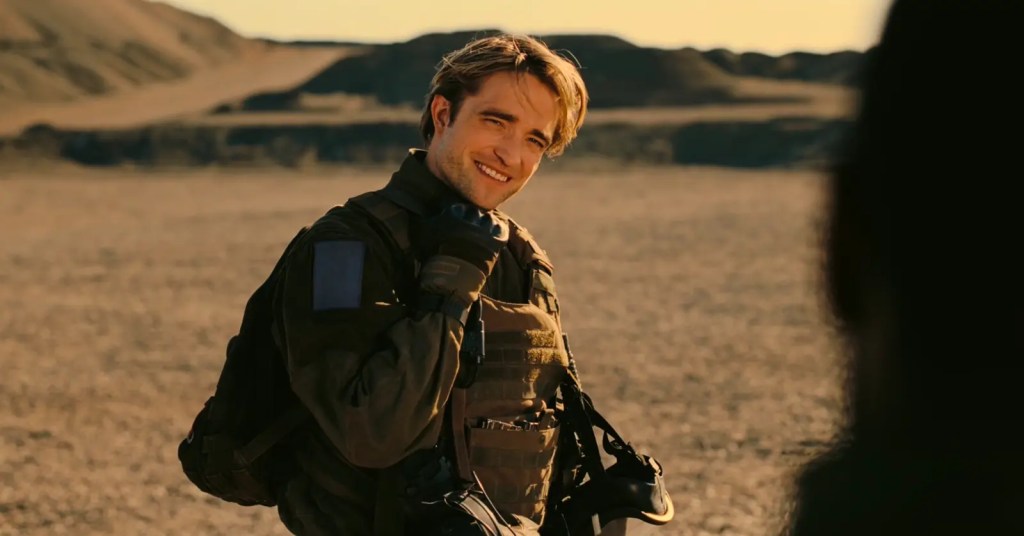
Tenet really blew minds in its final showdown. The Protagonists and Ives use the battlefield distraction to infiltrate Stalsk-12’s hypocenter, where Sator’s henchman Volkov (Yuri Kolokolnikov) is placing the inversion device. They get stopped by a locked cage door, unable to get to Volkov; however, a body that is lying on the floor inside the cage (at first seemingly killed by Volkov) suddenly comes back to (inverted) life, jumping up, unlocking the cage, and taking a bullet Volkov tries to shoot at the Protagonist. The Protagonist and Ives kill Volkov, remove the inversion algorithm from the bomb, and are saved from the detonation (when Kat kills Sator) by Neil, who switched from inverted time to regular time mid-battle, and drives them away on a Humvee’s tether cable.
As Neil, Ives, and The Protagonist break up the Algorithm into separate parts, the Protagonist makes a startling observation: Neil’s backpack has a unique orange tag clipped ot it. That same tag was seen multiple times throughout the film on the back of a mysterious figure: the first time during the opening rescue sequence at the opera house, then again on the dead body lying inside the hyocenter cage door.
The reveal is that Neil has pulled his own temporal pincher move to save The Protagonist in two ways at once: An inverted Older Neil fights the Battle of Stalsk-12, before switching back to normal time and driving the Protagonist away from the detonation. Meanwhile, an even older version of Neil inverts himself at a future date and revisits the battle to open the hypocenter cage door and take the bullet.
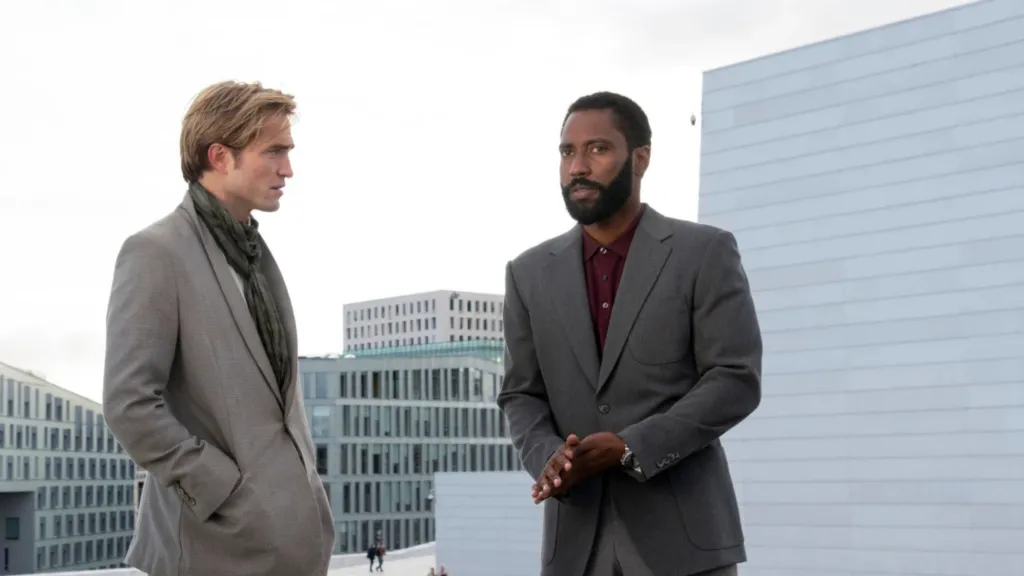
Through a brief bit of conversation, Neil intimates to the Protagonist that they are each seeing the battle from very different vantage points: the Neil the Protagonist meets early on in the film was actually the older version of Neil, who was recruited by an older version of the Protagonist (after he starts the Tenet organization). Before parting ways on the battlefield, Older Neil reveals that he and the Protagonist’s older self have already been on many missions together, calling the Battle of Stalsk-12 the “end” of a long friendship (for Neil), even though to the Younger Protagonist (who we followed throughout the movie), it is just the start of that friendship.
After the battle, the Older Protagonist starts the Tenet organization and inverts himself, traveling back years before the film to recruit and train the younger version of Neil. The Protagonist eventually assigns Neil, his most trusted recruit, to guide his younger self through the Sator mission, even knowing it will be the death of his friend. Because of the time loops, Neil has to die to ensure Sator doesn’t end the world, and that Tenet gets started in the future so it can save the past.
The added wrinkle that baffles most viewers is the inverted version of Older Neil, who sacrifices himself in the hypocenter cage: The entire reason regular-time Neil takes a moment to say goodby/hello to the Protagonist after the battle is that he knows he must inevitably invert himself one more time, travel back to the Battle of Stalsk-12, and sacrifice himself for the mission. That inversion happens offscreen after the movie ends, but is still key to understanding how Nolan uses the inversion dynamic as a twisty espionage trope.
Is there any other moment in Nolan movies that’s more confusing than Tenet‘s ending? Let us know in the comments!
More Movies
-

Courtesy of Touchstone Pictures -
Image Courtesy of Warner Bros.





Forum Conversation: LOTR: What Are Your Fav Scenes?
Go to ForumThose are all great scenes. I literally love every single second of the entire trilogy, even the extended editions.
Yep that’s a great scene! I try to watch the entire trilogy yearly.
Agreed. There are so many great scenes in this trilogy.